Deputy PM Says Monk Scandal Reflects Spiritual Failings, Not Legal Gaps
A former abbot's arrest for sexual misconduct and embezzlement reflects spiritual failings rather than legal gaps, Thailand's Deputy PM says, calling for stronger preventive measures including temple accounting systems to detect financial i
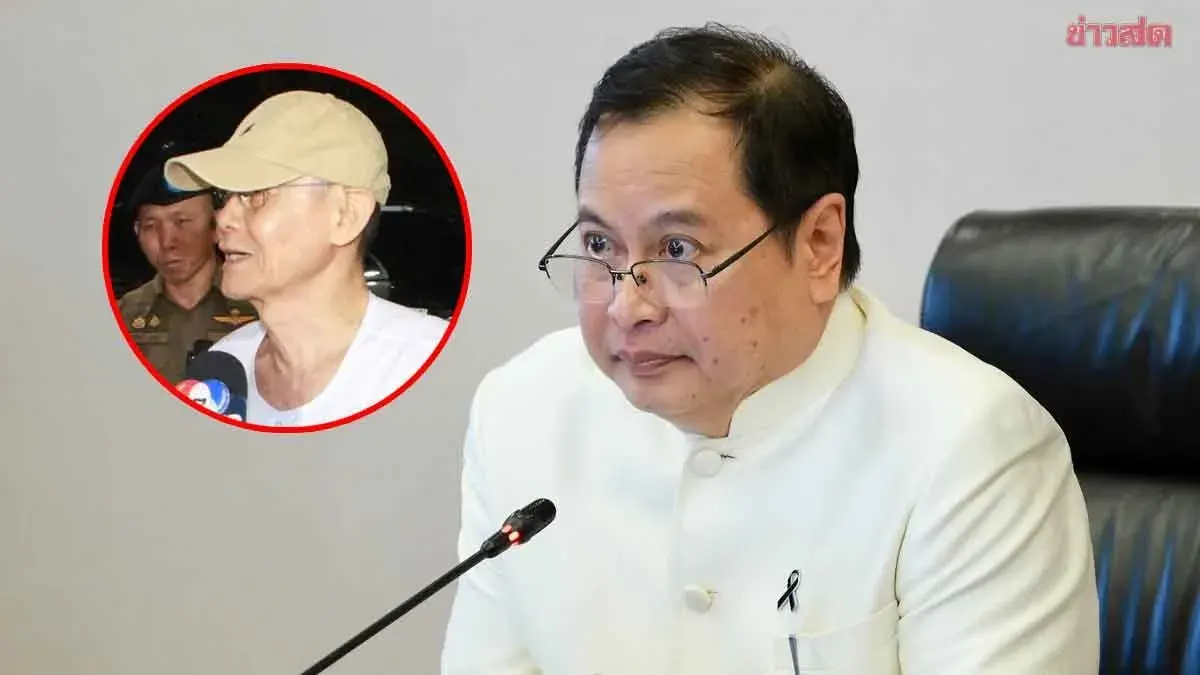
Deputy Prime Minister Prakorn Nilprapha expressed sadness over the case of former abbot Atichoti Thamvaro, former abbot of Phutthaideesawan Temple in Phra Nakhon Si Ayutthaya, who was arrested by police on charges of sexual misconduct and embezzlement. Prakorn said the issue must be separated into matters of Buddhism and matters of monastic conduct. With many monks in the sangha, some wrongdoing is inevitable, but efforts should minimize such incidents. The core problem is not the absence of law but hearts filled with spiritual defilements. Yellow robes alone do not eliminate defilements; only spiritual discipline does. If defilements persist even within the monastic order, it damages Buddhism.
"I am sad to see this. I do not want such incidents to occur. It is certainly wrong, but we should not circulate images of it. I believe it harms the hearts of Buddhists and is bad for the nation. But if asked whether he acted wrongly and if action is needed, it must be handled according to law," Prakorn said.
Prakorn compared the scandal to cheating in local elections, saying Buddhism is a pillar of daily life and without such principles, the nation would suffer. Just as election fraud undermines local governance, monastic misconduct undermines Buddhism. He noted that while the National Office of Buddhism is working with police, stronger preventive measures are needed.
When asked what stricter measures the National Office of Buddhism should take against misbehaving monks, Prakorn said the office will take proactive steps. With many monks and education alone proving insufficient, he stressed that even though everyone knows right from wrong, not everyone can control their inner defilements. Adding ten more National Offices of Buddhism and 100 more laws would not solve the problem if individuals cannot control their own defilements. However, when wrongdoing occurs, it must be addressed as well as possible and prevented from recurring.
As an example regarding property, Prakorn has already directed the National Office of Buddhism to create a simple accounting system for temples linked to a central database to monitor whether money or property is being received or used inappropriately. Early detection allows authorities to identify problematic behavior and intervene before serious incidents occur. Detecting unusual spending patterns early can serve as a warning sign. Lay Buddhists can do their part by being vigilant and refraining from sharing such images online.
When pressed on whether the National Office of Buddhism will truly act proactively when society views it as merely a supportive agency reluctant to challenge senior monks, Prakorn said the office works collaboratively, not coercively, with the religious establishment, which has its own rules and monastic discipline under the Council of Elders.