Thai Cement Industry Association Wins Excellence Award
The Thai Cement Industry Association won its fourth consecutive Outstanding Trade Association Award for advancing low-carbon cement production and securing green financing to reduce emissions by over 800,000 tons annually.
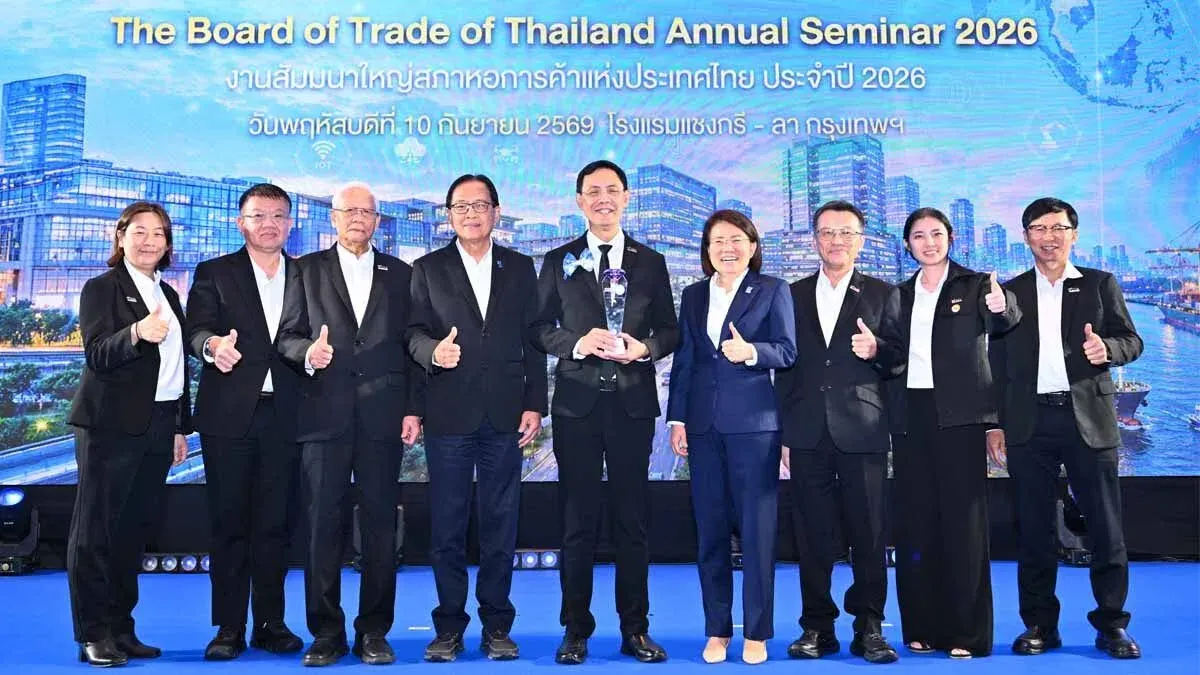
The Thai Cement Industry Association (TCMA) has won the Outstanding Trade Association Award for 2025, marking its fourth consecutive year receiving the honor from the Department of Business Development under the Ministry of Commerce. The award reflects the organization's clear operational framework, continuous strategic implementation, and concrete results for Thailand's industry and economy.
TCMA Chairman Surachai Nimmalaoe said the award represents more than recognition—it reflects "the power of collaborative work" and organizational management focused on delivering real results. TCMA functions as a mechanism linking the industrial, government, private, and academic sectors, along with domestic and international partners, to boost national competitiveness and address climate change challenges affecting global trade and economics.
Throughout 2024, TCMA advanced the Thailand 2050 Net Zero Cement and Concrete Roadmap, achieving significant results including reducing greenhouse gas emissions from hydraulic cement by over 800,000 tons of carbon dioxide annually. The association secured international green financing to accelerate the cement and concrete sectors' transition to low-carbon production under the "Decarbonization of Cement and Concrete Sectors in Thailand" project, covering technology, standards, and business capacity building.
TCMA also championed the Saraburi Sandbox as a model area for industrial transition, successfully selected as Thailand's first industrial cluster to join the World Economic Forum's Transitioning Industrial Clusters Initiative—the third in Southeast Asia and 21st globally. The organization expanded regional cooperation through the 2035 AFCM Decarbonization Roadmap to support carbon reduction in Asia's cement industry.
According to Surachai, TCMA's work demonstrates that transitioning to low-carbon industry and green economy is not merely environmental policy but a competitive necessity and new trade context. Developing low-carbon building materials like hydraulic cement alongside standards and certification systems prepares Thai businesses for international environmental trade measures. Green public procurement will create demand for low-carbon products, linking to future green economics, trade, and investment.