Thai Police Chief Bans Foreign Book Citing National Security
Thailand's national police chief has banned the import and distribution of the academic book "Routledge Handbook of Contemporary Thailand Second Edition," citing national security concerns. The order, published in the Royal Gazette, has drawn criticism over press freedom but avoids the technical errors of a similar 1993 ban that backfired politically and led to a police chief's ouster. Analysts note the current police chief's smooth appointment and error-free order suggest lessons have been learned from past controversies.
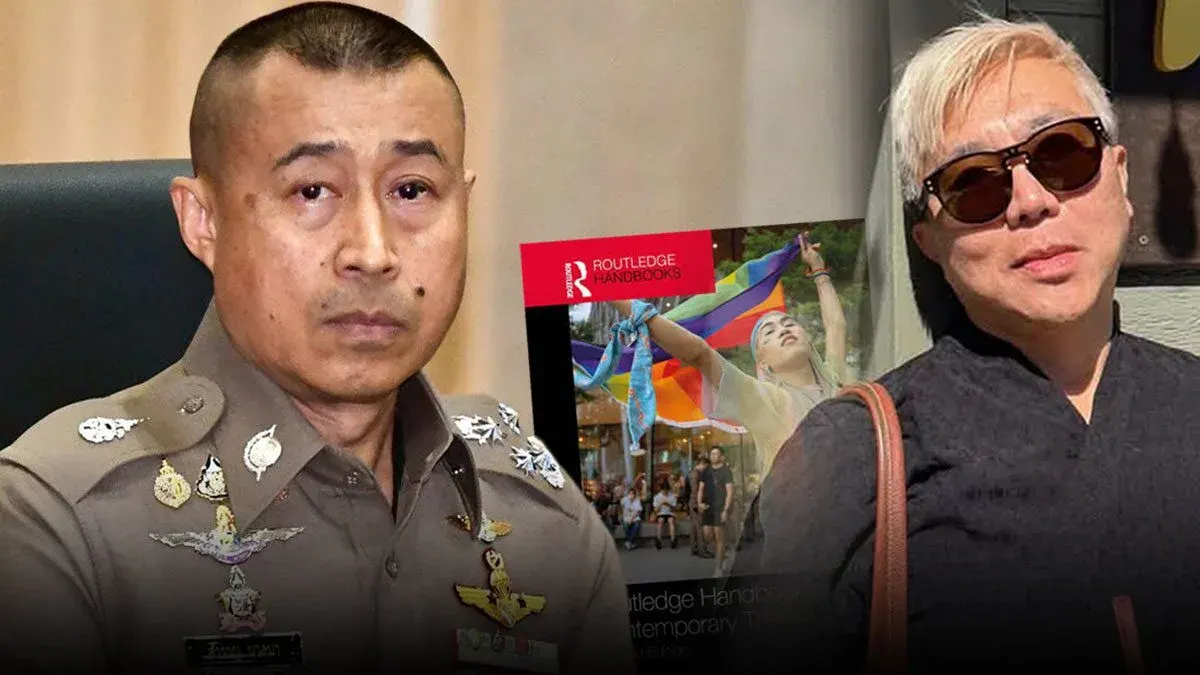
The Royal Thai Gazette has just published a National Police Office order banning the import or distribution of printed materials in the kingdom. Signed by Police General Saran Nualma, the national police chief, on October 30, 2026, the order "bans" the foreign publication "Routledge Handbook of Contemporary Thailand Second Edition," edited by Pavin Chachavalpongpun. The order states the book contains content affecting national security, potentially creating incentives for unrest, conflicting with the country's overall peace and order, or affecting the kingdom's security in a democratic society.
In a democratic society, such orders routinely draw criticism regarding freedom of reading and thought. However, from the perspective of security officials, it is understandable that they would issue such an order.
From another angle, seeing the police chief's order banning foreign media, those who have followed the news for a long time will recall a lesson from a similar order that once led to a former police leader's dismissal. Looking back to when it was still the Police Department, with a "Police Director-General" as chief, an incident occurred in 1993. An order signed by the Director-General banned the import of a foreign newspaper alleged to contain content insulting the monarchy. However, that announcement reproduced details of the offending content, effectively re-publishing the alleged insult. Political factions already seeking to remove the Director-General seized the opportunity to oust him immediately and install their own person.
First, they let him take over as acting chief, then whispered for him to show a major achievement to build credit for the Interior Minister and pave the way for his permanent appointment. The "showpiece" achievement that Interior Minister wanted was tracking down the "Sao U" diamond — the key gem in the Blue Diamond Affair — which triggered a chain of events culminating in the double murder of the Sri Thana-khan mother and daughter.
As noted, anyone who has followed the news for a long time must consider the background of the Director-General's order to ban foreign media, which backfired due to an error and became a charge of re-publishing inappropriate content. It is an important lesson in the printing industry and connects to politics — the Interior Minister's power and the removal of the Director-General. Moreover, when there is a hidden agenda to create an achievement, it can turn into a major disaster for the Thai police: from hunting the Sao U diamond to the murder of a gem trader's daughter-in-law.
Crucially, investigative reporting by the "Khaosod" newspaper exposed the double murder case, leading to arrests. This report won the News Story of the Year award, and Khaosod made history by becoming the highest-circulation newspaper within just two years.
However, regarding the latest foreign media ban order by the current police chief, it has proceeded smoothly. Police General Saran's order does not repeat past technical errors; he appears to have learned the lesson well. Furthermore, his assumption of the police chief post on October 1 went smoothly, without internal police conflict, without conflict with politicians, and without hidden agendas. The first month's performance in the "Big Ran" police era has gone well, and the foreign media ban order contains no technical errors repeating the past.