Thailand Announces $8 Billion Investment to Tackle Floods
Thailand’s government announced plans to invest roughly $8 billion in a long‑term water‑management system for the Chao Phraya River basin to reduce flood damage. The investment, disclosed at the IMF‑World Bank Annual Meetings 2026, aims to protect farmland, communities and key economic centres including Bangkok. Officials said the cost of inaction would outweigh the investment, and stressed the need for strong governance to attract private and development financing.
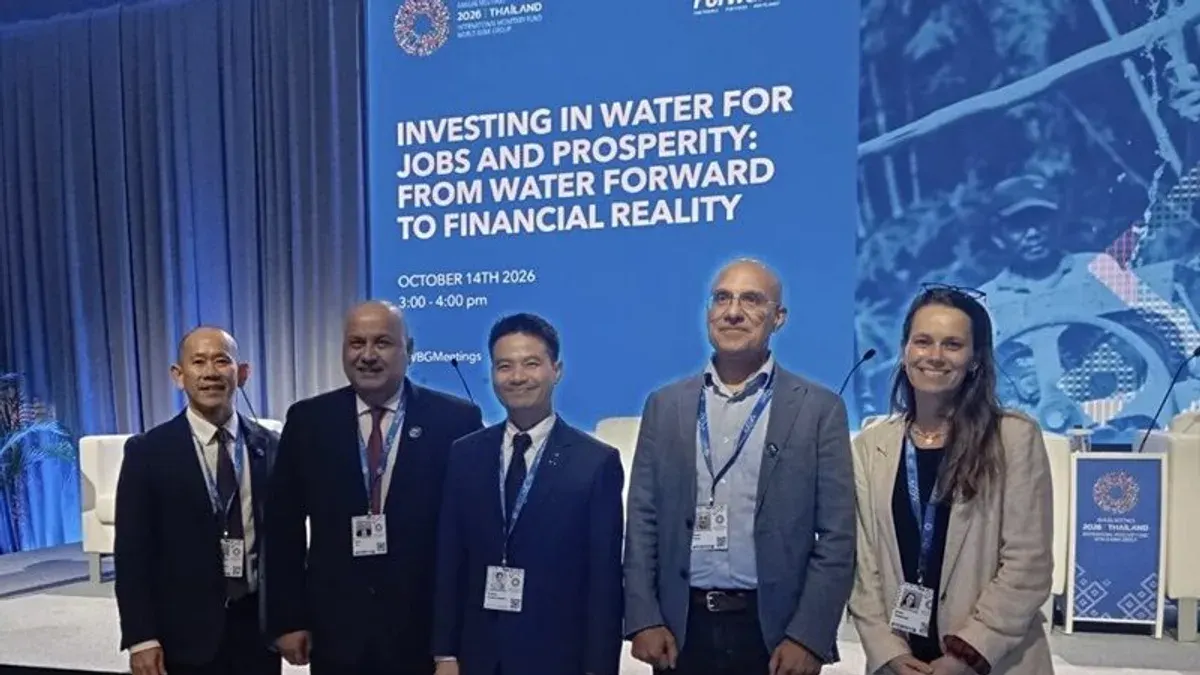
At the IMF–World Bank Annual Meetings 2026 held at the Queen Sirikit National Convention Center, Phiradon Prisananantakul, Minister attached to the Prime Minister's Office, delivered a special lecture on “Water‑resource investment for job creation and economic prosperity.” He said the government will move forward with an investment of approximately $8 billion to build a long‑term water‑management system in the Chao Phraya River basin, targeting protection of agricultural areas, communities and the nation’s key economic hubs, including Bangkok and its surrounding provinces.
He cited World Bank data showing that flooding causes Thailand average annual economic losses of about $600 million, not counting lost investment opportunities due to investor concerns over water risk. Although Thailand has recognized the need for such projects for decades, budget constraints have slowed progress. However, the government believes it can no longer delay investment, because the cost of inaction may exceed the long‑term cost of preventive measures.
For financing, the government plans to use strategic public funds to attract private sector and development‑finance institutions, citing the example of East Water Company’s blue bond, backed by the International Finance Corporation (IFC), which funded water infrastructure in the Eastern Economic Corridor (EEC) as a model that can be scaled up.
Phiradon stressed that successful investment depends not only on funding but also on strong governance—transparent rules, predictable regulations and responsible project management—to build confidence among domestic and foreign investors. He concluded, “Good governance is not just a matter of responsibility; it is what makes investment possible. The question today is not whether we have enough money to invest in water security, but whether we can bear the cost of not investing.”