Thailand Pushes ASEAN to Lead Global Economy
Thailand urged ASEAN to shift from economic participant to global shaper while positioning the region as a food security hub through agricultural innovation, Deputy Commerce Minister Girada Phaopijit said at Singapore's ASEAN & Asia Forum o
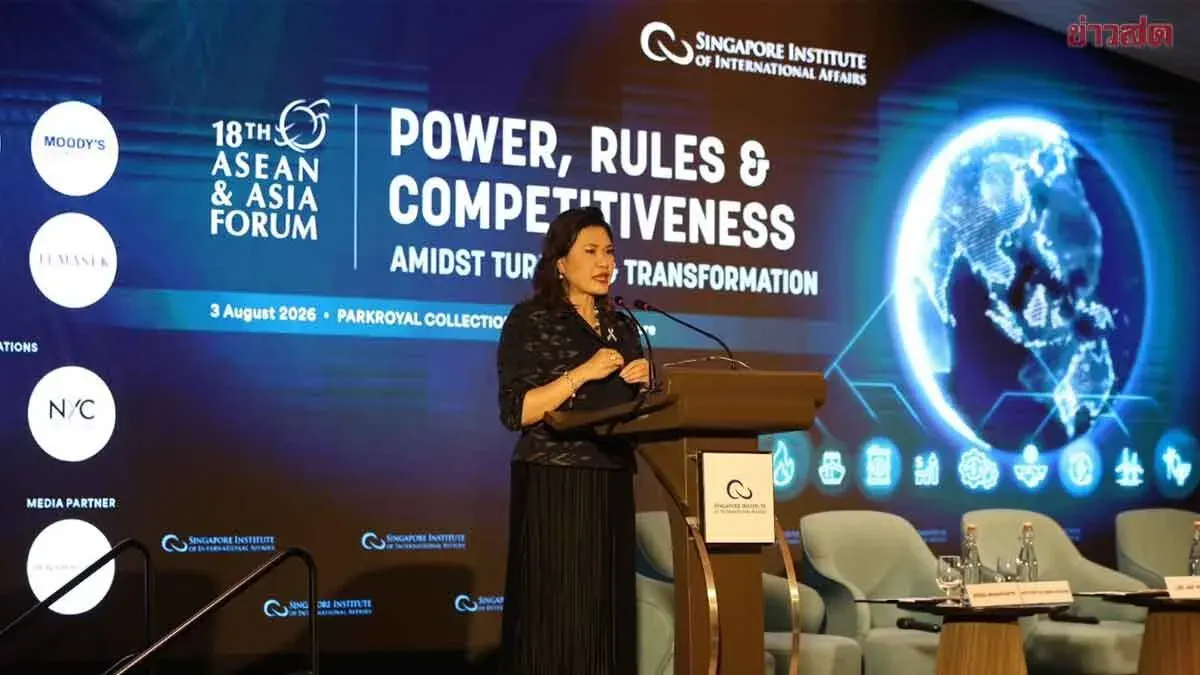
Thailand is advocating for ASEAN to take a leading role in shaping the global economy while promoting agricultural innovation to bolster food security. Deputy Commerce Minister Girada Phaopijit revealed that on August 3, 2025, she presented this vision at the 18th ASEAN & Asia Forum in Singapore, organized by Singapore's International Business Institute. She emphasized that ASEAN must maintain economic openness, strengthen connectivity, and invest collaboratively to elevate the region's role from a participant to a shaper of global economic direction, while advancing innovative agricultural products to establish ASEAN as a global food security hub.
The forum drew over 300 participants from government, diplomacy, business, and academia to exchange views on economic direction and regional cooperation in Asia and ASEAN. Thailand presented its perspective on ASEAN's trade and investment potential, noting that despite geopolitical challenges and global economic shifts, the region has substantial growth opportunities. The diversity of member states is not a weakness but a strength that can enhance ASEAN's ability to foster cooperation and position itself as a trusted trade and investment partner. ASEAN should accelerate progress in capital mobility, workforce skill development, skilled labor mobility, and renewable energy connectivity to strengthen long-term competitiveness and sustainability.
Girada stated that food security and agricultural product innovation represent a major opportunity for ASEAN's long-term economic growth, given the region's strong agricultural base that can be developed into high-value products such as functional foods, dietary supplements, cosmetics, and bioplastics. This would increase agricultural output value, reduce carbon footprint across production chains, and support the transition to green and bioeconomy models. ASEAN should pursue co-creation of goods and services among member states by leveraging each country's unique strengths to strengthen and build resilience in future food and bioproduct supply chains.