Thailand Pushes Doi Inthanon to Become 11th ASEAN Heritage Park
Thailand has submitted Doi Inthanon National Park in Chiang Mai to become its 11th ASEAN Heritage Park, recognizing the mountain's rare high-altitude ecosystem and boosting international conservation standards. The designation will support
The Natural Resources and Environment Ministry is advancing Doi Inthanon National Park in Chiang Mai toward designation as Thailand's 11th ASEAN Heritage Park, showcasing its outstanding high-altitude ecosystem and raising conservation standards to international levels while creating sustainable income for communities. The park has been formally submitted to the ASEAN Heritage Park registration process following Cabinet approval on September 15, 2026, and prior approval from the National Biodiversity Conservation and Utilization Committee on May 6, 2026.
Environment Minister Suchat Chomklin stated that advancing Doi Inthanon to ASEAN Heritage status fulfills commitments under the 2003 ASEAN Declaration on ASEAN Heritage Parks, strengthening Thailand's role in protecting regionally outstanding natural resources. The nomination will enhance personnel capacity and bring park management standards to international equivalence, facilitate knowledge, research, and conservation innovation exchange with ASEAN members, boost economic and social value, and support conservation tourism that distributes revenue sustainably to local communities.
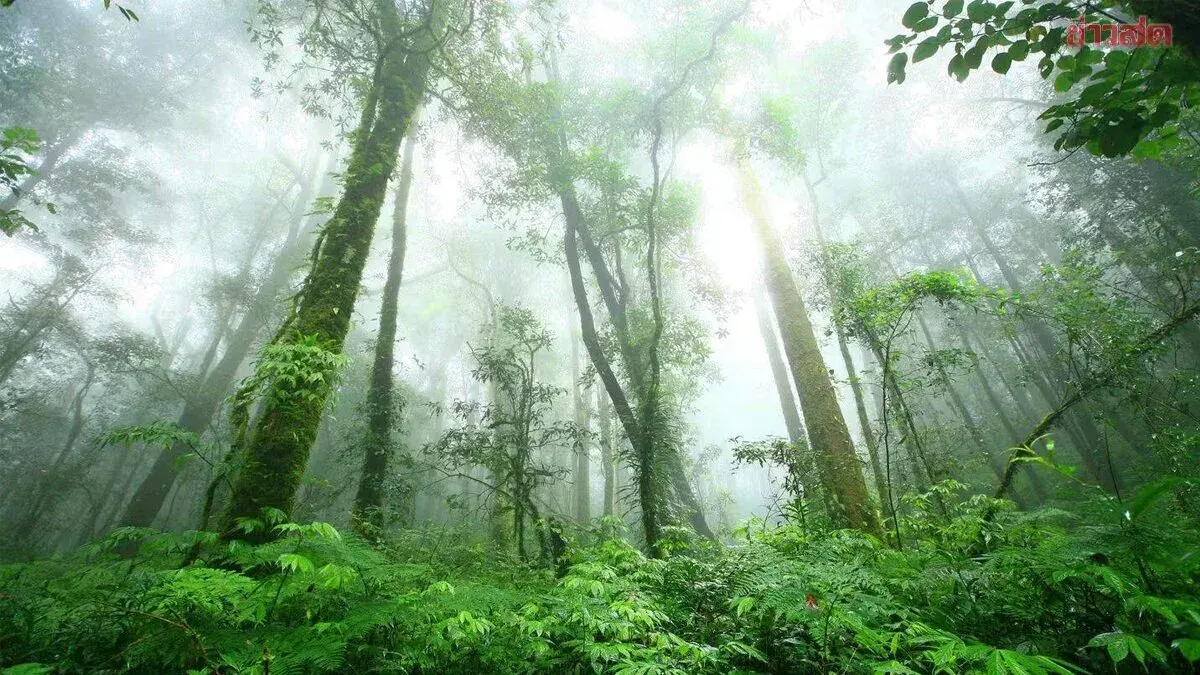
Park Director General Arthapol Charoenchangsa revealed that Doi Inthanon meets all ten ASEAN Heritage criteria, representing a complete high-altitude ecosystem spanning from dipterocarp forest through montane forest to high-altitude grassland and cloud forest—a rare regional ecosystem. The park maintains forest coverage at 89.49 percent and protects 73.67 percent as strict nature reserve and primitive zones.
Biodiversity-wise, Doi Inthanon hosts over 1,400 species and links geographically to the Himalayas, with 1,271 plant species including two newly discovered and 43 endemic species, plus 378 bird species and endangered fauna like sambar, muntjac, white-handed gibbon, and Doi Inthanon's unique gecko. At 2,565 meters above sea level, it is Thailand's highest peak and sole habitat for the green-eared hummingbird and ancient rose.
Beyond biodiversity, Doi Inthanon serves as a critical water source for the Ping River, producing over 540 million cubic meters annually for 35 villages and 74 communities, while sequestering approximately 13.42 million tons of carbon dioxide equivalent. The park operates under the National Park Act 2019 with a five-year management plan (2023–2027) spanning 12 programs and 114 projects, overseen by the National Park Advisory Committee and harmonizing culture and nature.