Election Commission's Selective Prosecutions Spark Political Uproar
The Election Commission faced sharp criticism after voting to prosecute only 77 people in a 2567 Senate selection fraud case, including just 26 of 138 accused senators, while excluding all political party executives and officials despite ev
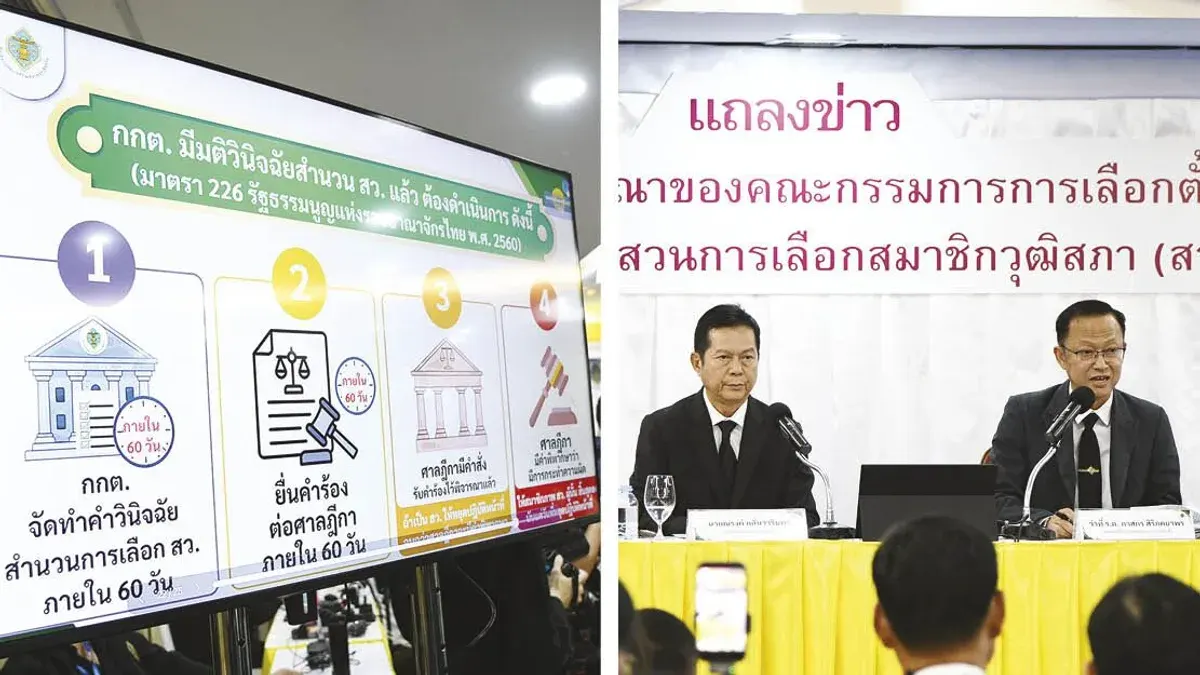
The 2567 Senate selection fraud case is a major political scandal, but the Election Commission's decision to prosecute suspects has made the controversy worse. The commission voted to prosecute only 77 people, including just 26 of 138 accused senators, while others included unrelated individuals. Notably, no political party executives, party officials, politicians, MPs, local councillors, or local administrators were prosecuted at all.
Although the commission chairman attempted to explain the reasoning, the public has found his explanations unconvincing, further intensifying political tensions. The decision has faced broad criticism from the plaintiffs, those harmed by the selection, opposition parties, academics, and the general public. The People's Party stated that the commission's discretionary use exceeded its legal authority and violated past standards, constituting misconduct or neglect of duty, and questioned whether it amounted to political favoritism. The Democratic Party similarly argued that the commission's ruling reflected systematic manipulation and demanded disclosure of individual decisions and investigation of those behind the scheme.
The Senate selection fraud involved evidence of collusion leading to cheating schemes, with signs of vote buying and money laundering, supported by clear photographic and video evidence and witness testimony provided to both the commission and the Department of Special Investigation. The commission's decision to refrain from prosecuting suspected political masterminds while prosecuting only 26 of 138 accused senators—many sharing identical lottery numbers and vote counts—raises serious public doubt.
The commission's ruling could create lasting problems, so relevant parties must pursue legal avenues to clarify the Senate fraud case in the public eye and prevent it from remaining shrouded in uncertainty.