Thailand Raids 33 Companies in Chonburi Over Suspected Foreign Nominee Scheme
Thai authorities raided 33 companies in Chonburi Province on Thursday as part of a nationwide crackdown on foreign investors illegally using Thai nominees to own land and businesses, seizing assets worth 235 million baht.
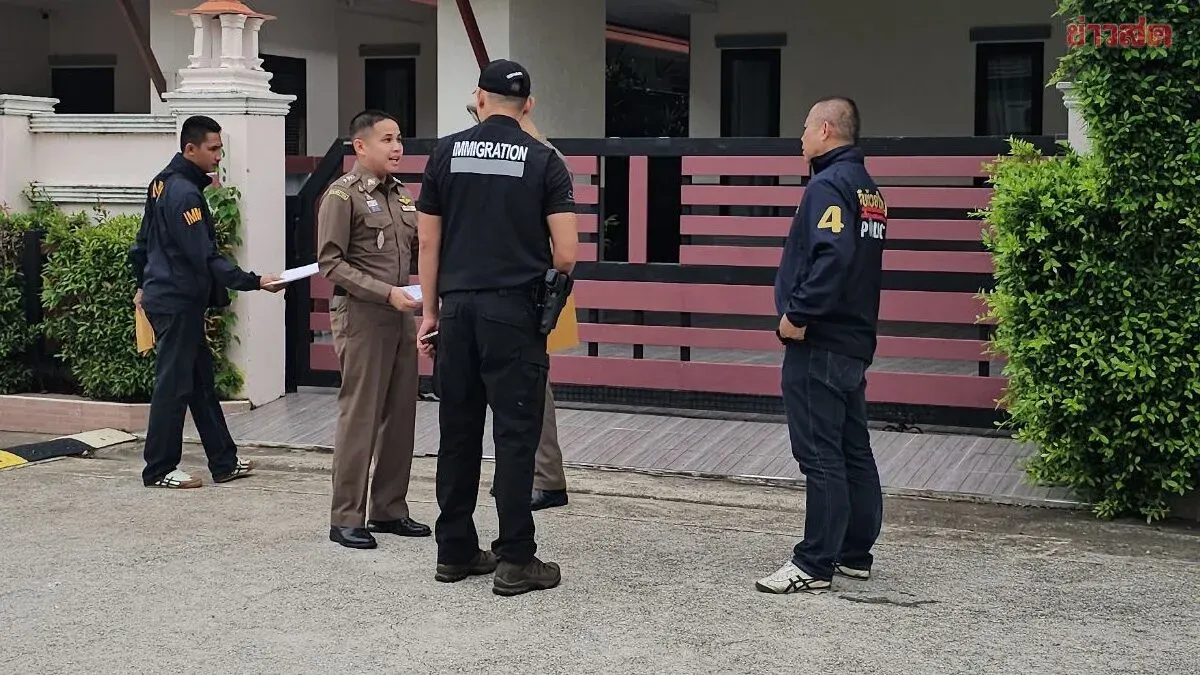
A large-scale operation targeting a foreign nominee business network was launched at 6:30 a.m. on July 17, 2025 at Huai Yai Police Station in Bang Lamung District, Chonburi Province. National Police Commander Pol. Gen. Nopsilp Poolsawasdi and Chonburi Governor Narit Niramaiwongse jointly oversaw the operation, which involved coordinated efforts from the Royal Thai Police special task force, Border Patrol Police, provincial administration, commerce, and land offices to examine companies and real estate projects suspected of using Thai nationals as nominee shareholders for foreign investors to evade Thai business and land ownership restrictions.
This operation marks the fourth phase of an ongoing nationwide investigation, following previous operations in Surat Thani (Koh Phangan), Phuket, Krabi, and Phang Nga. In the first three phases, authorities identified approximately 130 rai of land linked to nominee entities worth over 1.671 billion baht and executed more than 100 arrest warrants against both Thai and foreign suspects.
In Chonburi, authorities targeted 33 companies linked to 32 properties with suspected nominee ownership valued at approximately 235 million baht. The operation included 4 arrest warrants and 41 search warrants. One focus area was a residential development project in Pattaya under investigation for suspected foreign land ownership violations. Governor Narit emphasized that combating nominee companies and foreign land ownership is a key government priority requiring inter-agency cooperation, including deep investigation into shareholder structures and financial trails to close legal loopholes. Officers were deployed simultaneously to search target locations, gather evidence, examine shareholding structures and financial transactions, and verify land ownership rights, with any violations to be prosecuted under Thai law and land potentially subject to forfeiture or sale as prescribed by law.