Thailand Opens UNCLOS Talks With Cambodia on Maritime Disputes
Thailand and Cambodia opened UN-backed talks in Singapore to resolve maritime boundary disputes, with Thailand's foreign minister calling for dialogue while accusing Cambodia of hypocrisy over past conflicts.
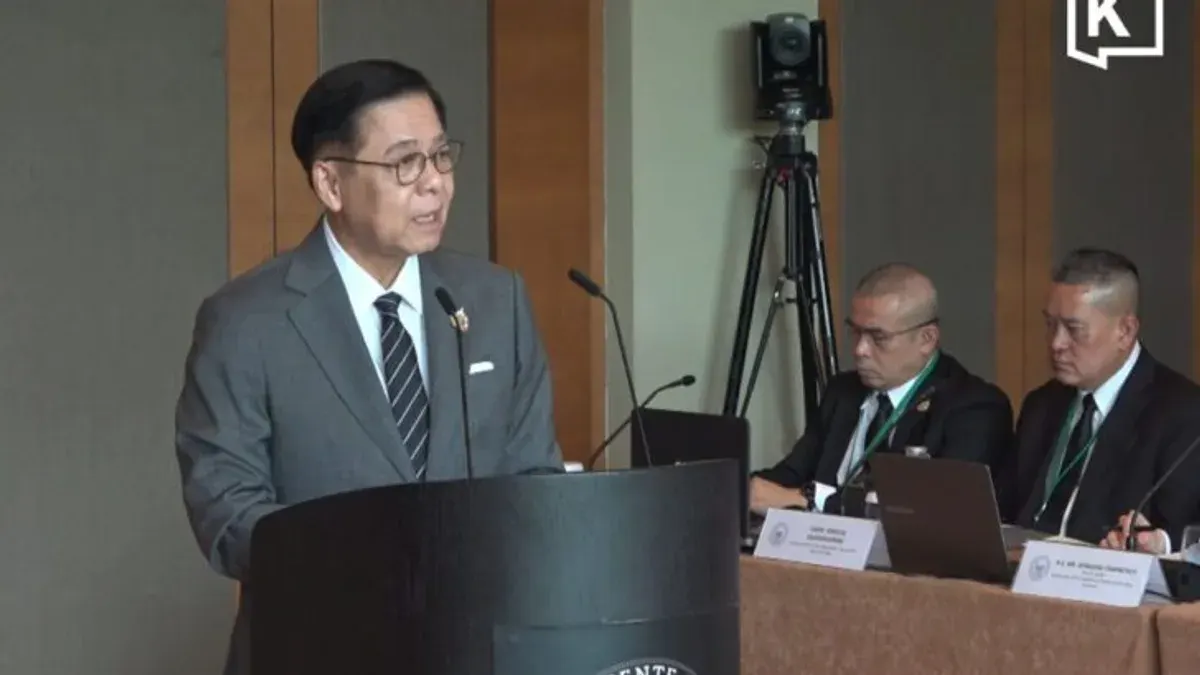
Singapore — 15 September 2026, Opening statement by Sihasak Phuangketkeow, Deputy Prime Minister and Minister of Foreign Affairs of Thailand, at the first meeting of the Thailand-Cambodia Conciliation Commission under UNCLOS.
Good morning, Madam Chair, distinguished members of the conciliation commission and representatives of the Kingdom of Cambodia. It is my honour to represent the Kingdom of Thailand. I am here with a clear purpose: to seek a solution on maritime delimitation that protects our rights and enables Thailand and Cambodia to move forward as neighbours.
There is a need to understand the circumstances and the course of events that have led us here to Singapore. At the heart of this process is a stark divergence in how Thailand and Cambodia have chosen to manage the issues between us.
Thailand has consistently believed that differences between neighbours should be addressed through dialogue. We keep channels open, rebuild confidence, and seek sustainable solutions through bilateral negotiations.
But Cambodia has approached the issues differently. It always claims that it respects international law, and portrays Thailand as flouting it. But the claims are self-serving and contain elements of hypocrisy. We should recall the events that precipitated the conflict: when Cambodia leaked a private telephone conversation between our leaders, when Cambodian rockets hit and killed innocent Thai civilians, and when our soldiers lost their legs to landmines planted by Cambodia. Where was respect for international law?
Let me be clear: Thailand's commitment to international law is unwavering. We firmly uphold the rules-based international order and will defend our rights within it. For Thailand, international law and diplomacy are complementary foundations of peaceful relations between states. Law provides the framework; diplomacy enables neighbours to apply that framework, build trust and confidence, and arrive at acceptable and sustainable solutions.
Our relationship has been through a difficult period. Conflicts have damaged trust and taken a heavy toll on communities on both sides. But if we want a real chance at finding a sustainable solution, we must rebuild that trust. Thailand has therefore pursued dialogue and a pragmatic approach to create the confidence needed to tackle harder issues.
At the ASEAN summit in Cebu earlier this year, our leaders reaffirmed their commitment to gradually restore relations. When I met my Cambodian counterpart, Deputy Prime Minister Prak Sokhonn, in New York in May, I proposed dialogue as the path forward.