Thailand's Public Debt Stays Below Ceiling at 68% of GDP
Thailand's public debt is projected to reach 69% of GDP in fiscal year 2027, remaining below the 70% statutory ceiling. The Public Debt Management Office plans new borrowing of 1.26 trillion baht alongside debt restructuring and repayment i

Thailand's public debt for fiscal year 2027 remains below the statutory ceiling, the Public Debt Management Office said. Director Chindarat Viriyataveekul of the Public Debt Management Office revealed that the office has prepared a public debt management plan for fiscal year 2027 for cabinet consideration, featuring three main plans: new borrowing of approximately 1.26 trillion baht, debt restructuring of approximately 1.9 trillion baht, and debt repayment of approximately 580 billion baht. All three plans were submitted to the cabinet on September 29, 2026, and are expected to be approved according to the established procedure.
The public debt-to-GDP ratio is projected to remain at approximately 68% by the end of fiscal year 2026, and is expected to rise to around 69% during fiscal year 2027 before reaching a peak of approximately 69% in fiscal year 2028. The ratio will then gradually decline in line with the medium-term fiscal framework, all while remaining below the 70% GDP ceiling required under fiscal discipline rules.
Regarding funding strategy and cost management, the office assessed that fluctuations in U.S. Treasury bond yields will have limited impact on Thailand's overall debt portfolio, since approximately 89% of Thailand's public debt consists of long-term borrowing with an average cost of around 2.6%, which remains manageable. The office will emphasize short and medium-term financial instruments such as term loans, promissory notes, and treasury bills to maintain flexibility and reduce exposure to long-term interest rate costs.
On the progress of the 400 billion baht emergency loan authorized by royal decree, approximately 200 billion baht has already been drawn in the past year, with plans to draw an additional 200 billion baht in fiscal year 2027. The first portion supports relief projects such as assistance for low-income groups, with the majority of disbursements already completed. The second portion will focus on energy transition initiatives, including solar panel projects for the public and the transition to electric vehicles in public transportation systems. All project proposals must be submitted by September 30, 2026, with disbursements required by December 31, 2027.
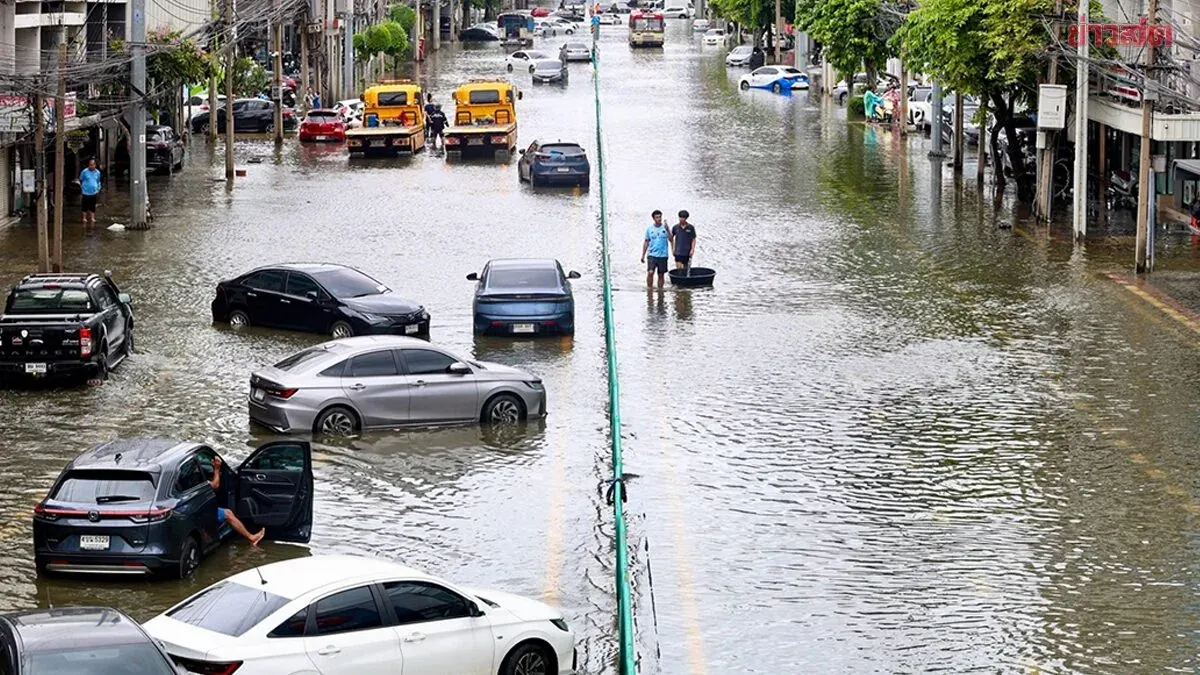
When asked about redirecting funds to address flood crises, Director Chindarat clarified: "The law clearly specifies the objectives of the emergency decree from the beginning, which were already approved by parliament. The law is our guiding principle, so we cannot reallocate budget to solve the flood crisis as proposed. Expenditure of borrowed funds must strictly adhere to the purposes defined by law."