Thailand Studies Floating Solar Power at Naval Base
Thailand is studying a 5-megawatt floating solar project at a naval base in Chachoengsao as it develops its new Power Development Plan to manage shifting electricity consumption patterns toward renewable self-generation. The project, launch
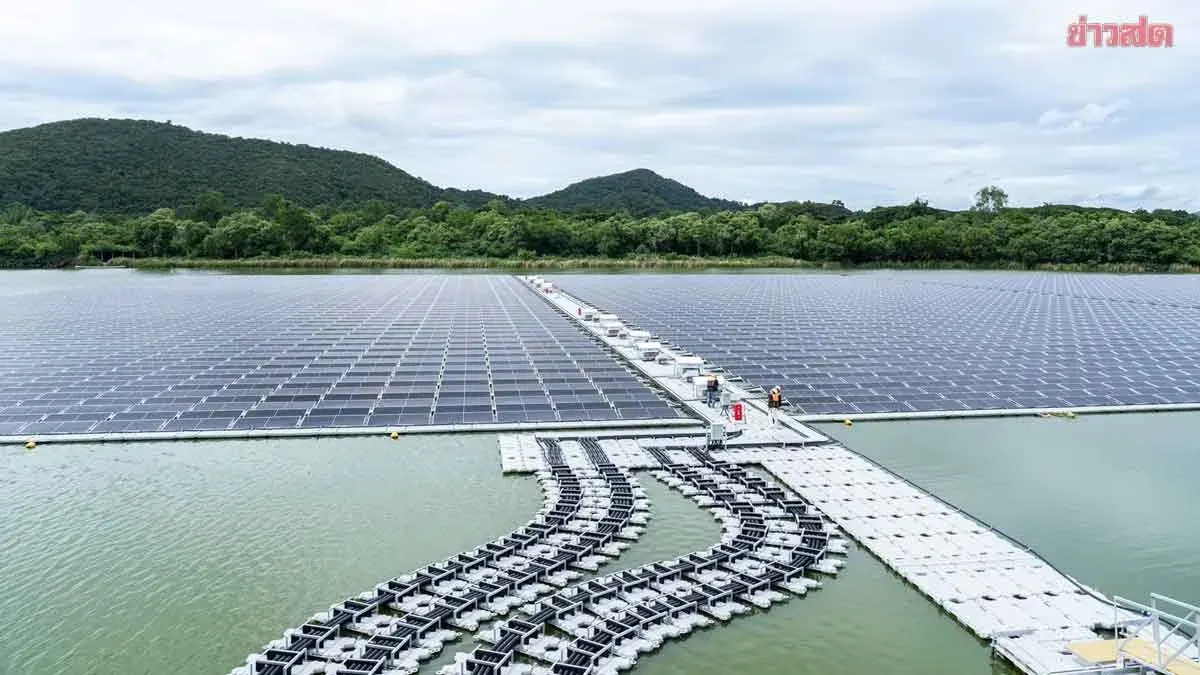
Watthana Pongkurawat, director of the Office of Energy Policy and Planning (OEPP), said he led executives, officials, and media on a study tour of a floating solar power project at Nong Kai Tia Reservoir at Satahip Naval Base in Chachoengsao province. The visit examined renewable energy generation for local on-site use, reflecting the changing patterns of electricity consumption that must be considered in developing Thailand's new Power Development Plan.
Thailand's electricity system faces changes in both technology and consumer behavior, shifting from dependence on centralized grid supply toward a future where organizations, businesses, and individuals generate renewable electricity for their own use. This transformation directly affects electricity demand forecasting, power generation planning, transmission systems, and appropriate reserve capacity levels.
The new Power Development Plan 2026 (PDP 2026) will provide a critical framework to advance Thailand's energy system with stability, reasonable costs, and increased clean energy, supporting the transition to a low-carbon economy and Net Zero goals by 2050. "The new plan must consider how electricity production and consumption patterns are changing as more users generate their own power, how demand from the grid shifts over time, and how to maintain stability and readiness during periods when renewable sources cannot generate," Watthana said.
The Satahip floating solar project is a collaboration between the Royal Thai Navy and PTT Public Company Limited with an installed capacity of 5.03 megawatts. The generated electricity feeds into the naval base's existing grid, with output managed to match local demand. Power generation is expected to begin in the first quarter of 2027 and could save approximately 6.35 million baht annually in electricity costs while reducing carbon dioxide emissions by roughly 82,000 tons over the project's lifespan.
Although the project operates outside direct government supervision, it serves as an instructive case study demonstrating trends in self-generated renewable power and localized energy management. It illustrates the relationship between distributed generation and the main grid, while highlighting the need to accelerate smart grid development and increase system flexibility to accommodate growing renewable energy in the future.
Following the site visit, participants attended a lecture on sea turtle conservation at the Royal Thai Navy Sea Turtle Conservation Center, then participated in releasing hatchlings back into the ocean to support marine resource restoration and ecosystem sustainability, demonstrating Thailand's commitment to environmental protection alongside energy security.