Land Department Teams With Utilities On Solar Rooftop Pilot
Thailand's Department of Land partnered with national utilities to install rooftop solar systems at 462 land offices nationwide, with an initial pilot of 100 offices targeted for completion by 2027 as part of the government's push toward ne
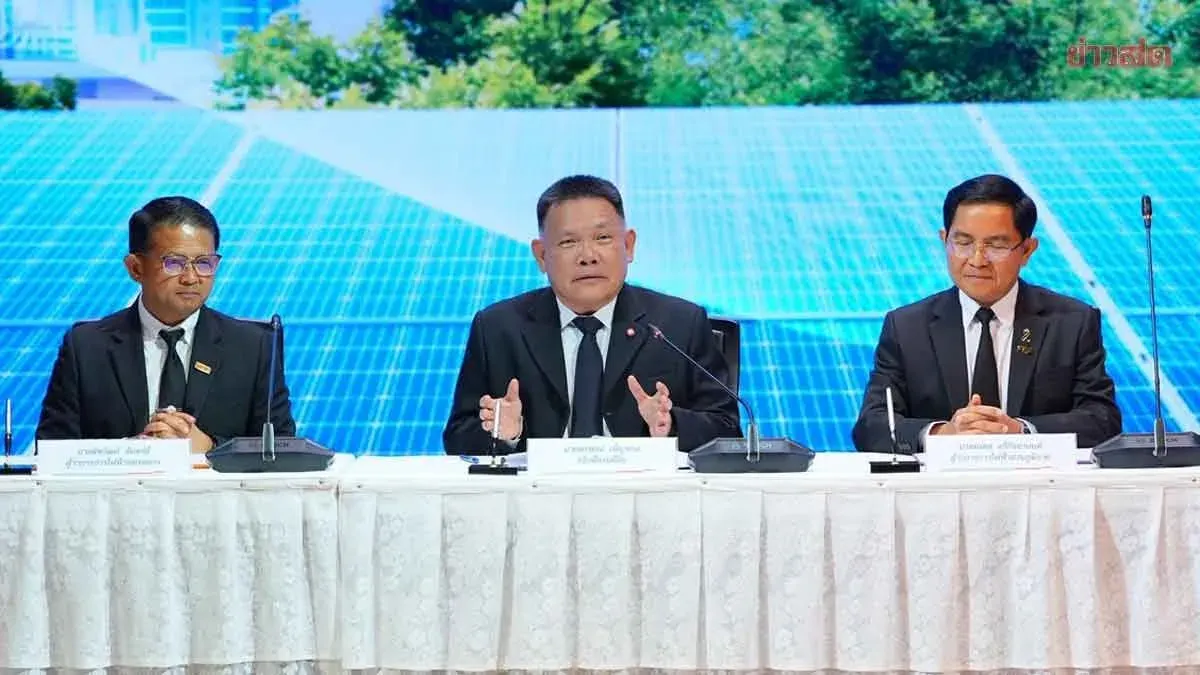
The Department of Land signed a memorandum of understanding with the Metropolitan Electricity Authority and Provincial Electricity Authority on September 22, 2025, to install rooftop solar systems across land offices throughout Thailand. The project is part of the Interior Ministry's "Action 5 Plus" policy framework, which aims to alleviate suffering, promote well-being, and improve quality of life across multiple dimensions including energy and environment, clean energy promotion, efficient use of public resources, and advancing Thailand toward net-zero emissions.
Department Director Pornpetch Penphas emphasized that the collaboration represents a fundamental shift in how land offices are managed, integrating public service delivery with efficient and cost-effective resource management. The department currently operates 462 land offices across 77 provinces, all requiring daily electricity for operations. Energy management is viewed not merely as cost reduction but as part of improving government efficiency and maximizing national resource benefits.
The department will work with the utilities to survey and assess the potential of each land office in terms of space, technical suitability, and cost-effectiveness. The first phase targets 100 pilot land offices for completion by 2027 before expansion to other offices nationwide. Results will measure electricity cost savings, reduced fossil fuel consumption, and decreased greenhouse gas emissions. Successful pilots will provide data to guide expansion to other offices systematically.
The director stated that future land offices will become "green land offices," demonstrating to the public that government can effectively use technology and innovation to manage resources efficiently, reduce costs, and take concrete environmental responsibility. Success at individual offices will be scaled progressively from one office to many, and eventually to departmentwide change.