Transport Deputy Pushes Dual-Track and High-Speed Rail Forward
Thailand's transport deputy inspected high-speed rail and dual-track railway projects in Nakhon Ratchasima, with Phase 1 of the Bangkok-Nakhon Ratchasima high-speed rail expected to open by 2574, cutting travel time to 90 minutes.
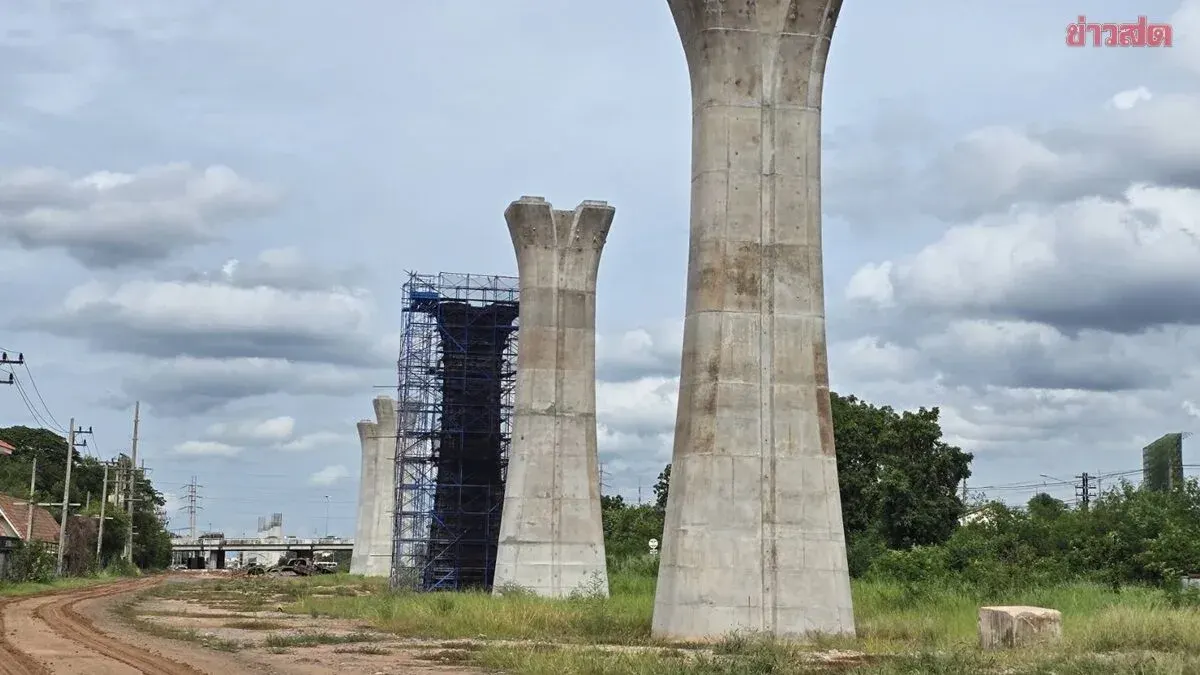
Deputy Transport Minister Siripong Angsakulkiattikul inspected progress on rail projects in Nakhon Ratchasima on August 21, 2569. He reviewed the Thailand-China high-speed rail project Phase 1 (Bangkok to Nakhon Ratchasima) and dual-track railway Phase 1 (Mab Ka Bao to Chum Thang Jira) and heard proposals and concerns from local authorities, joined by Watchraphol Tomornsakdit (Nakhon Ratchasima MP District 2), Manas Suwannarinthon (Deputy Governor), Yolada Wangsupkitjgosal (Governor), and government agencies.
Siripong said the inspection tracked key transport projects for Nakhon Ratchasima, following the trial opening of Highway M6 between cities, which has improved travel efficiency significantly. For the dual-track railway, construction is underway on multiple contracts with two remaining that need acceleration; it is expected to open around 2572. The Thailand-China high-speed rail Phase 1, despite delays beyond original plans, remains manageable and is forecast to open in 2574, reducing Bangkok-Nakhon Ratchasima travel time to about 90 minutes. Phase 2 (Nakhon Ratchasima to Nong Khai) procurement is expected within 2570, targeting a 2576 opening; when complete, travel from Nong Khai to Bangkok will take roughly three hours.
Delay causes include land acquisition and public complaints, particularly from Khok Krauat community, currently under negotiation. Once cleared, construction will resume normally. Contractors abandoning work will face legal action, while safety standards and contract management will be enforced to prevent individual contractor problems affecting the whole system.
MP Watchraphol submitted local concerns, especially over high-speed rail contracts 3-5 (12.8 kilometers), originally planned as a 7-kilometer earthen embankment but feared to harm drainage and divide the city. He requested the design be changed to elevated tracks. He also proposed the 100-rai Nakhon Ratchasima railway station area be developed as a transport hub rather than maintenance center to boost local economy and commerce. He further suggested coordinating with the Interior Ministry and local administrative bodies to resolve railway and electrical crossings, and to explore solar power systems due to frequent electrical equipment theft along the route affecting public safety and movement.
Siripong agreed to review all proposals.