Venerable Luang Pho Nge, Revered Monk of Ban Pai Tia
Luang Pho Nge, the revered abbot of Ban Pai Tia Temple in Samut Sakhon, died in 1968 after 34 years leading the monastery and becoming renowned for creating sacred amulets, particularly his famous Phra Somdej talismans.
Luang Pho Nge Pasatiko was the former abbot of Charoen Sukha Ram Monastery, popularly known as Ban Pai Tia Temple, in Samut Sakhon Province. Born in 1899 as Nge Rong Thong, he ordained at Ban Pai Tia at age 35 and studied Buddhist scripture under Luang Pho Khlaai at Silam Mool Temple before pursuing advanced Dharma studies at Don Khodsit Aram Monastery, where he befriended several eminent monks.
Ban Pai Tia Temple was founded around 1905 on land donated by the Pun-Udom and Milavonn families, situated along Khlong Ma Hawn canal in Samut Sakhon. The temple progressed through several abbots—Luang Pho Lao, Phra Ajarn Phlian, and Phra Ajarn On—before Luang Pho Nge was invited to lead the monastery following Phra Ajarn Ot's death. Although initially reluctant due to his affiliation with the Dhammayuttika Nikaya sect, the local community's strong faith and the practical arrangement between different Buddhist sects convinced him to accept the position.
After becoming abbot, Luang Pho Nge dedicated himself to developing the temple, rebuilding the main ordination hall with teak wood to replace the deteriorating structure, and providing spiritual guidance to the community. He served until his death on Monday, 4 November 1968, which coincided with the full moon day of the twelfth lunar month and Loy Kratong Festival. He lived 69 years and spent 34 years in monastic life.
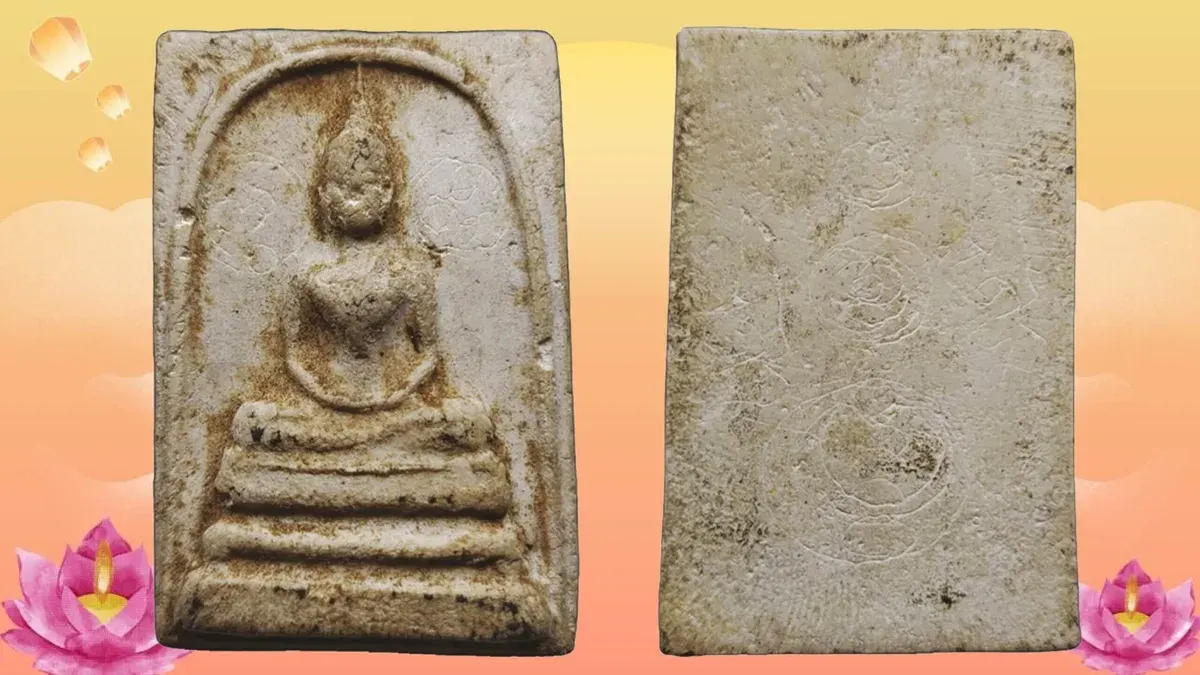
Luang Pho Nge became renowned for creating sacred amulets and talismans over many generations, most famously the first edition of his "Phra Somdej" amulets, produced around 1965. These square-shaped amulets contained white sacred powder made from a blend of special powders and hand-ground materials, distributed to temple donors. The front features a three-tiered Phra Somdej base design with characteristic Mon script inscriptions, while the back is smooth with Mon script text.