WHA Plans 2,000-Rai Data Center Park to Boost Thailand's AI Hub Ambitions
WHA Corporation plans to develop a 2,000-rai data center park in Thailand's Eastern Economic Corridor to transform the country from an AI user into a regional AI hub, requiring coordinated government planning on power capacity and industry

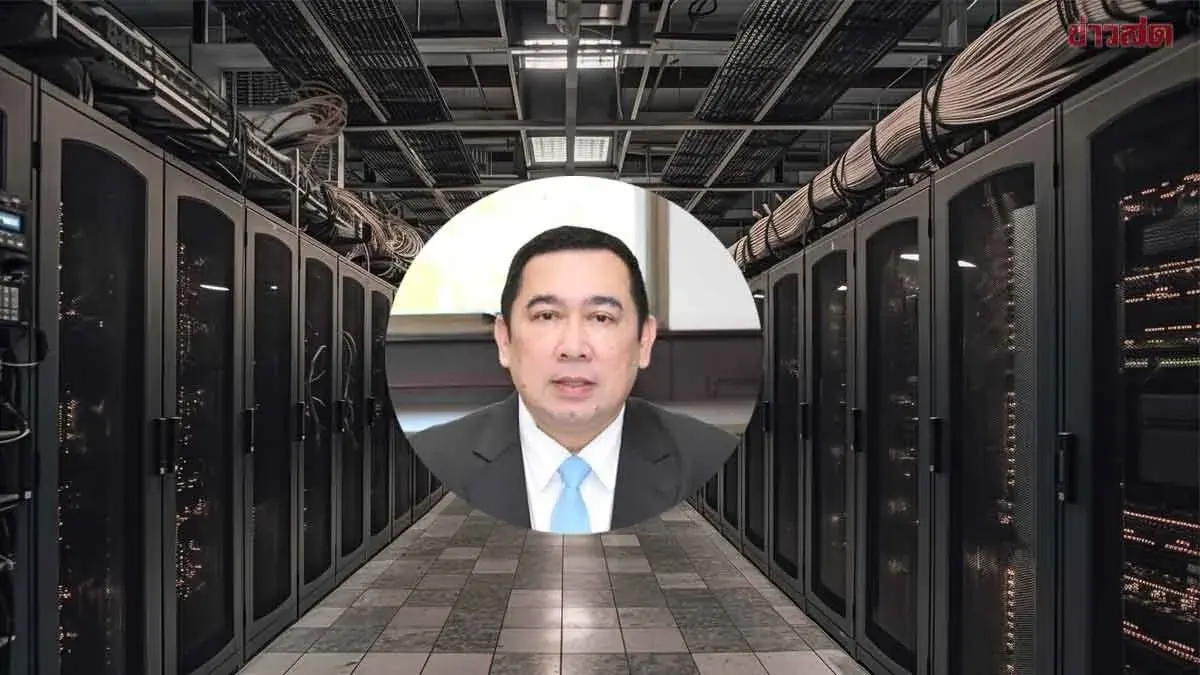
Jiraporn Jarukornsukul, chairman and CEO of WHA Corporation, says data centers are critical infrastructure for Thailand's digital economy. To transition from an AI user to an AI hub, Thailand needs hyperscaler data centers backed by long-term energy planning and a 1,000–2,000-rai data center park.
Jarukornsukul noted that Thailand is in the early stage of data center investment compared to the US, Singapore, and Malaysia, making it a critical moment to establish a clear growth framework from the start. She called on the government to avoid unlimited data center approvals but instead determine how many facilities Thailand should support, what power capacity they require, and how projects will benefit the Thai economy through supply chain development, cloud services, circular economy models, and linkages with other industries.
"Data center is infrastructure for the digital economy," she said. "If Thailand wants to grow in AI but lacks data centers—especially hyperscaler facilities—progress will be difficult. We need to decide whether Thailand will be merely an AI user or develop into an AI hub."
Jarukornsukul also supports requiring investors seeking data center permits to post bank guarantees if they reserve power that goes unused, preventing power hoarding without actual investment. She called for transparent energy cost management, particularly for gas and LNG, to help businesses plan costs.
WHA is developing a mixed industrial cluster on land in the EEC in Chon Buri-Rayong and additional sites in Saraburi that can accommodate data centers, automotive, and semiconductor industries. The company is studying a 1,000–2,000-rai data center park with integrated ecosystems including data centers, supply chains, training centers, water, power, and clean energy systems to serve long-term investor needs.
Currently, WHA has data center clients awaiting government regulatory clarity after the company suspended negotiations for several months. Closed data center land sales in Thailand total approximately 900–1,000 rai, with 2025 sales targets for Thailand and Vietnam combined set at about 2,500 rai. If the government issues guidelines on schedule, Jarukornsukul believes stalled deals will resume and additional sales are possible this year.
Regarding long-term energy solutions, Jarukornsukul noted that data center growth increases energy demand, requiring coordinated planning of generation capacity, transmission lines, and substations. Short-term solar and energy storage can help, but long-term WHA is eyeing Small Modular Reactors (SMRs) for stable, clean power to support energy-intensive industries. However, SMRs remain in early stages with high costs and require further technology development.