Young Weavers Keep Karen Craft Alive at Doi Tao
Young Karen weavers in Doi Tao District, Chiang Mai, are preserving their community's centuries-old textile tradition through handmade cotton cloth and colorful patterned sashes, with children learning the craft from childhood and creating
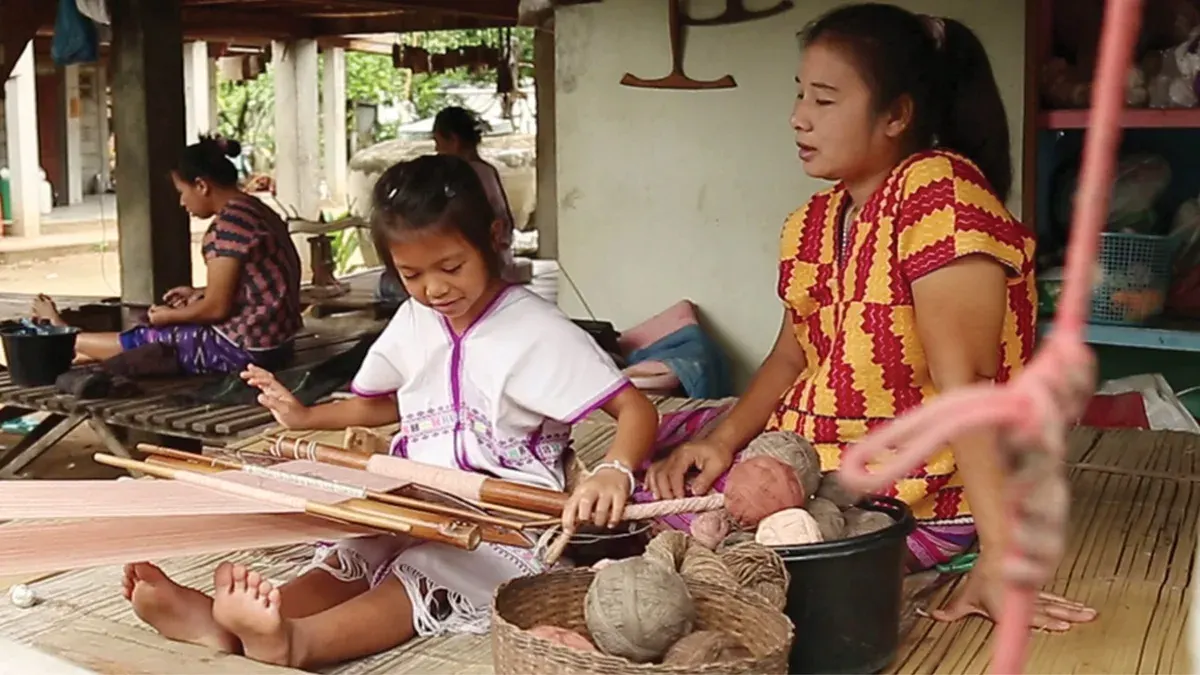
The Karen Phlop community in Baan Lai Gaew village, Doi Tao District in southern Chiang Mai, is a remarkable handicraft village known for weaving.
The garments produced there follow a remarkable journey: cotton is planted during the rainy season, and once the bolls mature and burst open, they are dried and fluffed before being spun into thin thread. The yarn is then dyed using natural dyes discovered long ago, producing a variety of colors. The dyed cotton is woven into cloth before being cut and sewn in the final steps.
All clothing and daily-use items come from handmade work, reflecting high self-reliance. Historically, Doi Tao was a remote, isolated community far from urban development, but the Karen Phlop people possessed inherited handicraft skills passed down through generations.
Young children, especially girls, grow up watching their mothers weave daily and gradually absorb and practice the craft from childhood. Children often begin with small woven pieces that resemble toys, then progress to small child-sized sashes. As they grow older, most can weave basic cloth patterns.
Children often weave simple sashes for themselves or ask their mothers to stitch them into small shoulder bags, a practice that sparked one of the village's most consistently bestselling products. Small, charming patterned bags represent the top-selling item from the Karen Phlop Baan Lai Gaew weaving group throughout every era. One such bag is called the "Jub Jib sash," which carries a delightful backstory.
At age eight, a girl named Jub Jib learned to weave with her mother's help creating small patterns. After cutting and sewing, her father, who sold woven products at various market booths, took the bags to sell. The young girl's handiwork attracted interest, and orders followed. Proud and encouraged by the attention, Jub Jib continued weaving sashes bearing her name. Years later, as she grew into a young woman, the Jub Jib sash remained highly sought after.
While mothers work on large, intricate cloth pieces, the younger generation learns weaving through small sash projects. Teenagers in the community express their creativity through their own designs, producing crafts that have garnered significant attention. Examples include dolls of Karen Phlop boys and girls, elephants, rabbits, and wild boar—crafted from fabric scraps left over from sewing and transformed into entirely new products.
When traditional wisdom walks hand in hand with design, craft is no longer merely heritage from the past; it becomes a language of the future that people worldwide understand together. Importantly, young people are carrying forward the value of finely made, beautiful, and genuinely nature-friendly handwork. The community—members of many generations and ages—are collectively building their community's future, keeping Karen Phlop weaving alive, and continuously advancing their creative economy.
The Jub Jib sash stands as a testament to this charming and admirable craft movement. Discover Baan Lai Gaew village and the young people creating their community's economy. Follow the story in the Thung Saeang Tawan series featuring Karen Phlop at Doi Tao on Facebook and YouTube at payaiTV.