Deputy PM Outlines Four Economic Challenges Facing Thailand
Thailand's Deputy PM identified four major economic challenges: geopolitical tensions between the US and China, rapid AI advancement, environmental weaponization in trade, and labor shortages from an aging population. He urged businesses an
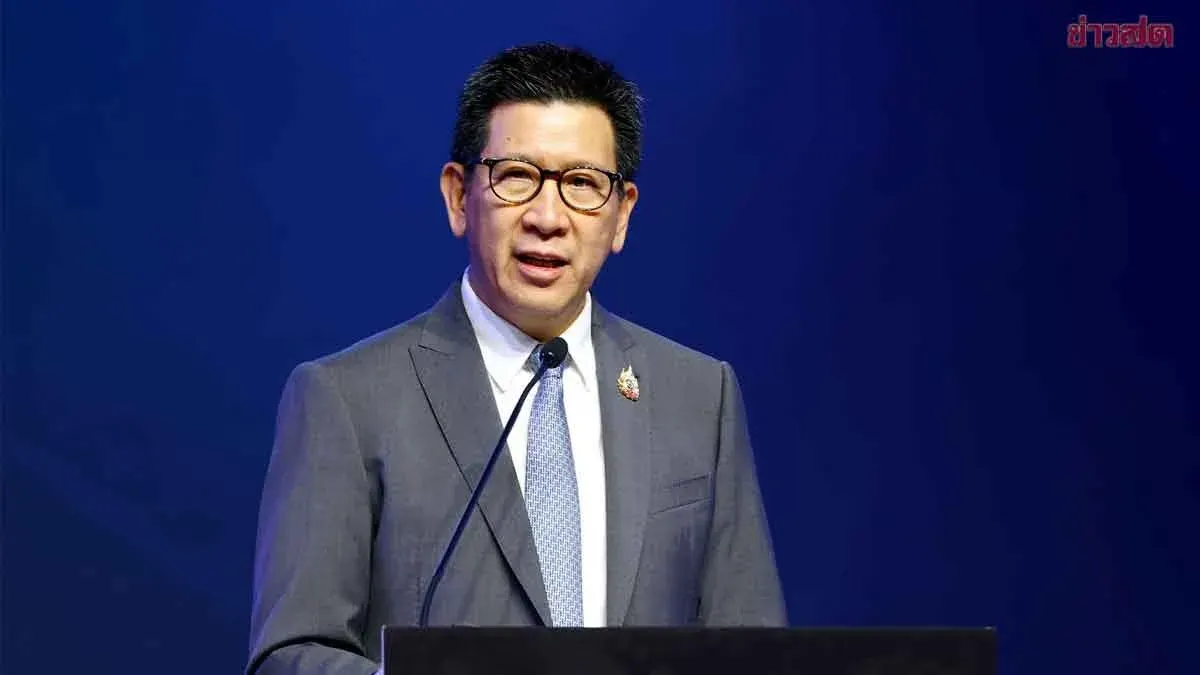
Deputy Prime Minister and Finance Minister Eaknarit Nitivattananond delivered a special address on Thailand's economic transition and new challenges facing the justice system, identifying four major global economic challenges: First, geopolitical and geoeconomic tensions arising from clear world polarization between the United States and China, forcing many countries to choose sides in trade negotiations—such as the 12.5% import tariff the US imposed on Thailand over forced labor concerns. Second, artificial intelligence technology, which represents an industrial revolution faster and larger than the internet age. Third, environmental issues now being weaponized as pretexts for trade and investment barriers, alongside energy price crises from global conflicts that may mean cheap oil prices never return. Fourth, Thailand faces labor shortages as the country enters an aging society with negative birth rates, forcing reliance on workers from neighboring nations.
To address these crises, Eaknarit said Thailand must accelerate transformation across multiple fronts. On geopolitics, Thailand must maintain neutrality to attract investors while selecting only quality investment partners. On technology, Thai businesses must embrace the AI era—citing the "Thailand Helps Thailand Plus" project, which uses AI tools to help small traders automatically analyze sales and costs. On energy, Thailand must transition to clean energy to buffer against global price volatility, as the country currently imports 65% of its natural gas and petroleum needs.
Eaknarit stressed that these global shifts have particular importance for judges, especially in specialized appellate courts, as increased foreign investment and labor will generate complex international cases. The rise of AI has spawned technology crimes such as deepfake fraud—using AI to fake faces and voices to deceive the public. He called on judges to adopt AI as an analytical tool for examining case data and detecting contradictions in rulings, though they must remain technologically savvy. If courts understand the global context, support the transition, and decide cases with awareness of these changes, they will strengthen confidence in Thailand's economy.
"You will see many fraud cases involving AI technology. I myself was recently targeted by an AI deepfake pretending to be me, trying to lure me into an investment—I reported it recently. The face and voice were very similar, but not identical. If you know the real person, you can tell the difference," Eaknarit said.