Thailand Transforms Science Museums Into Lifelong Learning Hubs
Thailand is transforming science museums from traditional exhibition spaces into lifelong learning platforms to address global challenges like climate change and technological advancement. Deputy Secretary General Supachai Patumnakuland emp
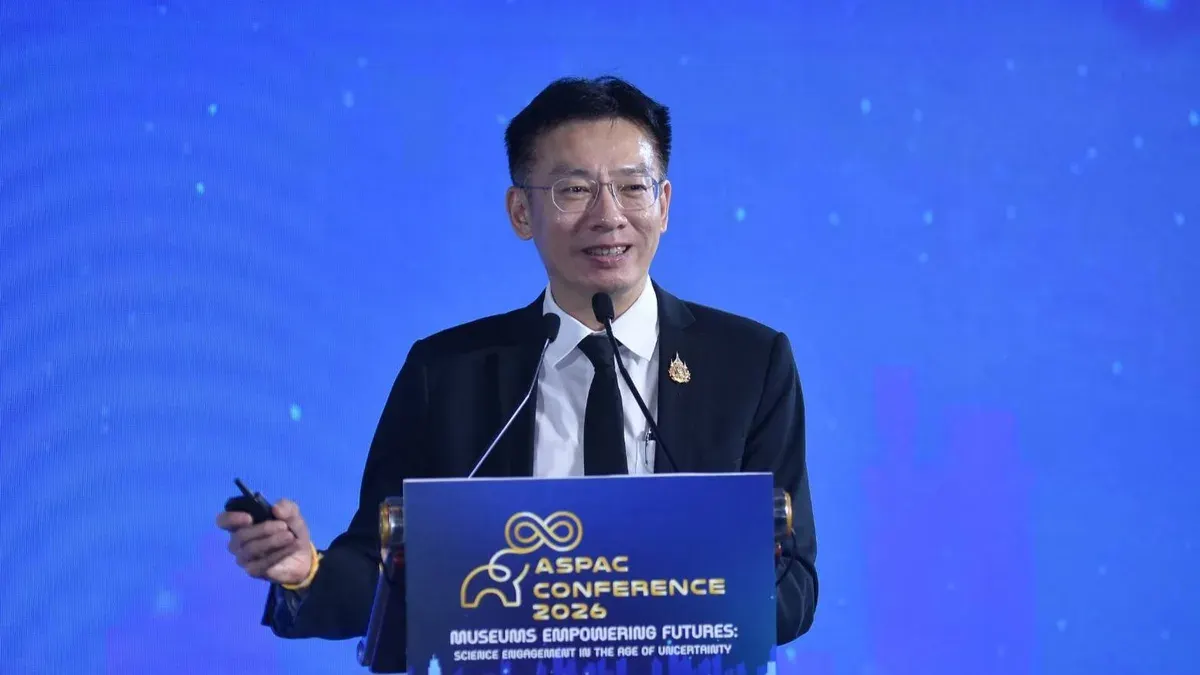
On August 19, Supachai Patumnakuland, Deputy Secretary General for Higher Education, Science, Research and Innovation and chairman of the National Science Museum board, delivered a keynote address at the Asia Pacific Network of Science and Technology Centres Conference 2026 (ASPAC 2026). His speech, titled "Empowering Future Generations: The Role of Science Museums in Building Resilient and Sustainable Societies," was held during the National Science and Technology Festival at the IMPACT Exhibition Center in Muang Thonburi.
Supachai emphasized that science museums must evolve to meet modern global challenges including climate change, demographic shifts, geopolitical tensions, and rapid technological advancement. He stressed that learning can no longer be confined to formal education systems but must embrace lifelong learning as a fundamental national infrastructure under Thailand's 14th National Economic and Social Development Plan (2028–2032). He noted that without improving human capital—knowledge, skills, and adaptive capacity—technology cannot achieve sustainability.
"We can no longer operate science museums in their traditional form as mere exhibition venues," Supachai said. "We must transform them into platforms for lifelong science learning within an ecosystem of science, technology, and innovation that shows the public that science belongs to everyone and can be applied to everyday life."
He outlined five key roles for future science museums: (1) building scientific literacy and providing out-of-classroom experiences for children and youth; (2) serving as lifelong learning platforms for all ages, supporting upskilling and reskilling; (3) fostering future literacy and skills through inspiration spaces such as the Futurium, which opens doors to future careers; (4) developing innovative tools using emerging technologies like AR and VR to enhance and democratize learning experiences; and (5) creating inclusive learning ecosystems through media, learning kits, and digital channels to reduce inequality and extend knowledge to remote communities.
Science museums must also bridge the gap between the public and the scientific community to build trust and shared understanding in science.