Ayutthaya-Era City Wall Unearthed in Korat
Archaeologists in Nakhon Ratchasima have uncovered Ayutthaya-era city wall remains buried over two meters underground, the first such discovery in the province in 20 years.
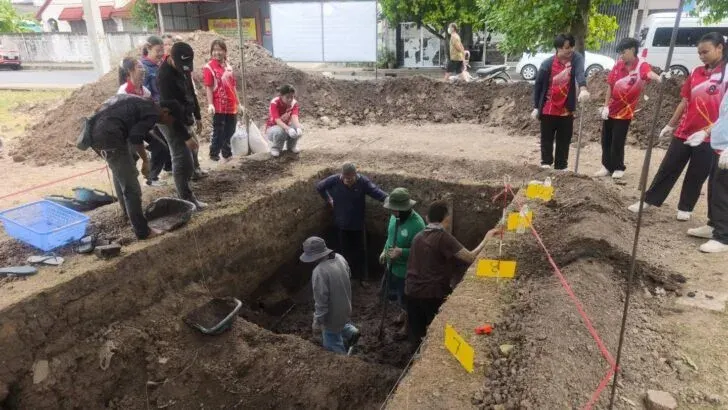
NAKHON RATCHASIMA — Archaeologists have uncovered remains of an Ayutthaya-era city wall in Nakhon Ratchasima, marking the first such discovery in the province in two decades. The find was made during an archaeological excavation along Phon Lan Road on the eastern side of the historic city wall, with the project being carried out jointly by the Fine Arts Department's Regional Office 10 in Nakhon Ratchasima and the Nakhon Ratchasima Municipality.
Official sources said the wall was found more than two meters below ground level and represents a significant archaeological breakthrough for the area. Nakhon Ratchasima, commonly known as Korat, has long been regarded as one of Thailand's most heavily fortified historic cities, with a carefully planned layout that included moats, fortifications, gates, and watchtowers.
Archaeologists believe the original city wall began as an earthen embankment constructed during the reign of King Maha Chakkraphat of the Ayutthaya Kingdom, with brick fortifications later added during the reign of King Narai the Great. Historical records indicate the city wall stretched approximately 1.7 kilometers from east to west and about 1 kilometer from north to south, with a wall crest measuring around 2 to 3 meters in thickness. Officials said further studies will be conducted to better understand the structure and its historical significance.