Bangkok Governor Apologizes After Official Yells at Elderly Flood Victim
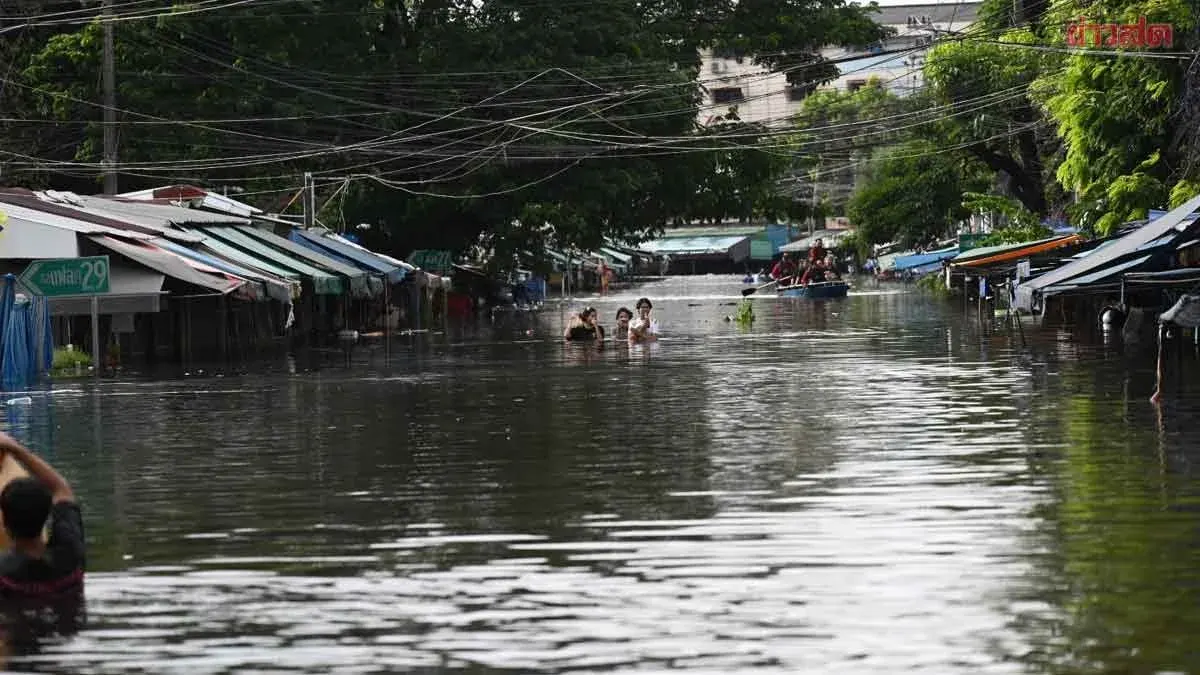
Bangkok Governor Chadchat Sittipunt apologized after a government official shouted at an elderly flood‑relief applicant, prompting him to order staff to speak politely and consider using students to help with registration. He also outlined ongoing flood‑response measures, including pumping operations in Ladkrabang-Ramkhamhaeng and cleanup work at Chan Canal, while noting that expected rain should not worsen the situation.
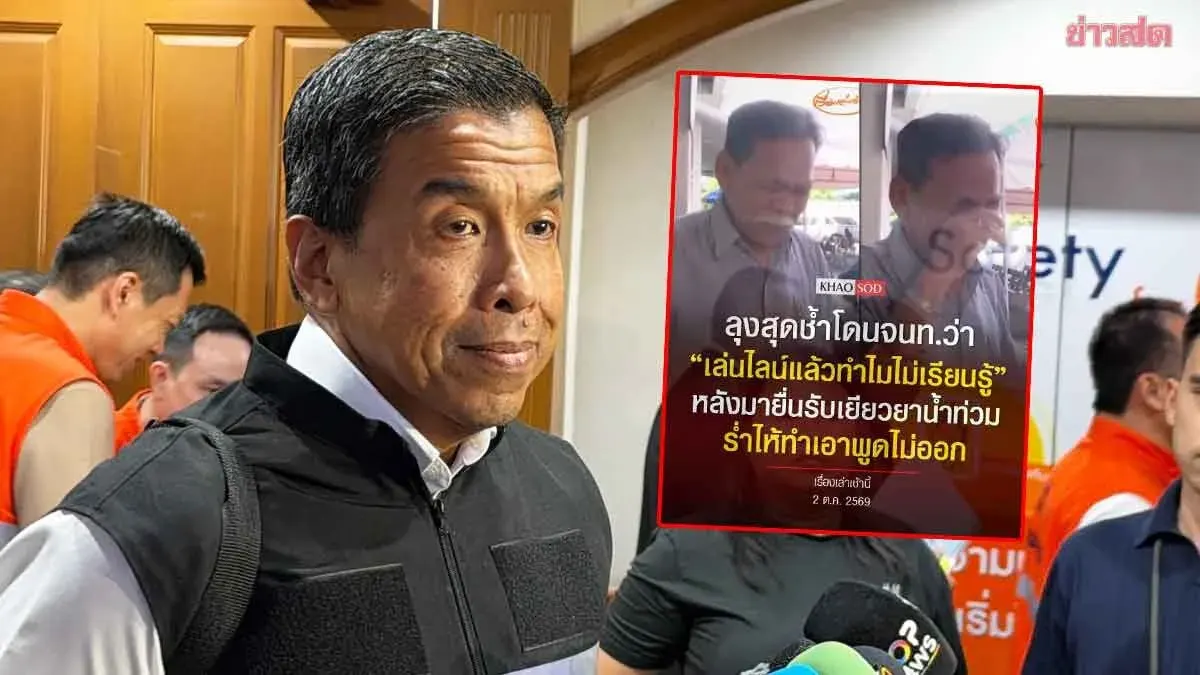
At 10:50 a.m. on October 3, 2069 (2026 CE) at the Department of Disaster Prevention and Mitigation, Bangkok Governor Chadchat Sittipunt addressed the case of an elderly man who cried after being scolded by a state official for not understanding how to register for flood relief through the online system. He said he had already instructed staff to speak kindly to the public and to avoid such incidents. ‘I must apologize to my fellow citizens if we have done something wrong; it may be due to discrepancies, misunderstanding of information, or behavior. Please help the public as best as you can,’ Chadchat said. When reporters noted that the registration process is complicated, causing many elderly people to enter data incorrectly, Chadchat replied that assistance is needed, suggesting that shelter staff could help. He added that officials have many responsibilities caring for flood‑affected people, so he ordered them to consider enlisting outside help, such as students and volunteers, who could ease the registration workload. He explained that in the first phase, people would need to complete two registrations: the government’s relief registration and a damage‑assessment registration, which is complex because of the various damage types. Therefore, maximum convenience must be provided to the public. Asked about water levels in Ladkrabang-Ramkhamhaeng after the city tried to bring in extra drainage pipes, Chadchat said there are about 16 permanent pumps around Ladkrabang that had previously failed due to flooding but have mostly been repaired. Four additional suction pipes will be deployed, starting to pump on October 2 and continuing into the morning of October 3, lowering the water by about ten centimeters. At night the pumping is reduced because the noise would disturb residents, but operations will continue and more equipment will be installed gradually. Initially the drawdown will be slow because the area is large, but as water recedes the rate will increase. Regarding the forecast rain of 30 mm expected from October 4 to 10, Chadchat said the amount is not area‑specific and, compared with the water already removed, should not cause major problems, since the rain will not fall continuously all day. When asked when residents would be able to move freely again, he said he would assess the situation that day, but his team estimates two to three days before noticeable improvement, while efforts must continue. He noted that cleaning work had already been done at Chan Canal, but several villages in Saphan Sung district—such as Muang Thong Garden and Phuekchat Village—still face difficulties because water enters but is hard to drain, and work is underway to resolve those issues. Regarding criticism of the ‘monkey cheek’ flood‑control project and whether it discourages him, Chadchat replied that he is fine, will explain the project, and believes its merits and drawbacks can be clarified. He admitted he initially felt uneasy because the project was linked to a royal initiative, but later learned it is unrelated; it is a Bangkok‑devised scheme from the six major flood projects, four of which have been canceled after reevaluation showed better alternatives. He described this as an academic approach, adding that readers can consult the details themselves.