Elderly Man in Tears Over Flood Relief Denial Sparks Outrage
A 66‑year‑old man was reduced to tears after officials scolded him while he sought flood relief in Bangkok, sparking public outcry. Critics argue the incident reveals a relief system that overly relies on online registration, leaving many elderly and low‑income people unable to access aid. The Bangkok governor has apologized and pledged to improve the system, including sending officials to shelters and enlisting students to help with online applications.
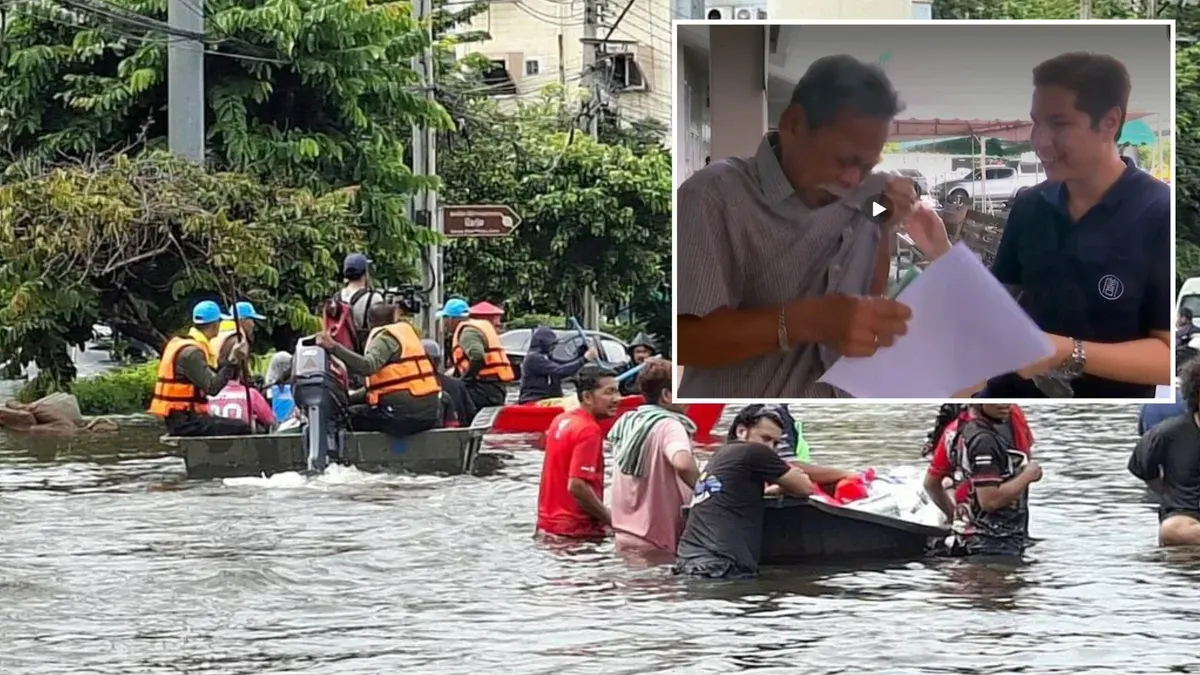
The image of an elderly man walking through floodwater to hand in relief paperwork, only to be rebuked by officials until he broke down in tears, has become a dramatic and widely debated scene. While the incident may stem from a communication breakdown between officials and the public, it should not be reduced to the misconduct of a single officer. Behind it lies a larger issue: the public’s access to government assistance remains inadequate for many groups. Current relief registration depends almost entirely on an online system that requires filling out multiple forms, using a smartphone app, and understanding how to navigate it. Yet many older people are not comfortable with technology, some struggle to read or complete the forms, and low‑income individuals may lack the necessary devices or internet connection. When the online channel is the main way to claim benefits, those who cannot access it must travel to offices in person, which is understandable rather than blameworthy. It is the state’s duty to make it easy for everyone to claim their entitlements, especially during floods when countless households suffer property loss, travel difficulties, and interrupted income. Seeing seniors wade through water to reach government offices reflects their determination to protect their rights, not an intention to burden officials. Officials certainly face heavy workloads and may feel stressed or make communication errors, but job fatigue does not justify criticizing people who are already distressed and unfamiliar with technology. The Bangkok governor’s apology, his order to improve the relief system, the proposal to send officials to shelters to assist the elderly, and the idea of recruiting students to help with online registration are steps that should be taken seriously. The controversy is not merely about improper conduct by officials; it is about whether the state’s relief system was designed only for tech‑savvy users or for all citizens. Government workers must recognize that those seeking aid are not asking for charity but exercising their rights. Courtesy, patience, and empathy are not beyond their duty; the state exists to help, not to add to the suffering of those already in hardship. Policymakers need to reconsider whether assistance could be made simpler, because a good system should not force the elderly or the poor to tears simply because they cannot use technology.