Bangkok Launches Dengue Vaccine Program for Grade 4 Students
Bangkok has launched a dengue vaccine program for Grade 4 students in five high-risk districts, targeting 1,132 students with the goal of vaccinating at least 80 percent to reduce infection risk and hospitalizations.
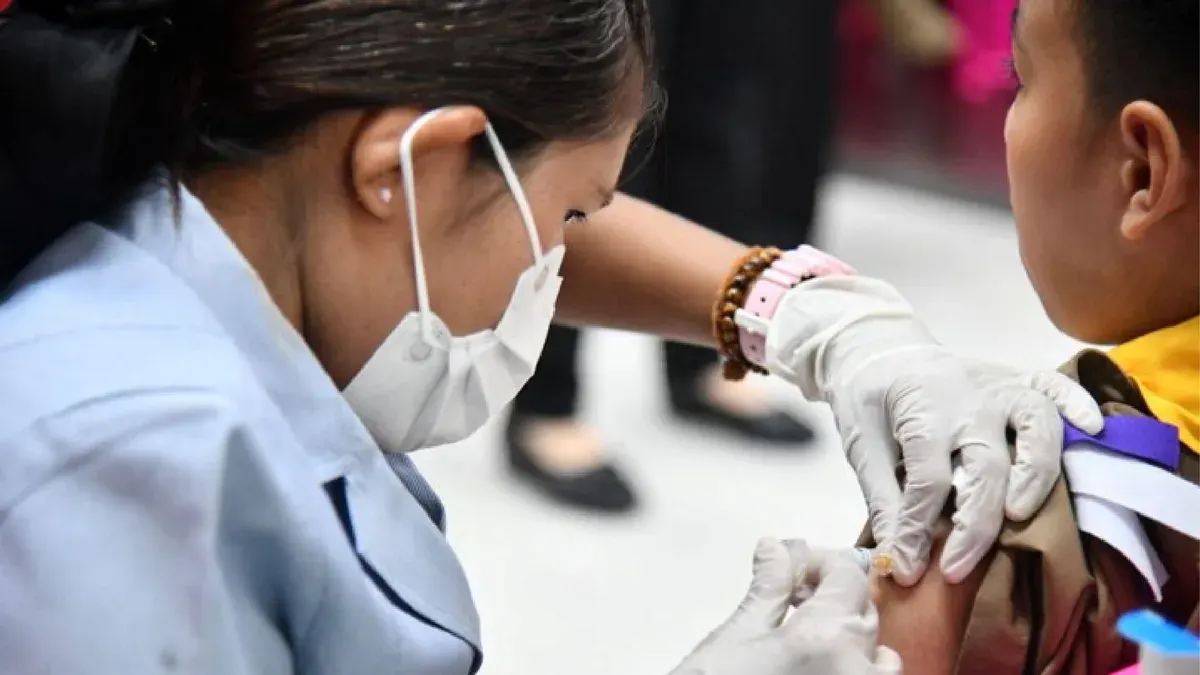
Though dengue fever is familiar to many, it continues to affect Thais, particularly school-age children who show high infection rates. Adults, the elderly, and those with chronic conditions face greater risk of severe illness and death if infected. Prevention should not wait until people fall sick but must start with mosquito breeding-site elimination, bite prevention, and vaccination.
From January 1 to August 19, 2025, Thailand recorded 21,620 dengue cases with 31 deaths, while Bangkok had 1,785 cases and 4 deaths, showing that disease prevention remains a continuous priority.
To strengthen disease prevention, the Bangkok Department of Health launched a "Dengue Fever Immunity-Building Program for Grade 4 Students" in the 2025 academic year. The pilot covers 40 schools under Bangkok administration in five high-risk districts experiencing repeated outbreaks: Khlong San, Thonburi, Bangkok Yai, Bang Kholaem, and Din Daeng.
The program targets 1,132 Thai-nationality students, with a goal of vaccinating at least 80 percent with complete vaccine courses. Medical personnel will administer the vaccines and monitor safety and outcomes.
Associate Professor Twida Kamalvet, Bangkok Deputy Governor, said the city takes dengue surveillance seriously because infection impacts children's school attendance, adults' work, and family finances. School-age children show particularly high infection rates. The dengue vaccine complements existing prevention measures and can reduce infection risk and hospitalizations by 80–90 percent. Those interested should consult a doctor for individual suitability assessment.
"This program isn't just about vaccination numbers," she said. "We'll track ongoing results, safety, cost-effectiveness, and build awareness among parents, teachers, and children. If outcomes meet targets, Bangkok will consider expanding to all 50 districts to improve public access to prevention."
To contain the dengue mosquito effectively, Dr. Naphatchol Thanasatthi, Deputy Director of the Bangkok Department of Health, emphasized that prevention requires multiple measures: reducing breeding sites, educating parents and teachers, and vaccination—aligned with WHO guidelines.
The pilot selects areas with repeated outbreaks, and Grade 4 students are the target group because they show the highest infection rates. School-based delivery enables systematic communication, consent, vaccination scheduling, and follow-up.
Children in the program receive complete vaccine courses per medical guidance and are monitored for dengue infection to evaluate results and inform future program expansion.
While vaccination is critical, dengue prevention requires everyone's cooperation. Bangkok communicates a simple three-step approach: "Born–Bitten–Boosted."
Born – prevent mosquito breeding by managing garbage and standing water, tightly sealing water containers, and using sand.