Thailand Think Tank Launches Tech Sovereignty Debate With India
A new Thai think tank launched by Dr. Suthikorn Kingkaew held a roundtable with Indian experts to explore which technologies Thailand should develop domestically versus source globally, balancing strategic autonomy with international partne
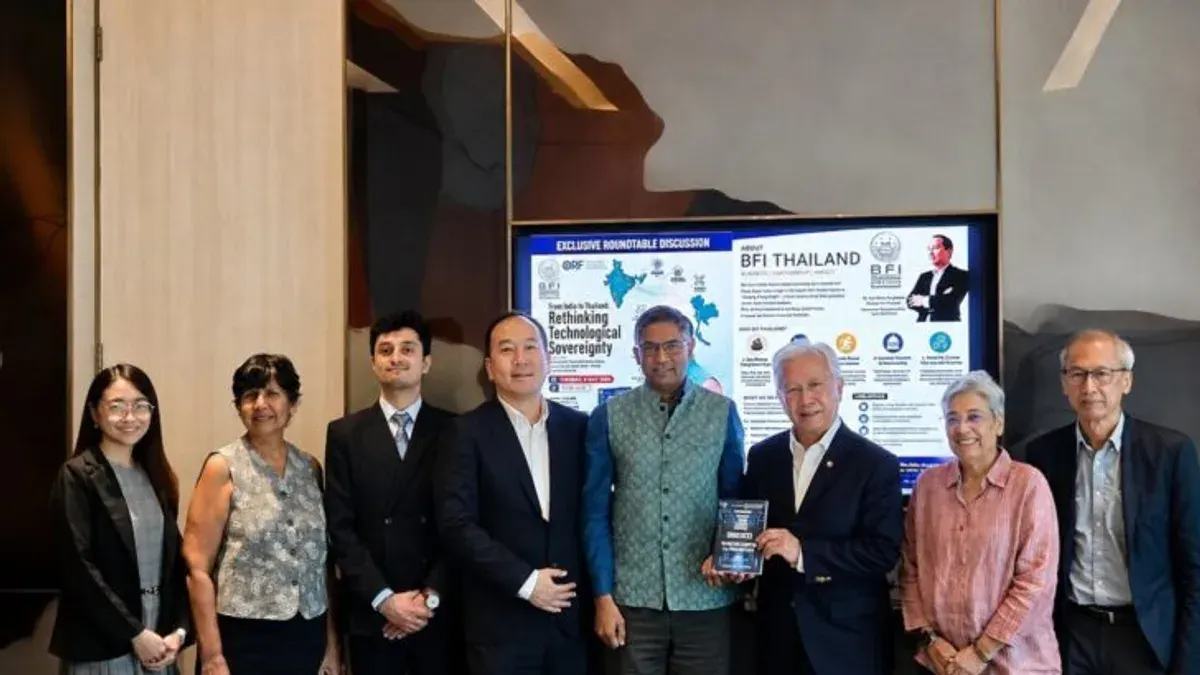
Bangkok, August 18, 2026 — The Boiling Frog Institute Thailand, founded by Dr. Suthikorn Kingkaew, has launched as an independent think tank focused on addressing Thailand's long-term structural challenges before they deepen into economic and social crises. Dr. Suthikorn, who in March 2017 warned that Thailand risked gradual loss of competitiveness in manufacturing sectors including automobiles, textiles, and hard-disk drives, now leads the institute under the principles of "Bridging, Framework, Impact" — connecting sectors, developing practical problem-solving frameworks, and translating ideas into change.
As a flagship initiative, the Boiling Frog Institute Thailand held an exclusive roundtable discussion titled "From India to Thailand: Rethinking Technological Sovereignty" with Indian strategic thinker Pranjal Sharma and senior Thai representatives from government, diplomacy, business, and academia, including Dr. Kanok Wongtrangarn, Advisor to the Minister of Industry, and Navodit Verma of the Indian Embassy. Rather than pursuing technological self-sufficiency, the discussion examined which technologies Thailand must own, which it should co-develop, and which can be safely sourced from trusted global partners — focusing on how countries can preserve strategic choices while strengthening domestic capabilities and remaining globally connected.
The roundtable reflects a collaboration between the Boiling Frog Institute Thailand and India's Observer Research Foundation, a leading think tank. Both Dr. Suthikorn and Pranjal Sharma are ORF Fellows. Sharma's 2026 book, "India Innovates: Technological Sovereignty in a Weaponized World," examining India's efforts to reduce dependence on foreign technologies that could become strategic vulnerabilities, served as the discussion's foundation. The book's concept of technological sovereignty extends beyond artificial intelligence to encompass data and computing across sectors.