BOI Unveils 2027 Investment Criteria Linking Tax Breaks to Local Content
Thailand's Board of Investment (BOI) has approved new 2027 investment criteria that tie additional tax incentives to local content usage and Thai employment levels, particularly for EV and electrical appliance sectors. The measures include higher minimum investment thresholds for large manufacturers, enhanced support for Thai SMEs, and an expanded Thailand FastPass system covering 12 government agencies to streamline approvals.
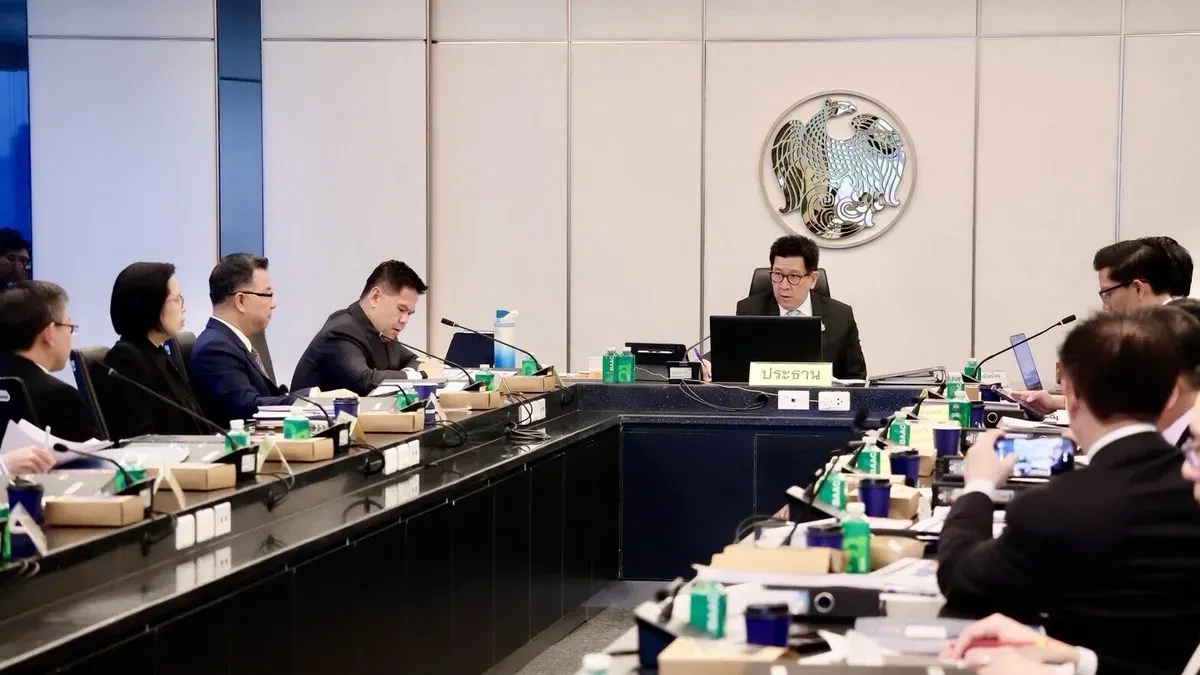
The Board of Investment (BOI) will apply new criteria to applications from January 2027, targeting the EV and electrical appliance sectors by granting additional tax incentives based on the proportion of domestic raw materials used and wages paid to Thai workers. BOI Secretary-General Narit Therdsteerasukdi said the board meeting on November 27, 2026, chaired by Deputy Prime Minister and Finance Minister Ekkakit Nitithanpraphas, approved three initial measures to redirect investment promotion. These accompany efforts to accelerate large-scale projects into actual investment in 2027 and expand the Thailand FastPass system to cover more approval and licensing agencies. "Future investment promotion will measure success by the value projects create for Thailand, not merely the number of projects or investment value," Narit said.
EV and electrical appliance projects that meet the criteria will receive additional tax exemptions. The BOI will reduce the basic incentives for EV and parts businesses, as well as electrical appliance and parts businesses, by granting an extra one-year corporate income tax exemption if domestic raw materials and parts reach a set threshold and obtain Made in Thailand (MiT) certification from the Federation of Thai Industries. The threshold for EVs and electrical appliances is set at 40-45% of total raw material value, while key components (e-Parts) must reach 15%. Another condition grants an additional one-year tax exemption if wages paid to Thai personnel collectively account for no less than 70% of the company's total wages, with compliance required within three years from the first revenue date.
The BOI also opened promotion applications for Thai SMEs investing at least 500,000 baht in nine designated industry groups: agriculture and food, bio-industry, medical, automotive and parts, electrical appliances and electronics, machinery, metals and materials, paper and packaging, and light industry. Applicants must have Thai natural persons holding at least 51% of registered capital and be registered with SME One ID at the Office of Small and Medium Enterprises Promotion (OSMEP). Qualified SMEs receive an additional two-year corporate income tax exemption beyond standard criteria, with relaxed conditions on debt-to-equity ratios and the use of used domestic machinery. Simultaneously, the board appointed a subcommittee to coordinate relevant agencies on proposals to help Thai SMEs access markets, technology, funding, and supply chains of the seven target industries.
For large-company manufacturing, the minimum investment threshold rises from 1 million to 20 million baht, after the previous threshold had been in place since 1993. Data from the past 10 years showed projects under 20 million baht accounted for about 13% of project numbers but only 0.38% of total investment value. The new threshold applies only to large-company manufacturing.
The board approved an expanded measure to stimulate investment in 2027: projects with actual investment within one year of receiving their promotion certificate can deduct 50% of corporate income tax for three years, on top of standard incentives. Actual investment must be at least 40% of the approved project value and reach 2 billion baht, excluding land cost and working capital.
Thailand FastPass partners increase from 8 to 12 agencies, adding the Immigration Bureau, Department of Employment, and the Thai Industrial Standards Institute.