Commerce Ministry Steps Up Feed Corn Procurement Oversight
Thailand's Commerce Ministry is tightening oversight of feed corn purchases nationwide, monitoring weighing, moisture measurement, and pricing at mills and buying points to ensure farmers receive fair prices based on quality and moisture co
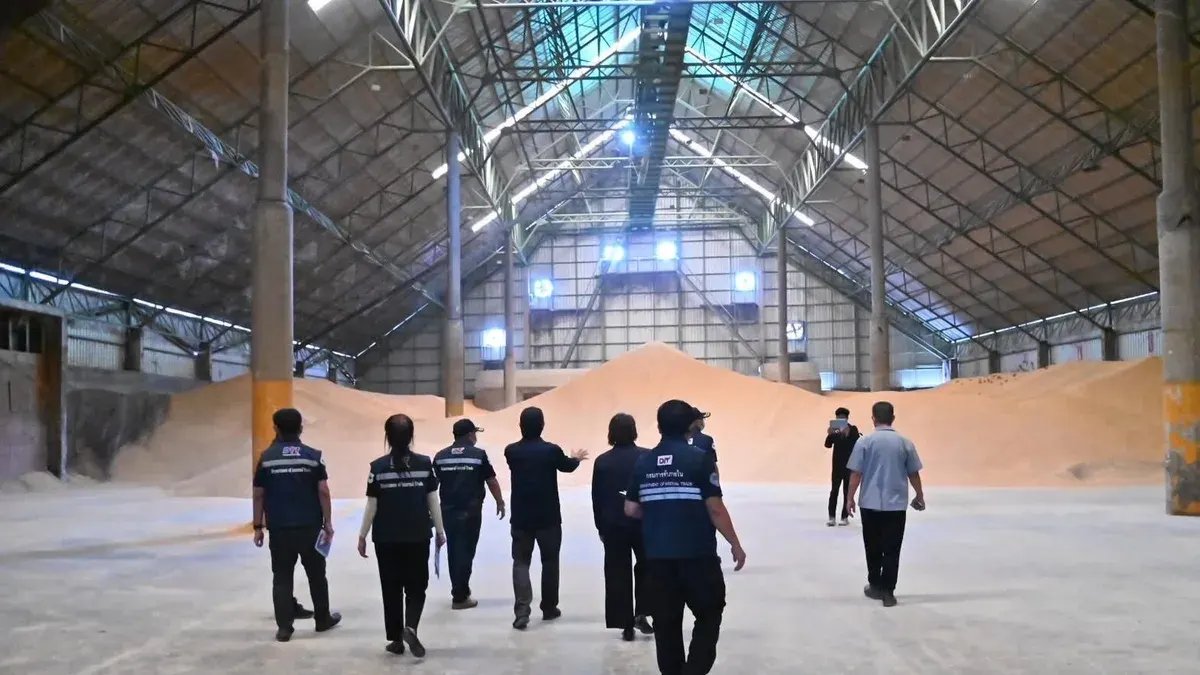
The Department of Internal Trade is tightening supervision of feed corn purchases nationwide, emphasizing transparent and fair trading that reflects product quality. Director-General Withayakorn Maninetr said the department is closely monitoring procurement as animal feed corn gradually enters the market, ensuring farmers can sell their harvest fairly and preventing oversupply issues. The oversight covers weighing, moisture measurement, price display, and quality-based pricing adjustments.
"We want the corn procurement system to be transparent from the start," Withayakorn said. "Farmers need to know their corn's exact weight, moisture content, and the price they receive. The moisture-measuring equipment is especially critical for determining purchase prices—if the equipment is not accurate, it directly affects farmers' income."
Withayakorn said oversight will cover feed mills, collectors, and buying points across all areas. The department has coordinated with provincial commerce offices, weights and measures officials, and inspection teams to conduct ongoing field checks to ensure strict compliance with Commerce Ministry standards on price display, weighing, moisture measurement, and quality-based purchasing.
Field inspections of CPF Company Limited's feed mill in Ban Pong District, Ratchaburi Province, found the facility can handle increased corn volume at full capacity. The mill operates a registration and advance queue system to manage supply volumes and reduce congestion. No major truck backups were observed, and independent farmers can sell directly.
In Nakhon Pathom Province, checks at buying points in Bang Len District found clear price posting and purchases following Commerce Ministry announcements, with no queue issues. Phetchabun Province, a major production area, has opened additional buying points as harvest increases. Current prices range from 7.09 baht per kilogram for Grade 2 corn at 30% moisture to 6.40–6.80 baht for Grade 3, with 14.5% moisture corn at 7.95–8.35 baht, and husked corn at 3.50–4.00 baht.
In Tak Province, the department investigated reported prices and found production has just begun—only about 2% of the crop has entered the market with high moisture. Prices have dropped 0.10–0.20 baht per kilogram from the previous week. Western-side husked corn sells for 3.30–3.50 baht per kilogram, while eastern-side corn reaches 4.80–4.90 baht, and seeded corn at 30% moisture costs 6.50–6.80 baht.
Withayakorn noted that purchase prices in each area must account for product quality, moisture, transportation costs, and distance. The department is closely tracking the situation to prevent these factors being used to suppress prices.
"The Department of Internal Trade will continue monitoring, especially during peak harvest, and will direct feed mills and collectors nationwide to continuously purchase from Thai farmers while strictly adhering to all standards," Withayakorn concluded.