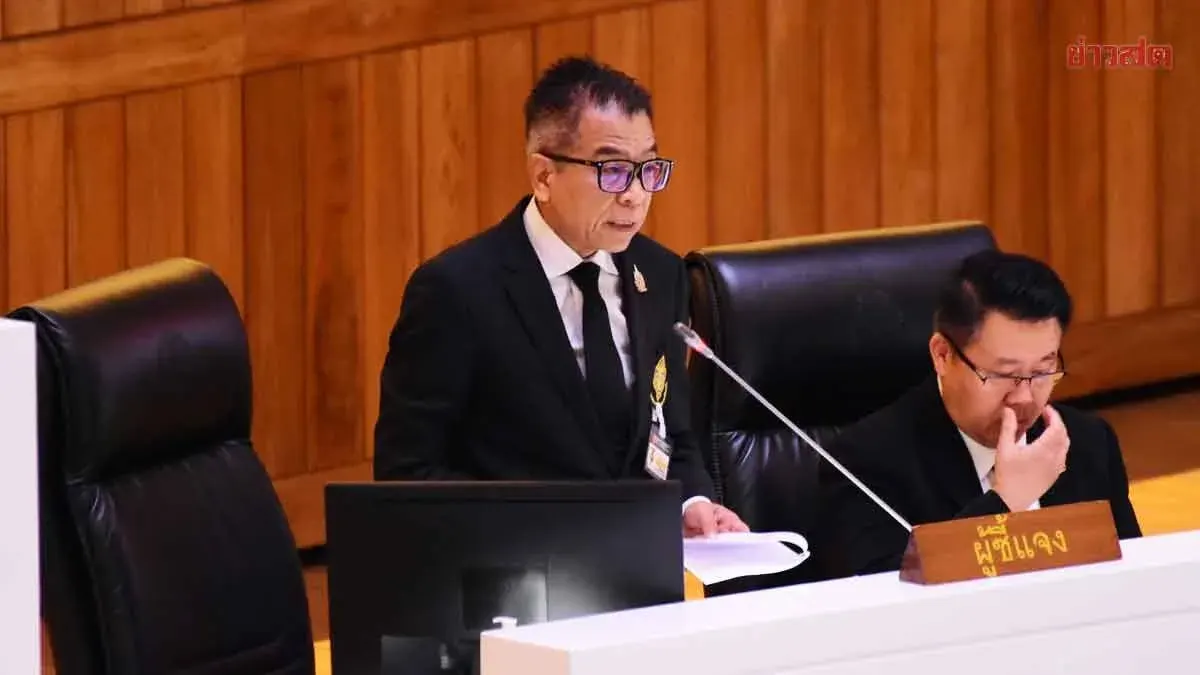
Democrats Plan Complaint to Anti-Corruption Body Over Senate Vote Manipulation
Democrats will file a complaint with Thailand's anti-corruption body over alleged Senate election manipulation, with evidence they say links the scheme to Bhumjaithai Party executives and politicians.

On September 16, Nattapong Ruengpanya, the Democrat Party leader and opposition head in the House of Representatives, commented on election commissioner Sitthichoke Inthaviseth's minority opinion, disagreeing with the election commission chairman's statements about acting transparently. While praising the minority commissioner's willingness to voice a position, Ruengpanya said the Democrat Party would incorporate this new fact into its complaint to authorities including the National Anti-Corruption Commission, and would proceed as quickly as possible.
When asked what was significant about the minority opinion, Ruengpanya said the most important point was that individual commissioners have their own judgment, but the minority opinion appears to align with public wisdom. He described the Senate election manipulation scheme as large-scale with clear organizers, and said evidence beyond witness statements could link the matter to executives or political figures of the Bhumjaithai Party. If the election commission acts transparently with sufficient evidence that this was an organized scheme involving politicians, it should refer all charges to court.
On the timeline for filing charges under Article 157 of the Criminal Code, Ruengpanya said the party would coordinate with its legal team and may require direct victims—the candidate—to file, while the party itself would submit a complaint to the anti-corruption commission; the party supports both tracks and expects progress this week. Regarding whether the scrutiny debate aims to prevent Pheu Thai from voting no-confidence in the government, Ruengpanya said the debate framework does not address no-confidence. He noted that the parliament speaker had made clear the focus should not be on election fraud in a no-confidence debate, and that checking politicians' integrity is separate from the government's tenure. Each party has its own voting position, and legislators as representatives of the people have the authority to vote no-confidence in the government or individual ministers if they believe the Senate election fraud—the largest electoral manipulation in Thai political history—is unjust.