Exploring Sacred Buddhist Literature: The Tripitaka World Cosmology
A newly published book explores "Tripitaka World Cosmology," an ancient Buddhist text from Thailand's Sukhothai period that describes the universe divided into three realms centered on Mount Meru, originally composed by King Lithai as a too
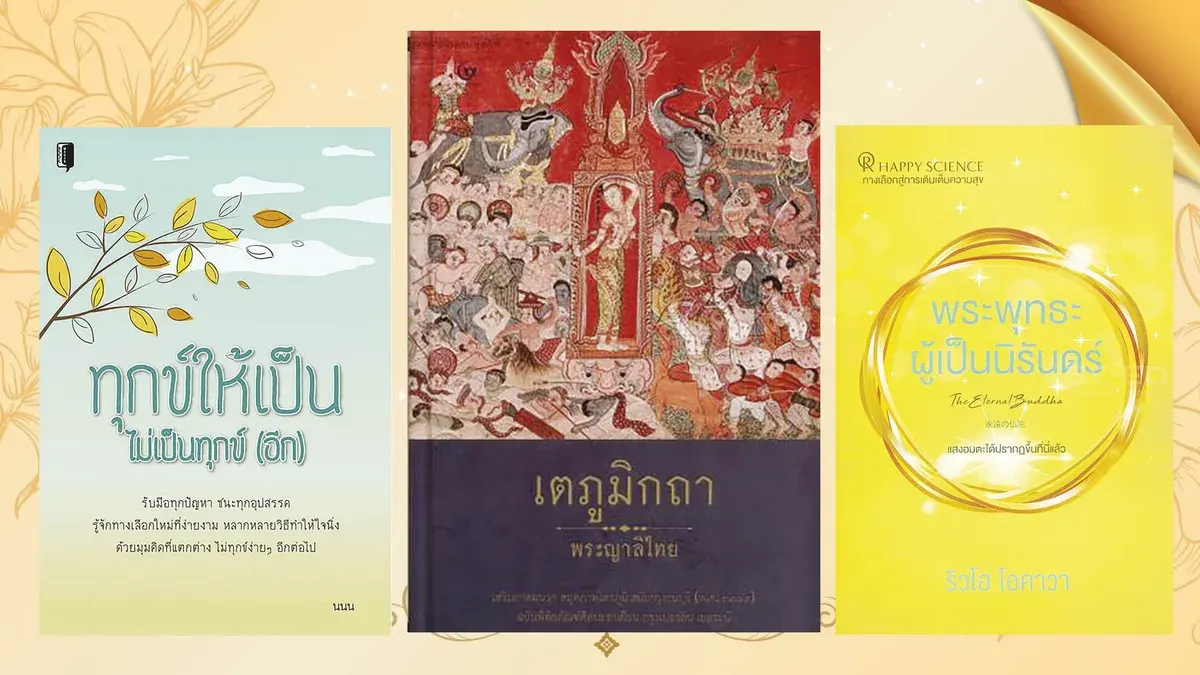
Book: "Tripitaka World Cosmology" Author: Phra Yaralihai Published by: Sri Panya Publishing House Price: 350 baht
"Tripitaka World Cosmology" has several alternative titles, including "Trilokavinichaya" and "Lokavinnichaya." It is a Buddhist literary work composed during the Sukhothai period around 1888 CE through the royal initiative of Phra Yaralihai. Compiled from Buddhist scriptures, it describes worldly structure divided into three realms: the realm of desire, the realm of form, and the realm of formlessness.
This literature addresses Thai Buddhist beliefs concerning thirty-one terrestrial zones—eleven in the desire realm, sixteen in the form realm, and four in the formless realm. It describes the locations, positions, and origins of humans, hell beings, hungry ghosts, demons, and celestial deities. These realms center on Mount Meru, positioned within the cosmos and surrounded by seven concentric mountain ranges named: Yugandhara, Isindara, Kravika, Sudassana, Nemindhara, Vinantaka, and Asgarna—the outermost range collectively called the Seven Mountain Ranges. Seven concentric seas surround these mountains, known as the Seven Seas. Beyond the outermost mountain Asgarna lies the Great Ocean encircling everything, with an iron boundary called the Edge of the Cosmos beyond.
The "Trilokavinichaya" demonstrates the exceptional Buddhist scholarship of King Lithai, who compiled passages from Buddhist scriptures including the Tripitaka, commentaries, sub-commentaries, and supplementary works into a systematic cosmological text—believed to be the first world science literature composed in Thai language based on current evidence.
Religious scholars have analyzed King Lithai's motivations for composing this work, concluding it held political significance. As the text concerns hell and heaven, teaching people to practice virtue to attain heaven while warning that misconduct leads to hell, it served a social purpose. The kingdom's population had grown significantly under King Lithai's reign, making governance increasingly difficult. State oversight could not reach everywhere, so the king composed this religious literary work to encourage his subjects toward virtue.
Thus "Tripitaka World Cosmology" functioned as an effective social control mechanism, reaching into the hearts of all people without requiring explicit law enforcement.
••"Trilokavinichaya"—Buddhist Literature•• ••All Problems Have Solutions: "Suffering Becomes Non-Suffering"••
"...Among humans, though one may be a child, if one has wisdom, one is considered mature; but if one is foolish, even with a large body, one cannot be considered mature..." —Dharma Teaching, Venerable Phra Buddhaghosa (Ven. Payutto), Yanawesakawan Temple
◆◆This week's column introduces quality books from Silapabannakan Publishing House, presenting "Trilokavinichaya," authored by Phra Yaralihai. This ancient manuscript dates to the Sukhothai period and is believed to have been written by King Lithai of Sukhothai. The original manuscript in the Vachirayan Library comes from Phetchaburi and consists of ten volumes. Upon examination, the text displays considerable age, with archaic vocabulary appearing in sources traceable only to Sukhothai-era stone inscriptions. Evidence suggests the original composition indeed dates to the Sukhothai era. Here is a significant Thai Buddhist literary work, esteemed as excellent and ancient from the Sukhothai period.