Finance Minister Unveils 'Star Egg' Model for Economic Reform
Finance Minister Ekkaniti Nithithanpraphas unveiled a "Star Egg" coordination model and D-E-E reform framework during a Udon Thani visit, prioritizing private-sector growth, service simplification, and urgent debt relief for small borrowers
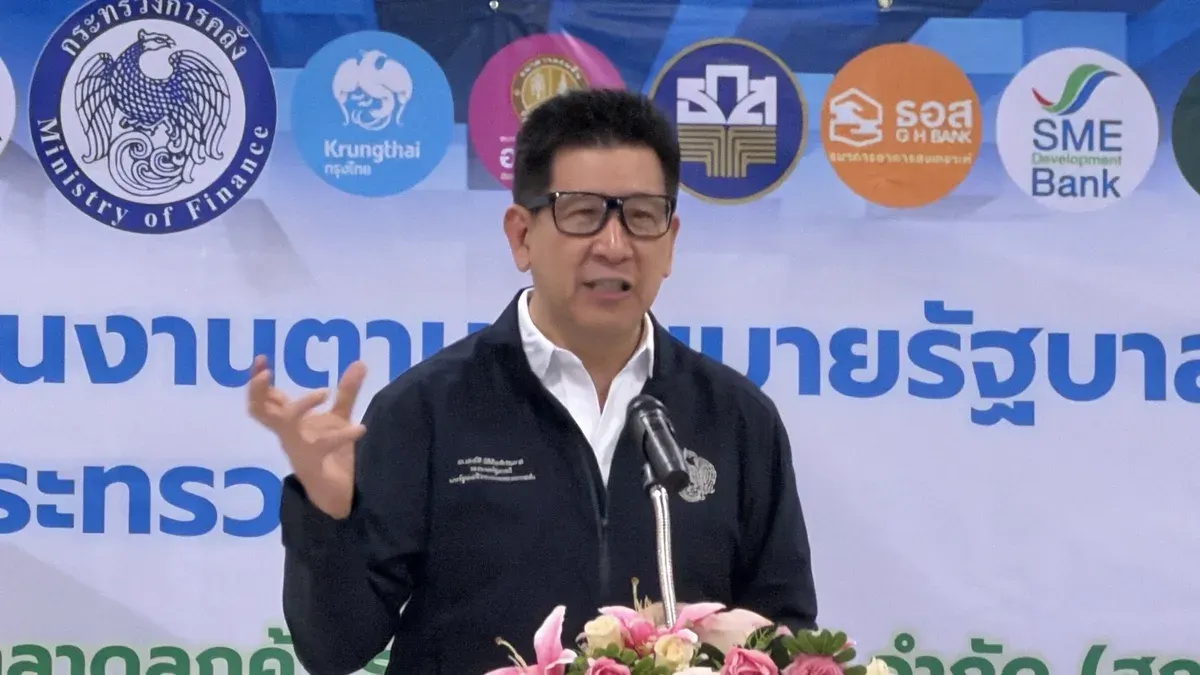
Deputy Prime Minister and Finance Minister Ekkaniti Nithithanpraphas traveled to Udon Thani to chair the provincial fiscal management committee meeting, delivering policy guidelines for driving the economy at the local level. He emphasized the importance of reforming the Finance Ministry's operations to foster cooperation and steer the country through transition. At the meeting, Ekkaniti outlined policies prioritizing the private sector as the main growth engine, including modern agriculture supported by the Bank for Agriculture and Agricultural Cooperatives (BAAC), processed food industry, smart electronics, electric vehicles (EVs), high-value tourism, medical services and hospitals, wholesale-retail business, and the creator economy — drawing new-generation content creators such as TikTok users into the system to create new revenue bases for the country.
He also established a working framework through D-E-E, comprising: - D (Data/Disclose): Public disclosure of all government procurement data for transparency and budget oversight. - E (Easy): Directing agencies under the ministry — Revenue Department, Treasury Department, and Customs Department — to each select one key public-facing service and streamline procedures to the simplest level, while transforming the Revenue Department's image into a friendly, smiling service provider. - E (Efficient): Enhancing civil service efficiency through digital technology to reduce unnecessary burdens and steps.
"The Revenue Department was once seen as a giant. From now on we will make services as easy as possible, turning the fanged giant into a smiling giant — cheerful and serving the people so they love us more," Ekkaniti said.
He compared the Finance Ministry's structure to a "star egg model": the "red yolk" represents government agencies or departments under the ministry, while the "egg white" represents state-owned specialized financial institutions and affiliated agencies such as the Government Housing Bank (GH Bank), BAAC, Government Savings Bank (GSB), SME Development Bank of Thailand, and Krungthai Bank. Both yolk and white must move together in coordination for fiscal policy to have maximum impact and enforceability.
He urged rapid surveys of non-performing loans (NPLs) under 100,000 baht held by people in the Upper Isan region to enroll them in fast-track debt resolution programs, expand credit guarantees under the SME Credit Boost project, inject capital to assist SMEs, and accelerate solar loans through three state banks down to the district level.
Ekkaniti warned civil servants and local fiscal executives that this period represents Thailand's last chance to restructure its economy. If reform is not accelerated now, the country risks falling behind and missing the development train. He noted that Udon Thani and the Upper Isan province group act as a crucial engine for the regional economy, which must move in the same direction as the center to produce visible changes within a one-year framework and long-term goals over the next four years.
"I dare say this, and have said it on many stages including at the World Bank: this is Thailand's last chance. If we cannot transform the country this time, we may fall behind and miss the boat entirely," he stated.