House Legal Committee Rejects Speaker's Guidelines as Unconstitutional
Thailand's House Legal Affairs Committee unanimously rejected operational guidelines issued by the House Speaker for the General Committee, voting 8-0 that they violate Section 129 of the Constitution. The committee ruled the guidelines improperly restrict its constitutionally guaranteed oversight powers and may contravene parliamentary regulations. Members have demanded a legal review and asked the Speaker to revise or clarify the disputed directives.
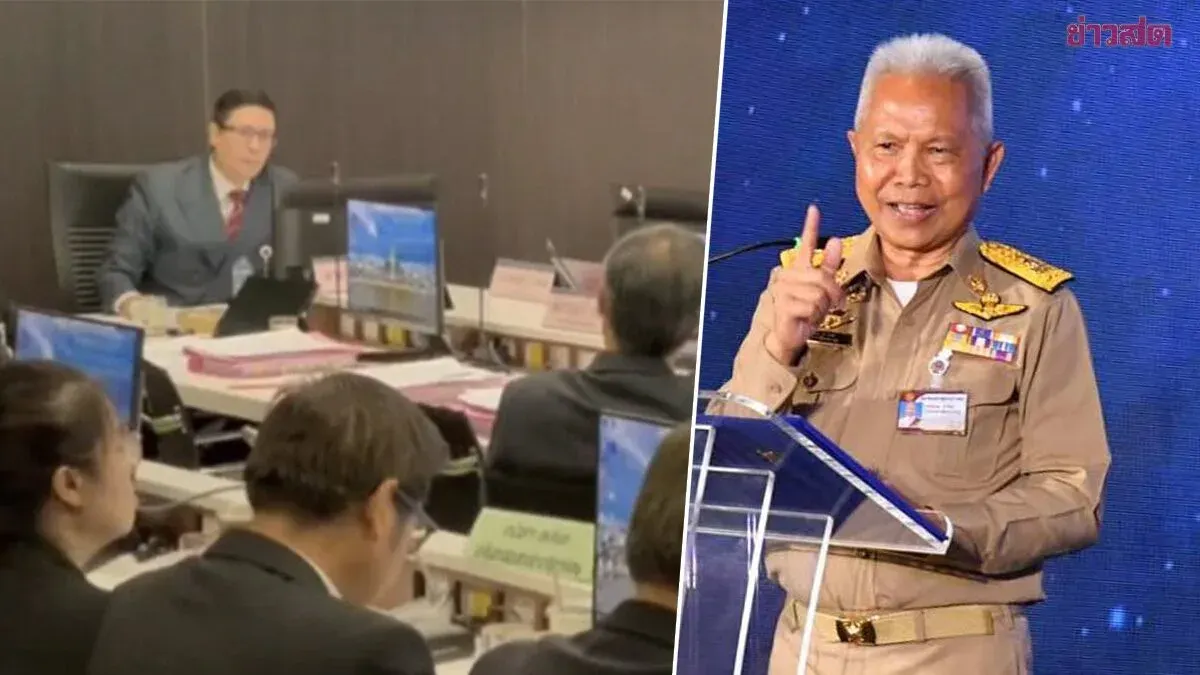
In a closed-door meeting on November 4 chaired by Rangsiman Rome, the House Legal Affairs Committee considered a circular containing operational guidelines for the General Committee issued by the House Speaker. The guidelines covered two areas: interpretation of the General Committee's scope of duties and powers, and the scheduling of committee meetings. The Legal Affairs Committee voted unanimously 8-0 not to endorse the guidelines on powers and procedures, finding they are inconsistent with the provisions and intent of Section 129 of the Constitution and may not comply with the 2019 House Meeting Regulations and amendments. Some members stated that 'oversight of state administration is a power guaranteed by the Constitution; administrative correspondence cannot amend or reduce that power.'
Key points raised: 1. Duties and powers of the committee: Section 129 of the Constitution and Regulation 90 already define the duty and power to investigate facts and study matters within the committee's remit. Practice guidelines cannot alter or reduce powers beyond what the law prescribes. 2. Convening meetings and setting agendas: Proceedings must follow Regulations 92 and 93 and related provisions. Guidelines cannot add conditions without legal basis that obstruct meetings or consideration of matters within the committee's authority. 3. Summoning persons or documents: Regulation 97 requires summonses to be issued as letters signed by the committee chair or vice-chair acting as chair. The 2025 Act on Summoning Powers of Parliamentary Committees sets specific criteria for issuing summonses. A clear distinction should be made between legal summonses and voluntary invitations for information, and it should be verified whether the guidelines impose conditions exceeding existing laws and regulations.
Although there is no Constitutional Court precedent directly on the Constitution and current regulations, a similar ruling exists: Constitutional Court Decision 17/2020 dated October 7, 2020, on the constitutionality of the 2011 Parliamentary Committee Summoning Act — a different law from the 2019 House Meeting Regulations. That decision did not directly rule that summoning persons or documents requires a committee meeting resolution every time. Citing it must not be stretched beyond its scope or used to add conditions without legal authority.
For these reasons, the Legal Affairs Committee disagreed with the General Committee guidelines and requested the committee review its legal basis, while urging the House Speaker to reconsider or clarify where guidelines exceed the Constitution and regulations, thereby restricting the committee's duties and powers beyond what the law allows.