Kids Learn Nature and Life Along Bangkok's Canal
Children explore nature and community life at SAFETist Farm along Bangkok's Bang Mod Canal, learning through hands-on activities like gardening, boat paddling, and cooking rather than textbooks.
Children's learning doesn't have to happen only in classrooms. Sometimes small spaces near home can become whole worlds where kids play, experiment, ask questions, and discover answers themselves.
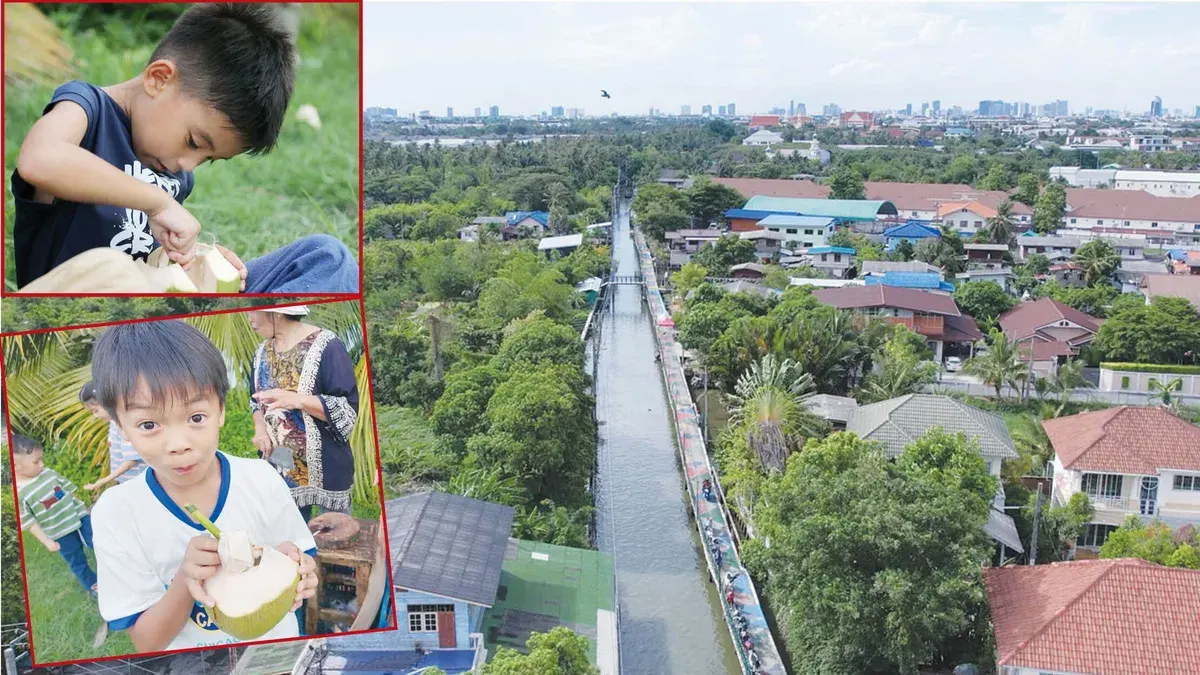
Along Bang Mod Canal in Bangkok, there are still green spaces and hidden community life in the midst of the city. At SAFETist Farm, children and families spend time together through simple activities close to nature—planting vegetables, fishing, paddling boats, and meeting people from both sides of the canal.
Candy Siwarai Suthivakorn and his friends have grown up at SAFETist Farm, which serves as their home, playground, and learning space all in one. Tung Saeng Tawan first met Candy when he was four years old. Now at ten, he continues to travel, play, and discover new things with his friends and family.
Outings to paddle along Bang Mod Canal typically have no rigid lessons. Children are free to look, listen, talk, and ask questions about everything they find—from trees and fish to bats, trash in the canal, and the lives of people along the banks. Ordinary things along the way thus become interesting whenever children choose what to stop and learn about.
At Aunt Da's garden—owned by Suda Kaewsantichaiand Uncle Lek Chali Saesiem, which is reached only by boat—the kids tried their hand as gardeners, learning how to select and harvest coconuts from community members.
"Listen to the sound. A sound like this is good, this one is soft. This one can be picked. Go ahead and pick it, Candy."
Knowledge wasn't explained through textbooks but passed on through listening, observing, and trying things themselves. The children then tasted fresh coconut straight from the tree, learned about ancient spoons for scraping the flesh, and straws made from rattan before turning what they touched into explanations in their own words.
"Clear jelly—natural jelly, coconut flesh from a fresh tree."
From tasting came hands-on cooking. Making sticky rice cake, the children learned about raw ingredients from the garden, observed smells and textures, and discovered that leftover coconut husks could be reused as containers. These activities may seem like simple play, but within the fun lay lessons about food, nature, traditional wisdom, and valuing resources.
Meanwhile, learning along the canal didn't take children backward into only old ways. It also connected them to new energy through travel by electric long-tail boat.
When the engine sound faded, conversation and natural sounds became clearer. They could see the difference between energy types through direct experience.
"If you use a gas boat, it's loud when it runs. If you use an electric boat, it's quiet and you don't have to spend money on fuel—just charge the battery."
The electric boat thus wasn't just transport to a destination but a tangible lesson in energy, technology, and environment, turning something that seemed distant into part of everyday life.
A creative space for children and families doesn't necessarily need expensive equipment or complex curricula. With nature, community, adults willing to share, and freedom for kids to play, taste, try, and ask questions, the whole world becomes a classroom.
Join the kids learning along Bang Mod Canal this Saturday at 1 p.m. in the program "Kids Hooked on the Canal" on the Tung Saeng Tawan Facebook page and YouTube.