Lawmaker Traces Deep South Violence to 7,000 Deaths, Urges Policy Review
Over 7,000 deaths in Thailand's Deep South since 2004 stem from a 1999 policy failure, Democrat lawmaker Chuan Leekpai told parliament, urging revival of the late King's "Understanding, Access, Development" approach to resolve the decades-l
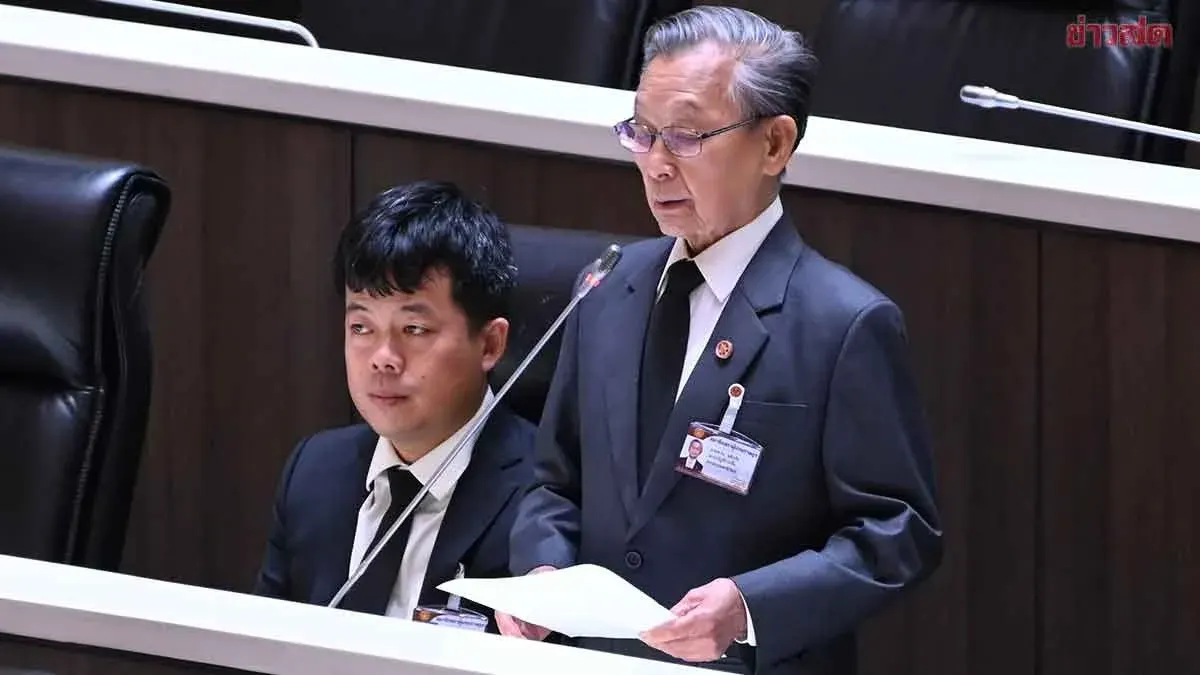
During a National Assembly session chaired by Deputy Speaker Lersak Pathanachaiyakul, Democrat list MP Chuan Leekpai debated an urgent motion on resolving unrest in southern border provinces. He traced violence in the Deep South and parts of Songkhla, which has killed over 7,000 people since January 4, 2004, back to the April 7, 1999 Hat Yai railway station bombing. That attack triggered a lenient policy of eliminating 18 suspected insurgents monthly, spawning extrajudicial killings, a new insurgent group called RKK, and the 2004 Cho Airong military camp gun theft that took over 413 weapons—escalating violence to the present day.
Chuan argued the most lasting solution lies in following the late King Bhumibol Adulyadej's "Understanding, Access, Development" approach, which resolved conflict and developed the region while fostering Buddhist-Muslim harmony for 40 years. He questioned whether the current government truly grasps this policy's intent, noting it appears in government policy 9.3 but officials claimed they were not ready to answer parliamentary questions about it.
Chuan also objected to Deputy PM and Transport Minister Pipat Ratchakitprakarn's recent visit to Trang province, where he criticized Chuan's six-year-plus tenure for not developing the province. Chuan defended his record, noting development initiatives like four-lane highways nationwide, dual railways, the Suvarnabhumi airport project, the education loan program, and school milk schemes were distributed fairly—not concentrated in one area.
Chuan urged Prime Minister Anutin Charnvirakul and Interior Minister to reprimand cabinet members for using inspection tours to create division. He also called on the government to clearly define whether southern unrest is a domestic or transnational problem. If domestic, the government must trust its own capacity to resolve it and avoid underestimating its people. He proposed reviving cooperation under the Indonesia-Malaysia-Thailand development triangle framework to build lasting peace and prosperity in the southern border region.