Global Museum Leaders Gather for INTEDIF 2026 Forum in Thailand
Senior museum and science center leaders from 20 countries gathered in Thailand for the International Directors Forum 2026, discussing how institutions can adapt to rapid global change and artificial intelligence while creating value for so
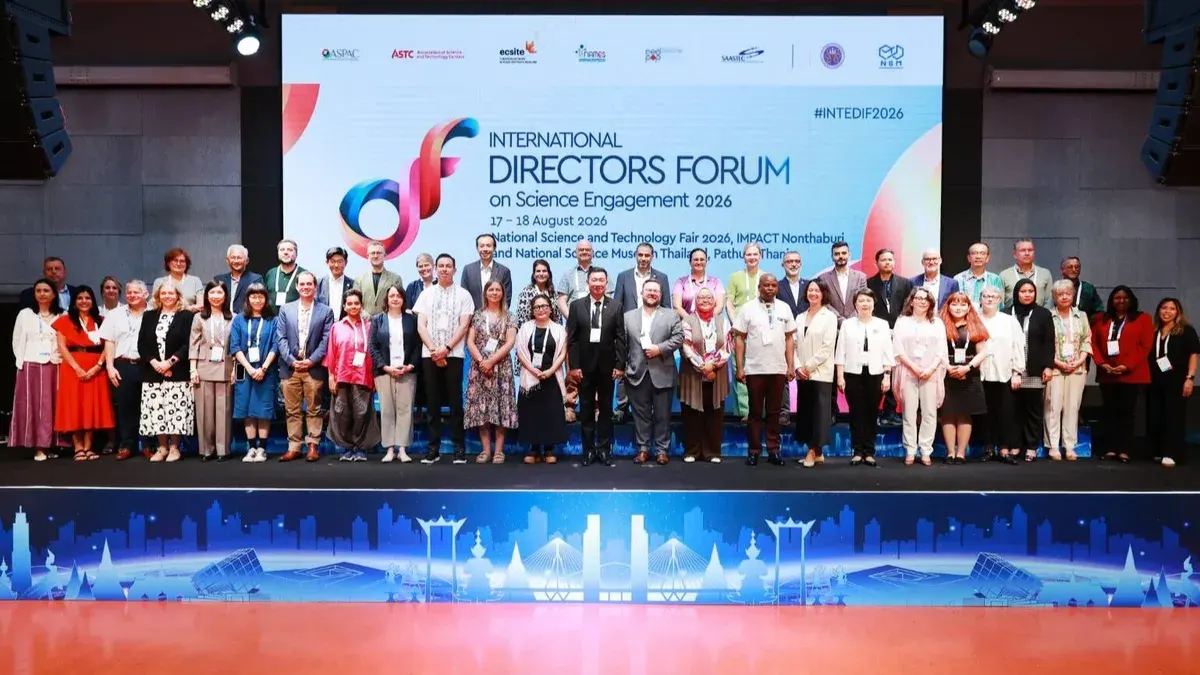
On August 17, the National Science Museum of Thailand (NSM) under the Ministry of Higher Education, Science, Research and Innovation, together with the Asia Pacific Network of Science and Technology Centres (ASPAC), launched the International Directors Forum 2026 (INTEDIF 2026) under the theme "Evolving our Organizations Amidst a Rapidly Changing World." The forum brought together senior executives from museums and science centers worldwide to exchange perspectives, experiences, and strategic approaches for developing organizations that keep pace with global change, while defining the future role of museums and learning centers in creating value, meeting societal needs, and driving sustainable development.
The opening ceremony was attended by Suwrong Wongsiri, acting director of NSM, alongside Maria Isabel Garcia, President of ASPAC, and international network leaders including Christofer Nelson (President and CEO of the Association of Science and Technology Centers), Maria João Fonseca (President of the European Network of Science Centres and Museums), Maissa Azab (Executive Director of the North Africa and Middle East Science Centers Network), Miguel Garcia-Guerrero (Executive Director of the Network for the Popularization of Science and Technology in Latin America and the Caribbean), and Rufus Wesi (Chairman of the South African Association of Science & Technology Centres). The event took place at the Ramakrishna Museum in Pathum Thani.
Suwrong stated that NSM was honored to welcome over 30 organizations and 51 senior leaders from 20 economic zones globally to the conference. He emphasized that this gathering represents a crucial opportunity to exchange knowledge, experiences, and strategic perspectives on how organizations can adapt and create value amid rapid global transformation, particularly regarding artificial intelligence and its impact on management, learning, and visitor experiences. He noted that modern museums must do more than collect and transmit knowledge—they must adapt to change, connect people with information, and help society understand and address new challenges. The diversity of perspectives from global leaders will yield strategic direction and international collaboration to elevate the field of museums and science learning centers worldwide.