PIM Celebrates 20 Years Building Work-Ready Graduates
Panyapiwat Institute of Management marks 20 years of combining classroom learning with real workplace experience, creating graduates who are immediately job-ready. Founded by CP All chairman Korsakdi Chaiyangsaksiri, PIM's "learn while work
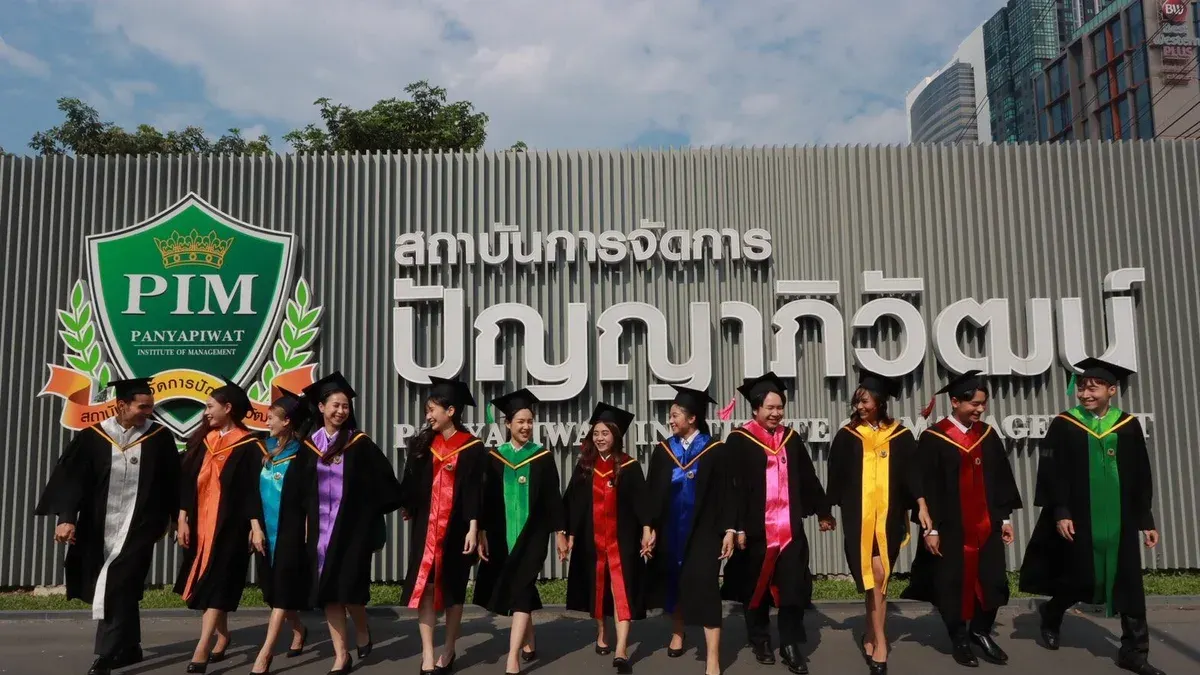
Over nearly 20 years, Panyapiwat Institute of Management (PIM) has demonstrated that education should not be confined to the classroom but must connect with the real working world to develop skilled, employable graduates.
The institute's foundation lies in the life experience and convictions of Korsakdi Chaiyangsaksiri, chairman of CP All, who transformed his own "learn while working" experience into an educational model whose graduates are now recognized and accepted by organizations throughout Thailand. PIM's journey is not simply a story of building a university, but evidence that "educational opportunity" can truly transform people's futures.
Korsakdi Chaiyangsaksiri reflected on the past 20 years: "There is a story I have rarely told anyone. It is about a young man under 20 years old who had to study evening classes at Thammasat University while working at CP All's operations. While his friends attended regular daytime classes, he had to rush from work to make it to class by 6 p.m. Some days he was so exhausted he nearly fell asleep at his desk. But he persevered because he understood that learning while working was the path to understanding the real world. From that direct experience, I witnessed a painful truth: 'University graduates cannot work.' That sentence sounds harsh, but it was a reality I encountered every day. Many fresh graduates still had to relearn and retrain in their organizations, taking months more to become truly productive, despite having spent four years at university.
"I asked myself: 'Should a university be a place where students stroll around, attend classes day by day, and graduate unable to work?' This question stayed with me. When I decided to establish PIM, I was 54 or 55 years old. Many people said I was crazy. Many laughed. Many criticized it as a 'second-rate university' or a 'grassroots university.' I heard it all, but I did not care because I knew what I was doing. I was creating an institution to prove that education should not be separate from real life, and that people who work while studying are not inferior to anyone. On the contrary, I believed those experiences would become crucial assets in their lives.
"Our model was simple: 'Learn while working, graduate with a job.' But do you know how difficult that was? In our first year, we enrolled only 350 students. In our second year, 550. In the first two years combined, just 900 students. This was despite offering 100% scholarships, employment during studies, and a learning system genuinely connected to real work. But nobody believed in it.
"I understood that for society to accept something new takes time—not one or two years, but generations of graduates must prove themselves. We had to send graduate after graduate into the workplace, convince their supervisors, earn their colleagues' acceptance, and win society's trust. Over three graduating cohorts, which might not sound long, but passing through each generation required patience, determination, and unshakeable conviction.
"Time passed quickly. Nearly 20 years have gone by. From the day we enrolled just 350 students, we now receive applications for nearly 7,000 places annually, and currently accept 5,000–6,000 per year. From being called a 'grassroots university,' our graduates today are recognized and accepted across organizations."