Red Line Extension to Thammasat University Breaks Ground This Month
Construction of a Red Line extension to Thammasat University's Rangsit campus begins July 23, with the 6.06-billion-baht project expected to reduce travel time to central Bangkok to approximately 30 minutes upon completion in 2572.
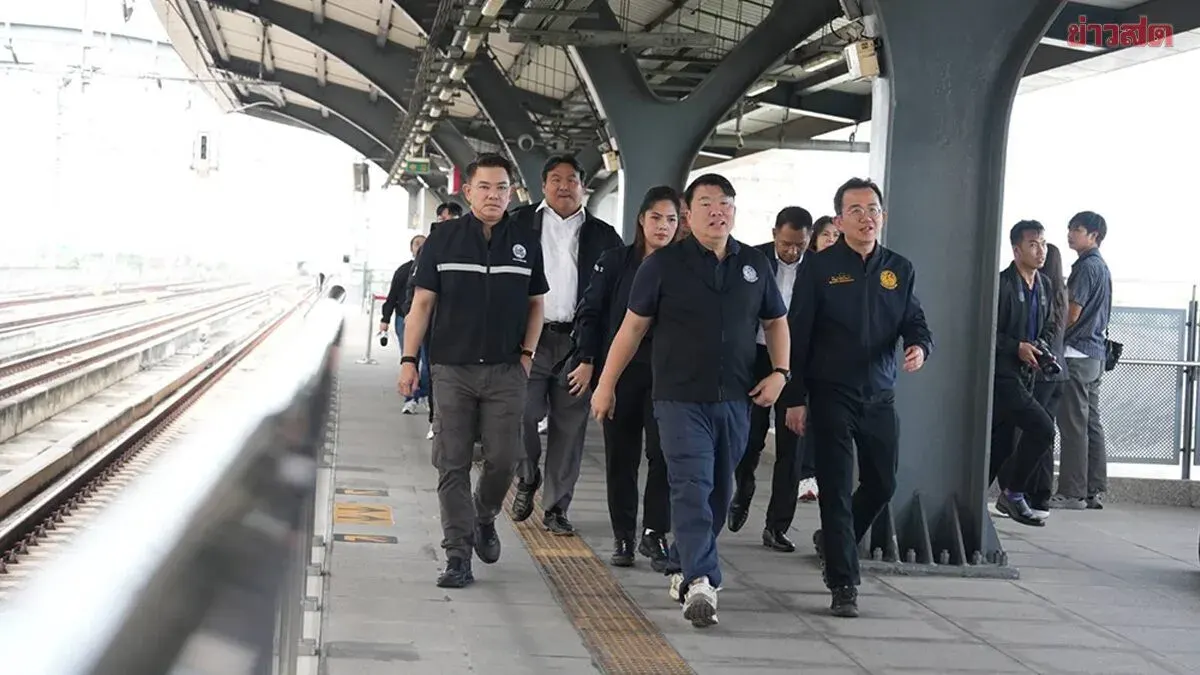
Deputy Transport Minister Siripong Angsukulkiarti visited the Red Line suburban electric train between Rangsit and Bang Khae stations on July 10, 2569, to reaffirm the government's commitment to extending the line to Thammasat University's Rangsit campus, with construction beginning July 23. He ordered the State Railway and Bangkok Mass Transit Authority to implement feeder bus services connecting passengers to stations and reduce traffic congestion by promoting rail as a primary transportation option, with maximum safety measures during construction.
The minister traveled the existing line and met with railway engineers, who reported that the Red Line has become highly popular, reducing travel time from Rangsit to Bangkok's Central World from the original duration to just 23 minutes. Once the extension to Thammasat University is complete, the journey time is expected to be approximately 30 minutes, enhancing convenience and interconnectivity with other transport networks.
The Red Line currently handles peak-hour passengers from 6:30-9:30 a.m. and 4:30-7:30 p.m. with 10-minute frequency, and 15-minute intervals during off-peak hours. The Rangsit station accommodates 400 parked vehicles, which are nearly full most days, and serves over 60 long-distance train services daily from the northern and northeastern lines.
The State Railway has contracted Unique Engineering and Construction Public Company to build the deep red line extension, with a budget of 6.057 billion baht. Construction officially begins July 23, 2569, with a three-year timeline for completion and public service by 2572.
The railway has established three core principles: safety as the top priority with clearly designated construction zones and maximum security measures; maintaining passenger rail service during construction; and restoring the surrounding landscape to a better condition than before. Deputy Minister Siripong emphasized close supervision of construction standards, applying lessons from previous projects to ensure higher safety and quality standards.