Revered Buddhist Amulets and Coins Showcase Regional Heritage
Revered Buddhist monks across Thailand had commemorative coins and amulets struck to honor their spiritual teachings and protect devotees, with examples spanning from Bangkok to Satun showcasing regional heritage and devotion practices.
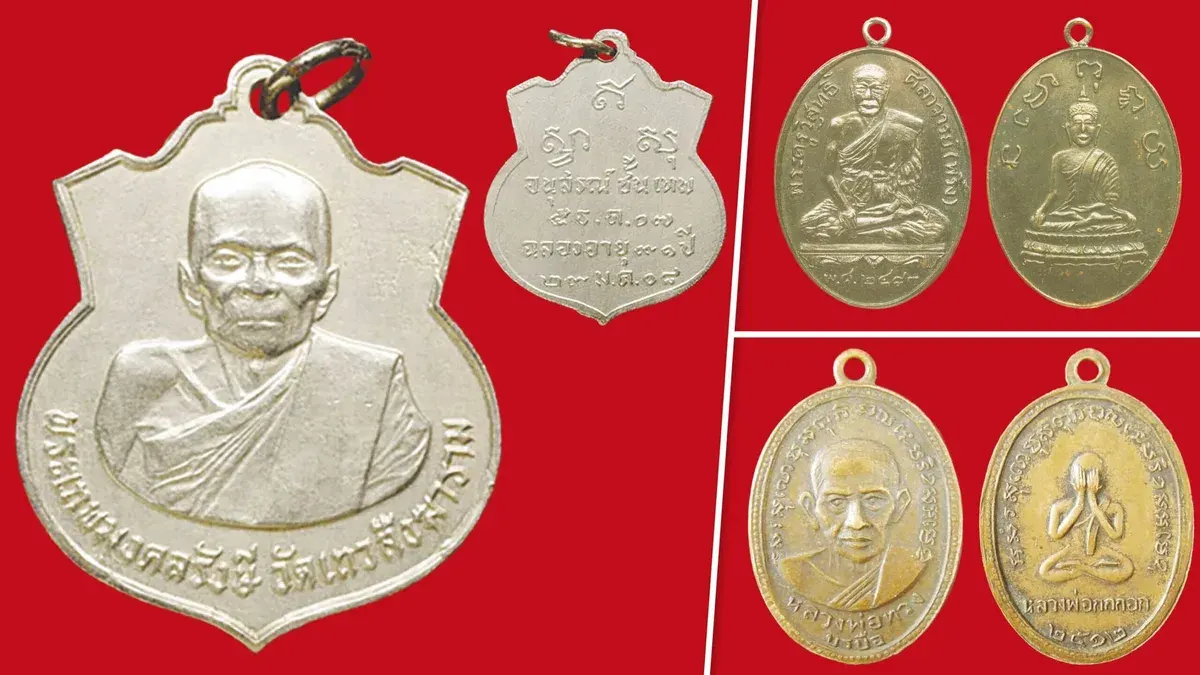
Luang Pu Di Phutthachoti, the former abbot of Wat Henu (Wat Tevo Sangkharam) in Kanchanaburi, is deeply revered by local devotees, and his amulets and talismans are highly prized. His 2507 BE commemorative coin, commissioned by Supreme Patriarch Somdet Phra Sangkharat Krom Luang Wachirayan Warorot to mark two significant occasions in the abbot's life—his elevation to the rank of Thepchao and his 91st birthday—features a portrait in three-quarter profile, struck in alpaca by the Royal Mint. The reverse bears Khmer script and Thai inscriptions.
Luang Por Pring Intachoti of Wat Bang Prakot in Bangkok, an accomplished teacher, created his first-edition struck copper coin in 2483 BE. Cast in an oval form with joined loops, it depicts the monk in deep meditation on a pedestal, surrounded by Thai inscriptions of his name and date. Legend holds that soldiers who carried this amulet to the Indochinese War returned safely unharmed.
Luang Pu Tuang Thamachoto, former abbot of Wat Ban Yang in Maha Sarakham, had coins created eighteen years after his passing in 2512 BE. The oval coins feature his portrait and protective Khmer and Thai mantras, cast in dark copper and silver-plated versions, serving as rare local artifacts of Maha Sarakham.
In 2552 BE, Phra Pannyawutti Wimol, abbot of Wat Chonathip Chaloem, a royal temple in Satun, commissioned a second edition of the "Phutthapatimakorn Coin, B.E. 2483." Cast in both copper and alpaca, these 3,000 coins support a conservation fund for the temple's ancient principal Buddha image and the base of the temple's original chedi, honoring Luang Pu Tuad.