Thai Chamber Urges Businesses to Stock Raw Materials Amid Hormuz Tensions
Thai Chamber of Commerce urges businesses to stockpile raw materials as renewed US-Iran tensions in the Strait of Hormuz threaten shipping routes and supply chains.
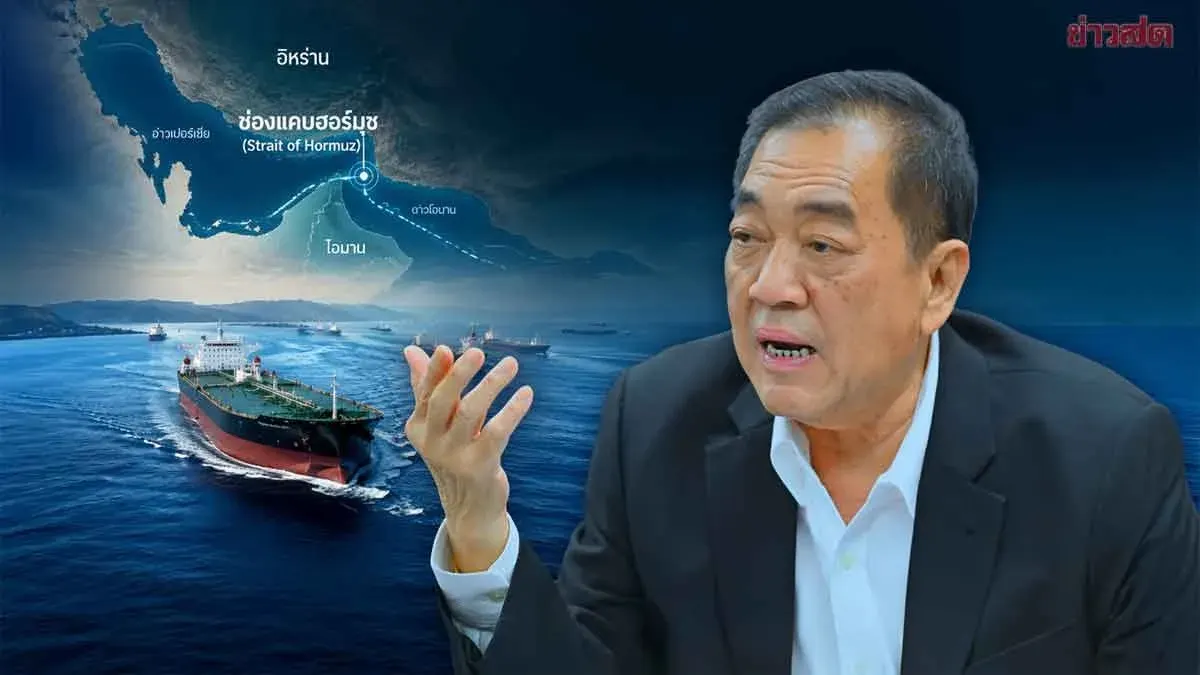
The Thai Chamber of Commerce has warned Thai business operators to accelerate stockpiling of raw materials in preparation for potential renewed tensions around the Strait of Hormuz in the Middle East. Poht Aramwattananont, chairman of the Thai Chamber of Commerce and the Thai National Chamber of Commerce, revealed that the situation in the Hormuz Strait region may escalate again due to ongoing US-Iran conflict that occurred in late June and early July 2025, shortly after both sides signed a ceasefire agreement (MOU) on June 17, 2025. The escalation could impact transportation systems, especially maritime shipping through Middle Eastern routes, causing volatility in shipping rates, insurance costs, energy prices, and raw material availability for the manufacturing sector.
Shipping lines have prepared contingency plans from previous conflicts, currently rerouting vessels to ports in Khor Fakkan, United Arab Emirates, and Salalah/Sohar in Oman instead of transiting the Strait of Hormuz. While some vessels continue to use the strait, shipping lines conduct ongoing risk assessments, resulting in minimal traffic through the critical waterway.
Poht advised that businesses should not panic but closely monitor developments, as the situation remains fluid and subject to continuous change. Thai businesses must prepare and manage risks through three key strategies: (1) continuously monitor energy prices, transportation costs, and logistics expenses; (2) assess raw material and goods inventory to meet demand and prepare contingency plans to secure supply in case of future shortages; and (3) coordinate with shipping lines and logistics providers to identify cost-effective transportation routes and methods through the Middle East.
The Thai Chamber of Commerce and the Thai National Chamber of Commerce stand ready to serve as intermediaries for member feedback from affected businesses. They will coordinate with government agencies, private sector partners, and relevant stakeholders to address issues arising from Middle Eastern conflict that impact Thailand, with the goal of building concrete confidence in trade, shipping, and energy security. This effort mirrors previous collaboration with the government on Middle East conflict resolution mechanisms through the Center for Administration and Monitoring of Middle East Conflict Situation (CASMECS).