Thai Official Calls for ASEAN Financial-Climate Shield
Thai Deputy Finance Minister Santitham Sthiti‑thai warned at the IMF‑World Bank 2026 meeting in Bangkok that Thailand’s reliance on energy imports—nearly 10% of GDP—leaves it vulnerable to global economic shocks. He urged ASEAN to adopt a three‑step ‘support‑transition‑invest’ strategy and to build a regional financial‑climate shield involving data sharing, green standards, and pooled resources. Effective adaptation, he said, also requires knowledge, incentives, and capability, not just funding.
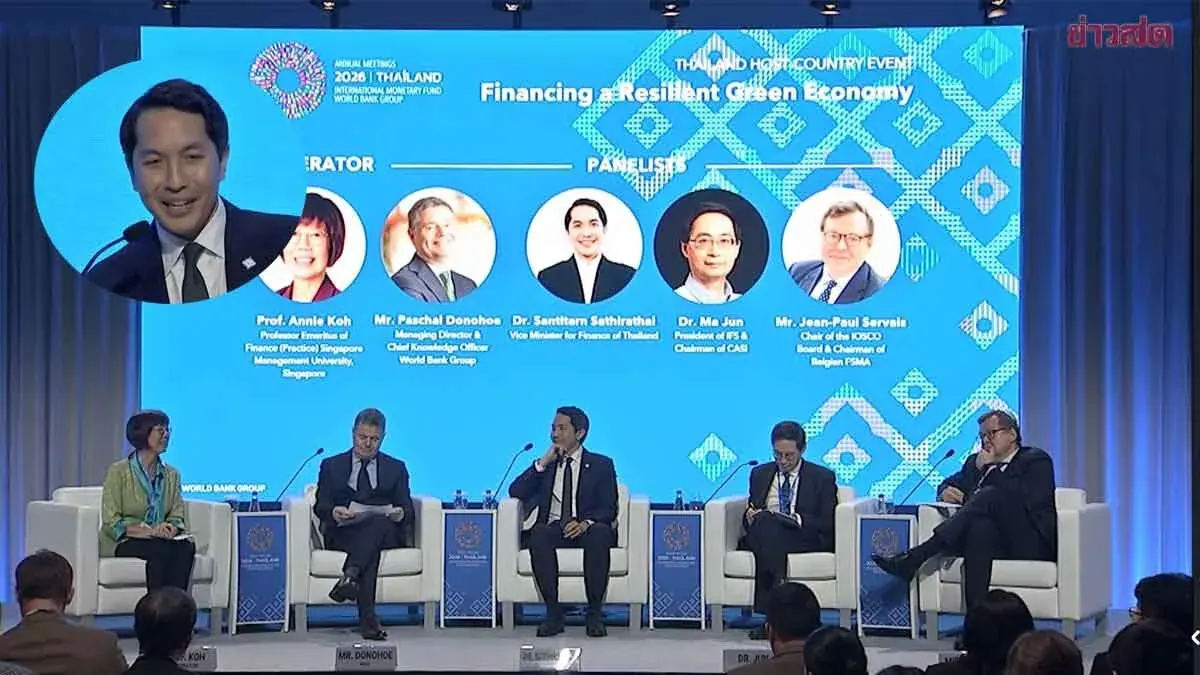
Adapting to climate change poses challenges beyond financing, he said, identifying three key conditions: knowledge, incentives, and capability. If people and businesses do not understand the risks or lack sufficient motivation and resources, even available funding may fail to achieve desired outcomes. For example, farmers who cannot easily change land use because they do not own the land, or entrepreneurs hesitant to relocate from risky areas due to uncertainty about whether a new location would generate sufficient income. The government must therefore enable socially necessary investments, especially flood‑protection and water‑management projects that deliver long‑term benefits without requiring clear financial returns for direct investors, while designing appropriate incentive measures and placing people at the centre so that those affected understand their options and can genuinely participate in adaptation. Beyond domestic measures, Santitham urged the region to consider building an ‘ASEAN financial‑climate shield’ to reinforce global mechanisms, drawing on lessons from his experience helping design regional financial architecture, including the Chiang Mai Initiative—a cross‑country foreign‑reserve pooling mechanism—as well as sharing data and macro‑economic early‑warning systems. He outlined three pillars for regional cooperation: first, sharing information and developing advance‑warning systems, expanding economic and financial data collaboration to climate data, climate models, and knowledge to help countries assess risks and prepare more quickly; second, aligning green standards by creating a harmonised green‑activity taxonomy that works across borders to reduce barriers to green investment and finance; third, pooling resources and mobilising joint efforts—not just funds but also expertise, capacity‑building, standards, and private‑sector financing, with multilateral development banks (MDBs) providing support.