Thai University Tests Homemade Light Rail Tram
Thai researchers at Rajamangala University of Technology Isan have successfully tested a homemade light rail tram prototype, demonstrating the country's capability to design and develop rail technology independently. The achievement marks a
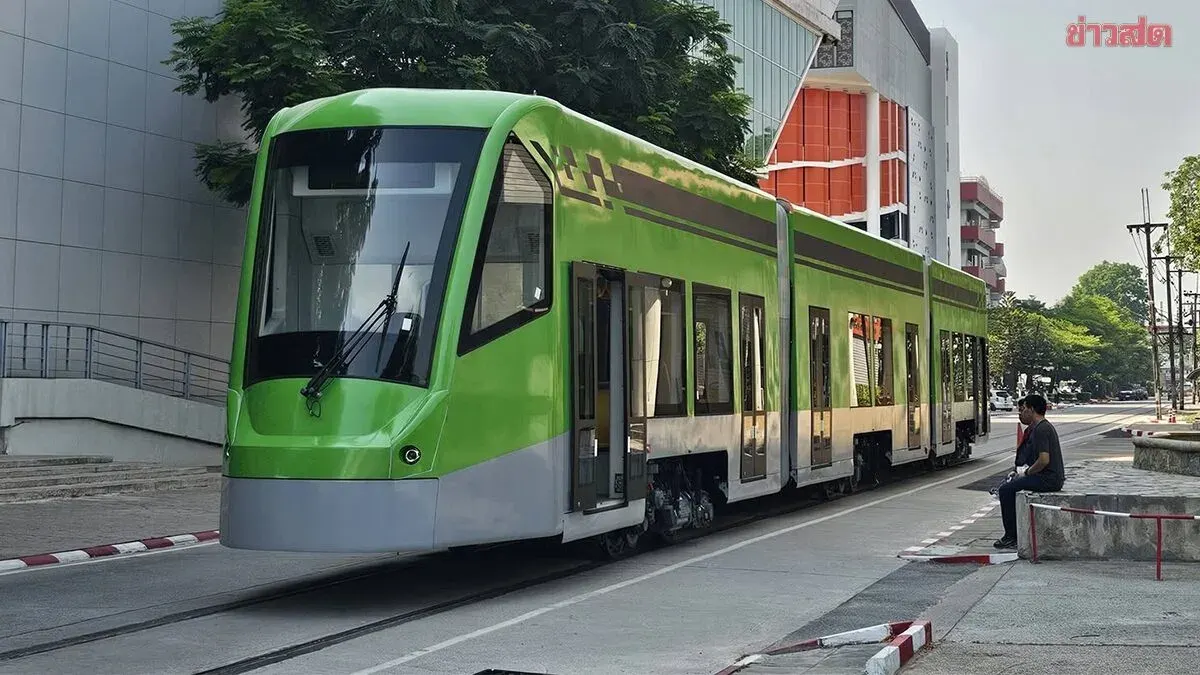
Rajamangala University of Technology Isan (RMUTI) in Nakhon Ratchasima has achieved a major milestone in Thai rail technology development by successfully testing its homemade Light Rail Transit prototype, 'Tram Luuk Isan,' on actual tracks at its Khon Kaen campus. The prototype, developed by Thai research and engineering teams, demonstrates the university's capacity to innovate in rail systems while producing quality personnel to support the nation's growing rail industry.
University Rector Associate Professor Dr. Khotsit Sriphudhon described the prototype testing as a crucial step in developing rail technology by Thai engineers, showcasing both the university's role in knowledge creation and workforce development. He emphasized that this achievement represents Thai capability to design, research, and develop functional rail technology, laying the foundation for Thailand's rail industry growth powered by Thai talent and expertise.
Testing covers straight and curved track performance, braking systems, propulsion mechanisms, wheel assemblies, and critical components developed by university researchers including rail fasteners and rail pads. The development incorporates international rail engineering standards adapted to Thailand's context, ensuring safety and performance standards competitive at global levels.
Rector Khotsit noted that the testing track at Khon Kaen campus functions as a large-scale laboratory, allowing students, faculty, and researchers to learn through real-world experience in design, manufacturing, installation, testing, maintenance, and rail system management. Over 15 years, RMUTI has continuously developed curricula, research initiatives, and rail industry partnerships. The 'Tram Luuk Isan' success represents not only institutional achievement but a significant step for Thailand in building indigenous rail knowledge, reducing foreign technology dependence, and developing a complete rail industry ecosystem. The university aims to position its Khon Kaen campus as a regional center for rail learning, research, and innovation, connecting workforce development, research, and industry collaboration to support Khon Kaen's development as a rail hub and advance Thailand's long-term infrastructure development.