Thailand Completes Agricultural Database for 75,000 Villages
Thailand has completed an agricultural database covering 75,000 villages nationwide, using village volunteers to gather field data on crops, livestock, and aquaculture to improve farming policy and production planning.

Peerapat Korthong, secretary-general of the Office of Agricultural Economics (OAE), has revealed that accurate and current agricultural information is crucial for analyzing conditions, planning production, and implementing measures suited to actual local circumstances. Since agricultural structures vary widely between villages—including crop types, farmer numbers, cultivation areas, livestock, and aquaculture—establishing a clear village-level database is essential for developing a functional national agricultural information system.
The OAE's Agricultural Information Center is implementing a sampling frame data project with village agricultural volunteers under a 2025 fiscal-year efficiency initiative, working with the Department of Agricultural Extension (DAE) to create a village-level agricultural activity database for survey sampling and analysis. This frame serves as a foundation database enabling comprehensive surveys, appropriate sampling, and clearer reflection of actual production patterns.
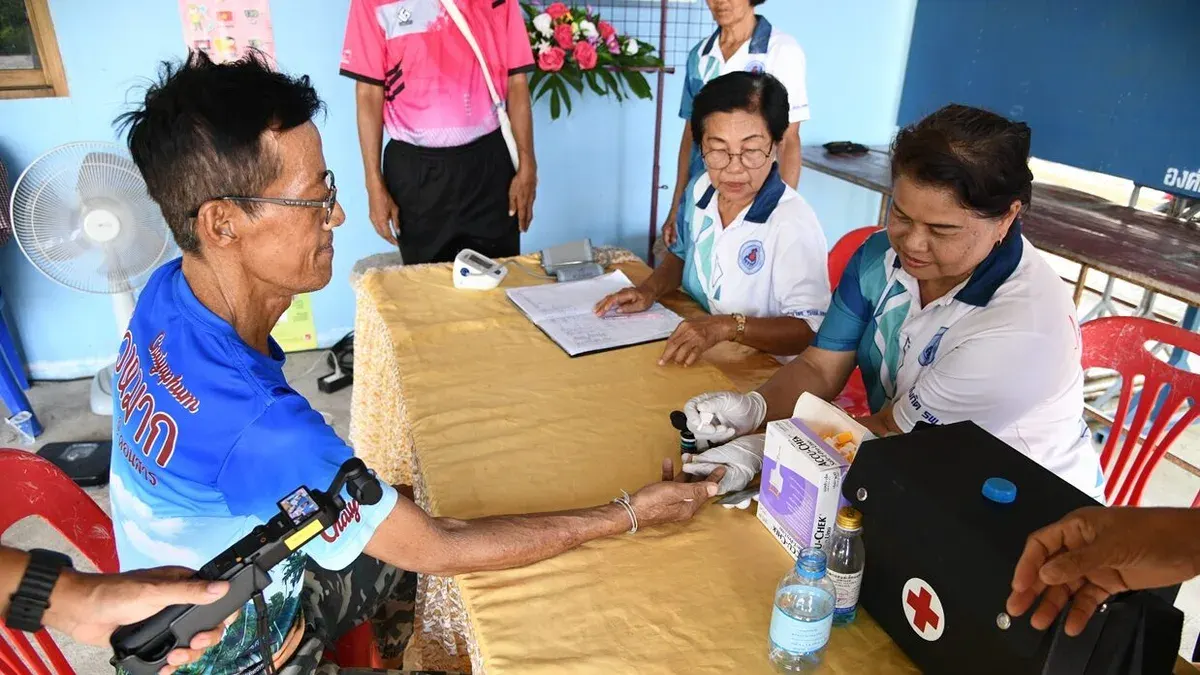
Korthong stated that the project's core objective is leveraging village agricultural volunteers, who are close to farmers and know local agricultural conditions well, to conduct field surveys in coordination with DAE and OAE staff using the digital Frame-asa system. This enhances data accuracy while elevating volunteers to become a village-level agricultural information network, bridging on-the-ground data to policy application.
The project has run continuously from 2022 to 2025, targeting approximately 75,000 villages nationwide. The 2025 fiscal year is the final critical phase, with about 18,000 villages remaining in the responsibility zones of the OAE's northeastern regional offices (Maha Sarakham, Roi Et, Kalasin, Khon Kaen, Surin, Buriram, Chaiyaphum, and Nakhon Ratchasima). Data collection will cover 26 agricultural commodities including field crops, perennial fruits, livestock, and aquaculture, enabling efficient survey and information analysis. Operations follow an OAE-DAE coordinated roadmap using the Frame-asa web application for field data recording, with briefings for extension staff before guidance is passed to village volunteers, who will document farmer activities covering household numbers, cultivation areas, livestock counts, production standards, sales outlets, and prices, followed by progress monitoring, data verification, and quality assurance.