Thailand Agriculture Ministry Partners with FAO, ADB on Climate-Smart Farm
Thailand's Ministry of Agriculture has partnered with FAO and ADB to push forward the RAP-T project, aiming to assess agricultural value chains and create a strategic investment portfolio to help farmers adapt to climate change. The initiative, aligned with the National Adaptation Plan, will move to pilot areas in 2027. Officials highlighted the need to develop Smart Farmers and improve value-chain linkages through a Productive Alliance model.
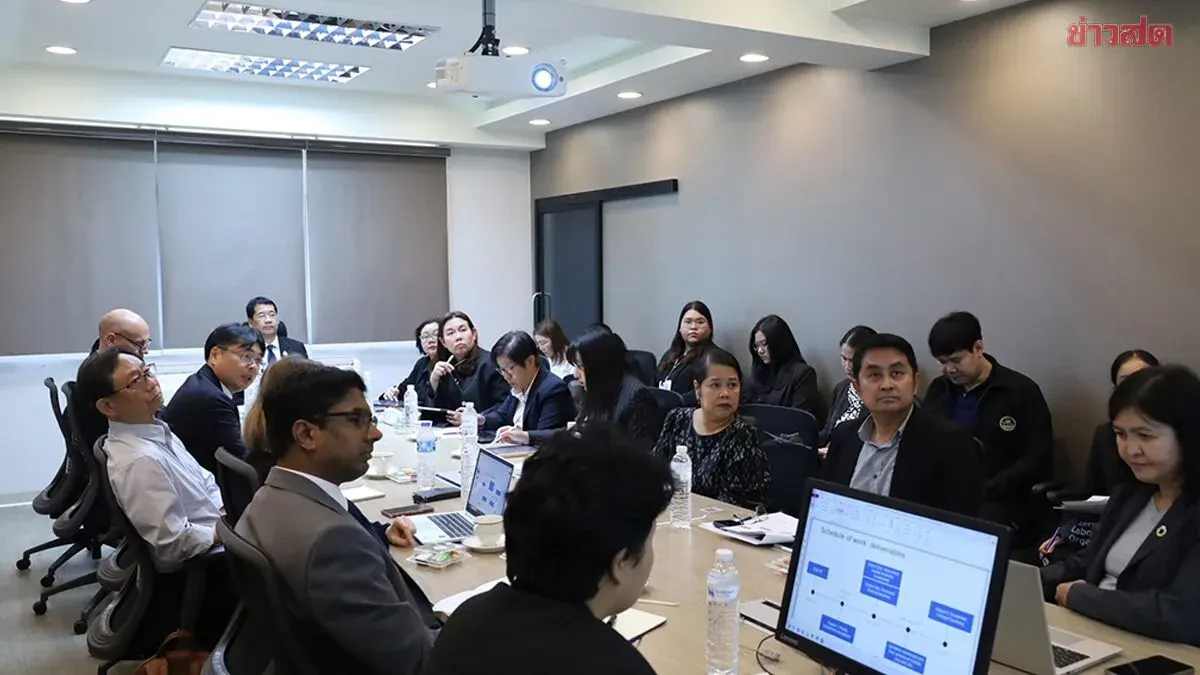
The Ministry of Agriculture, FAO, and ADB are moving forward with the RAP-T project, listening to the Inception Mission outcomes to quickly evaluate agricultural value chains and develop a strategic investment portfolio that helps Thai farmers adapt to climate change in accordance with the National Adaptation Plan (NAP) ahead of pilot areas in 2027. On October 7, 2026, Mr. Phongthai Thayothin, Deputy Permanent Secretary of the Ministry of Agriculture and Cooperatives, presided over a meeting with FAO delegates, including Mr. Robert Simpson, FAO’s Deputy Regional Representative for Asia and the Pacific, and Mr. Shinko Kimura, ADB expert from the Asian Development Bank, together with ministry officials. The project aims to assess value chains and formulate a strategic investment portfolio under the Resilient Agribusiness Program Thailand (RAP-T) to support farmers’ adaptation to the NAP. RAP-T builds on the Climate-Smart Agriculture Investment Plan (CSAIP) to mitigate the impacts of erratic weather on high-risk crops such as durian, cassava, animal feed corn, and coffee, promoting agroforestry, value-added processing, and aquaculture in cages. Discussions with agencies and the private sector revealed that the main obstacle is not a lack of funding but weak linkages in the value chain; thus the project proposes a Productive Alliance (PA) model that coordinates the government, private buyers, and farmer institutions to plan business and joint investment, alongside developing weather-index crop insurance and agricultural climate information systems. The Deputy Permanent Secretary emphasized that the key policy direction is to develop farmers into Smart Farmers who genuinely adapt and apply technology to reduce greenhouse gas emissions. Recommendations include: 1) Encouraging cooperatives and private firms to act as agricultural service providers, providing machinery and precision technology such as soil preparation tractors, harvesters, agricultural drones, and irrigation systems at fair prices due to small average farm sizes. 2) Creating incentives by offering higher purchase prices for produce that meets climate-smart agriculture standards, which boosts yields, enhances climate resilience, cuts emissions, or belongs to low‑carbon product groups.