Thailand Distributes Disease-Resistant Cassava Seedlings to Khon Kaen
Thailand distributed 20,300 disease-resistant cassava seedlings to farmers in Khon Kaen Province to combat cassava leaf spot disease, which can destroy yields by up to 80-100 percent and has plagued the northeastern region.
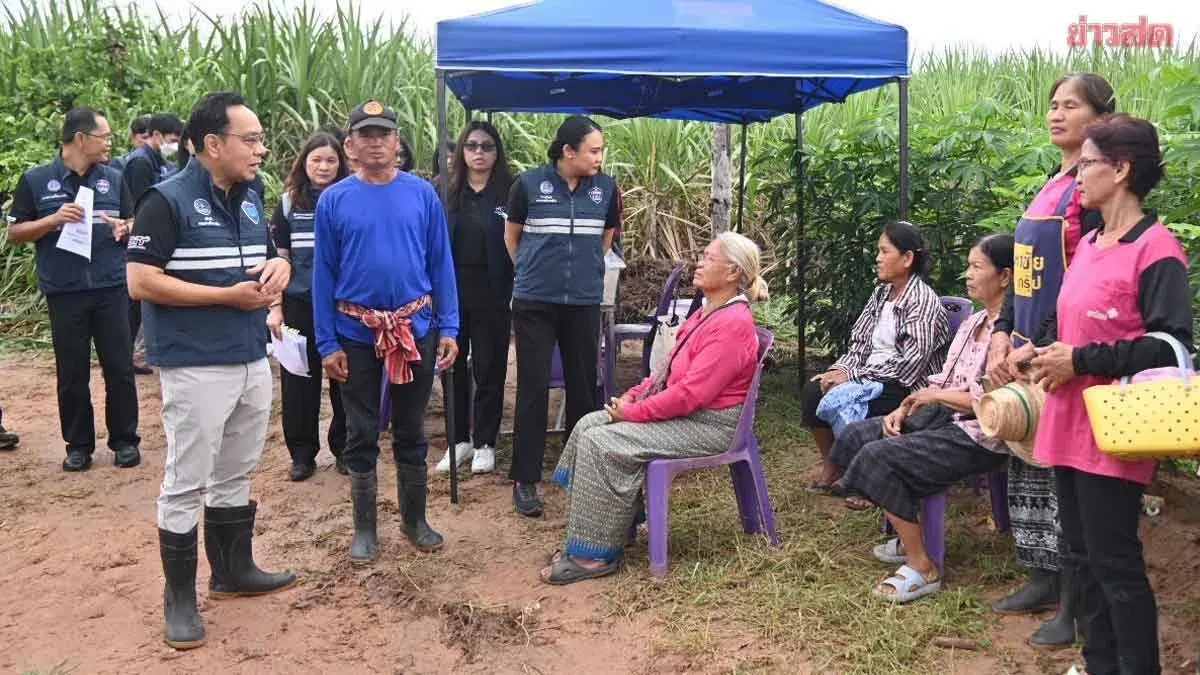
The Department of Internal Trade inspected a cassava seedling support programme in Khon Kaen Province targeting cassava leaf spot disease, which has caused continuous outbreaks in the northeastern region. Wittayakorn Manirat, director-general of the Department of Internal Trade, and officials from the provincial commerce and agriculture offices oversaw the inspection of the 2568/69 production year programme, which aims to distribute quality disease-resistant seeds widely to farmers.
Wittayakorn noted that Khon Kaen is a major cassava-growing area but falls within a surveillance zone for cassava leaf spot disease, which causes curled leaves with yellow and green striped patterns and can destroy yields by 80-100 percent without proper management. In the current season, the province received 20,300 seedlings of three disease-resistant varieties distributed to 29 farmers across three districts—Muang, Kranuan, and Khao Suan Kwang—to replace older varieties and reduce disease spread.
The programme is a collaboration between the Department of Internal Trade, the Department of Agricultural Extension, and the Cassava Fund Foundation, funded by 25.75 million baht from a joint assistance fund with a target of 5 million seedlings nationwide. This addresses critical shortages of clean planting material and helps protect Thailand's competitiveness in global processing industries. However, domestic production of resistant seedlings remains limited, forcing most farmers to rely on conventional varieties and cope with disease outbreaks.
Wittayakorn advised that although the three resistant varieties have very low or no infection rates, farmers must maintain consistent care including proper irrigation and fertiliser application, and should not store seedlings too long as this affects yield quality. Deputy director-general Yanee Srimanee noted that the inspection revealed strong farmer interest in switching to disease-resistant varieties, and the department will coordinate closely with local agencies to ensure farmers successfully grow quality crops and support rural economic development.