Thailand Launches 40-Baht Meal Program to Fight Rising Costs
Thailand's government launches a 40-baht meal program through 200,000 restaurants to ease living costs, with the Commerce Ministry providing subsidies to participating vendors.
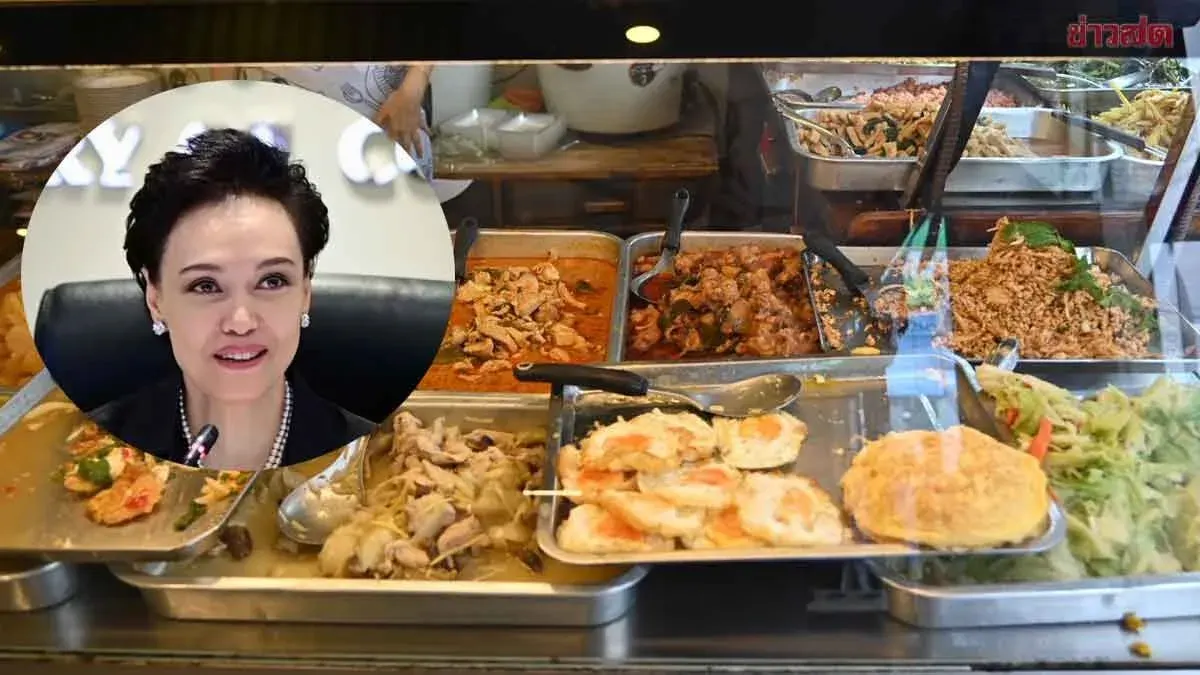
Deputy Prime Minister and Commerce Minister Supachee Sutthammapant has announced the "Thai Helping Thai" rice dish project, offering meals at 40 baht per plate to address rising living costs. She acknowledged that while rice dishes and prepared foods have seen continuous price hikes, restaurants cannot simply lower prices due to multiple cost pressures beyond fuel expenses, including electricity bills, labor costs, rent, and other hidden expenses. The government must therefore be fair to business owners and consider their full cost structure, not just fuel prices alone.
To accelerate relief for wage earners and ordinary citizens, the Commerce Ministry is launching the "Thai Helping Thai" rice dish program as an extension of the broader "Thai Helping Thai Plus" initiative. The program will distribute affordable meals at 40 baht per plate through the Commerce Ministry's network of approximately 200,000 restaurants, creating alternative menu options and reducing the cost of living burden across the population.
The government will provide financial support to participating restaurants, with budget allocation currently under consideration from either the central budget or a 400 billion baht loan fund. The exact subsidy amount is still being assessed. "The Commerce Ministry is expected to present the "Thai Helping Thai" rice dish project to the Cabinet for approval on Tuesday, July 20," the minister stated. "Once approved, implementation will begin immediately in July. The first phase targets a three-month operational period, after which results will be evaluated to determine continuation."
Regarding price reductions in consumer goods following recent fuel price decreases, Supachee said she has instructed the Department of Trade to closely monitor cost structures of essential consumer products to determine which items should have prices adjusted according to changed input costs, while ensuring fair pricing throughout the supply chain.