Thailand Plans Tiered Interest Rates for Student Loan Defaulters
Thailand’s Student Loan Fund is facing a liquidity crisis as ultra‑low interest rates have encouraged widespread defaults, leaving only one million of nearly four million borrowers current on payments. Minister Pharadon proposes splitting borrowers into disciplined and delinquent groups and applying a tiered interest‑rate scheme, while seeking an extra 1.2 billion baht in short‑term funding. The plan also targets universities and village heads accused of exploiting loopholes to certify false poverty claims.
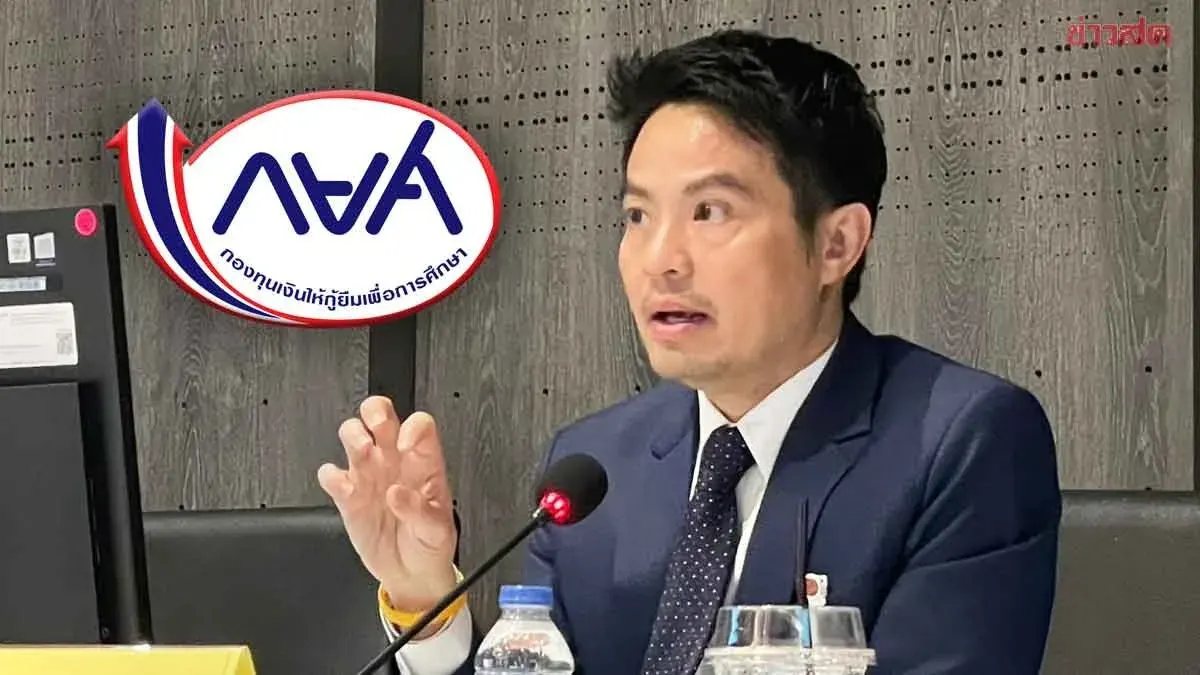
Pharadon Prisananantakul, Minister attached to the Prime Minister’s Office, told a parliamentary committee on October 1, 2069 (2026) that the Student Loan Fund (GYSS) was created to give poor students access to education. He said the problem originated from a 2023 amendment that cut interest rates from 7‑8% to 0‑1% to ease repayment burdens, but the ultra‑low rate has instead encouraged some borrowers to stop paying, opting to service higher‑interest debts elsewhere. Nearly four million people are in the GYSS system, yet only about one million are considered good borrowers, while 2.6 million are delinquent, severely straining the fund’s liquidity.
Since 2023 the fund has repeatedly needed extra central‑budget allocations to stay afloat. Pharadon noted that, after discussing the issue with Deputy Prime Minister and Finance Minister Aekniti Nitithanprasert, they learned that for the 2026 academic year around 14,000 Tier‑4 students awaiting loan approval have not received funding. An urgent short‑term fix is to secure an additional 1.2 billion baht in central‑budget money through a government borrowing commitment.
For the long term, Pharadon directed the Finance Ministry to manage the fund with minimal errors and tasked GYSS with improving debt collection from the 2.6 million delinquent borrowers. He split them into two groups: those without jobs or income, who will first be given opportunities to earn before repayment efforts resume, and those who have income but refuse to pay, identified as the main challenge. He said that if this second group made even a single payment, the fund could sustain itself, and he is ready to amend the law if necessary.
Pharadon proposed a tiered interest‑rate structure: low rates for borrowers with good repayment records and higher rates for those who have defaulted, to avoid penalizing students or the unemployed. He also acknowledged reports of budget leakage, citing cases where universities inflate tuition fees for GYSS participants and where village heads sign off on false poverty certifications.