Thailand Pumps 5.8 Billion Baht Into Industrial Future
Thailand is investing 5.8 billion baht to strengthen the Industrial Economics Office's role in shaping industrial policy and driving growth in advanced sectors including electric vehicles, biotechnology, and artificial intelligence through

Industry Minister Weerawut Silapachaya announced a 5.8 billion baht injection into the Industrial Economics Office (IEO) following an inspection visit where he outlined new policy directives. He assigned the IEO to strengthen its role as the "think tank" and "policy driver" for the Ministry of Industry, utilizing data analysis and forecasting to shape policies, plans, and strategies that align the industrial sector with economic, technological, and investment shifts.
The rollout requires coordination between government agencies, the private sector, and network institutions, with input from the public and business operators to develop measures, reform laws, and implement concrete policies aligned with the ONE MIND 4-pillar framework. The goal is to enhance business potential, increase competitiveness, and establish a foundation for stable, sustainable Thai industrial growth.
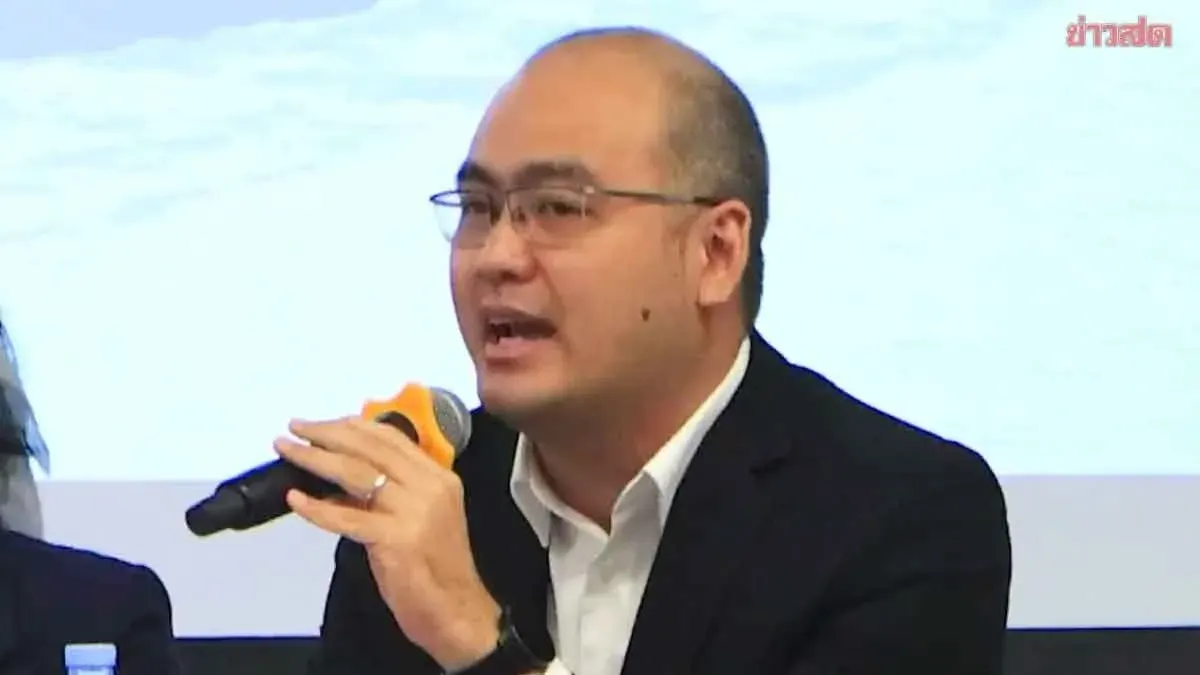
IEO Director Suphakij Bunsiri stated that the office will drive the ONE MIND policy alongside the S-Curve industrial development plan, targeting growth in modern vehicles, biotechnology, electrical and electronics, food, robotics and automation, comprehensive medical industry, digital and artificial intelligence, smart electronics, and security sectors. Coordination will link technology, personnel, infrastructure, and investment incentives through cooperation between public agencies, the private sector, and networks. The fiscal year 2569 integrated industrial and services development program commands a total budget of 5,884.18 million baht covering 49 projects from 14 agencies.
Previous results show that electric vehicle and new energy vehicle (xEV) production in 2568 reached 284,679 units, a 50% increase from the previous year. Automation system investments approved by the CoRE committee between 2563–2569 totaled 22,621.69 million baht, and during 2567–2569, workforce training in target industries for modern technology reached 89,267 people.
Suphakij added that the IEO will next accelerate industrial index updates to match changing production structures and cover emerging industries, providing accurate data for government policy and industrial development direction. It will also promote new potential industries including medical devices, defense, and halal sectors to establish new production bases, reduce import dependence, and expand Thai products into regional and global markets. The S-Curve industrial development plan concludes in 2570, so the IEO is currently reviewing and preparing a new development plan to address changing industrial context and will present it to the Cabinet for consideration.