Thailand Taxonomy Aims to Green Agriculture Supply Chains
Thailand launched Phase 2 of its environmental taxonomy framework to accelerate green finance in agriculture, construction, and manufacturing, with over 70 stakeholders convening to develop implementation best practices for sustainable supp
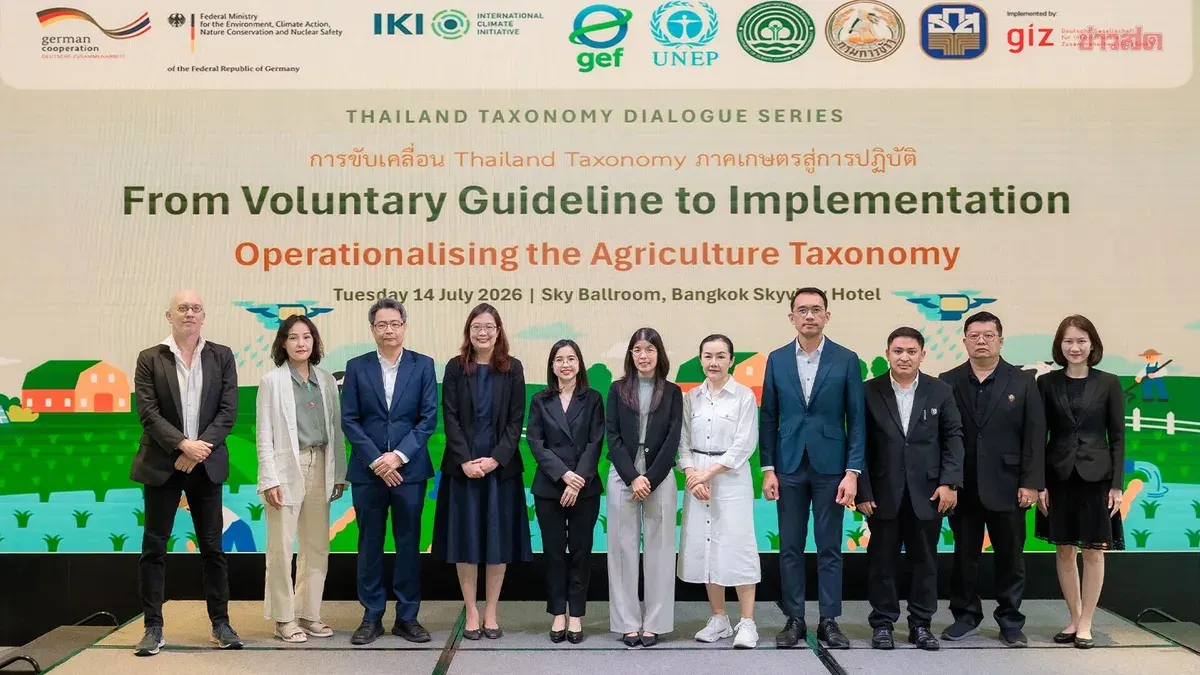
Germany's GIZ organization in Thailand, together with the Bank for Agriculture and Agricultural Cooperatives and representatives from research institutions, government agencies, private sector, and international organizations—over 70 participants in total—convened for a workshop titled "Implementing Thailand Taxonomy in the Agricultural Sector" at Skyview Hotel Bangkok.
The meeting aimed to develop best practices for Thailand's agriculture and finance sectors, and to advance implementation of the Thailand Taxonomy framework, an environmental classification standard enabling both public and private sectors to align on criteria for promoting green finance. The framework covers activities that do not cause significant negative environmental and social impacts, while supporting greenhouse gas reduction and climate change adaptation.
Phase 1 of Thailand Taxonomy covered energy and transport sectors as the highest emitters. Phase 2 expanded to include agriculture, construction, real estate, manufacturing, and waste management, bringing total coverage to over 95% of the country's emissions. Thailand Taxonomy serves as a key tool to help businesses and financial institutions transition to a low-carbon, sustainable economy.
Piyavarn Khemtongpradit, Deputy Director of Financial Institution Strategy at the Bank of Thailand, opened the session by noting that while the launch of Thailand Taxonomy Phase 2 last year was a significant milestone, the real challenge lies in practical implementation. "The financial sector has a crucial role in supporting agriculture's transition," she said, adding that "Thailand Taxonomy will be an important tool enabling financial institutions to design financial products, assess risk, and transparently support green activities."
Sangwal Sapma, Project Manager and Head of Member Relations and Communications at the Sustainable Rice Platform (a multi-stakeholder global initiative focused on sustainable food production), discussed practical application of taxonomy standards. "SRP standards and Thailand's Taxonomy policy for agriculture already align well. SRP helps farmers implement and measure sustainable practices, while Taxonomy policy opens access to finance through existing structures. Rather than creating new systems, we should build on what already exists, like the SRP standard," she explained.