Education Minister Prasert Chantharangthong is negotiating with banks to reduce teacher loan interest rates to 3.5% annually and restore bankruptcy rights for educators burdened by debt that leaves some with no monthly income.
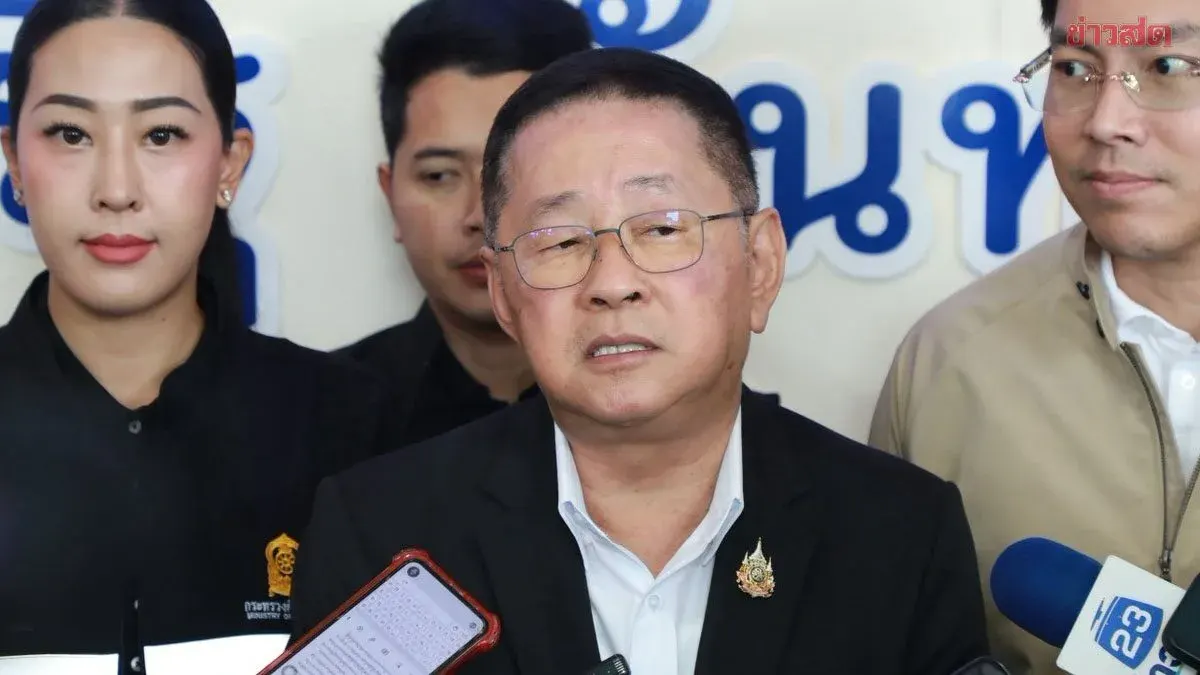
Education Minister Prasert Chantharangthong is pushing forward with measures to address teacher debt, negotiating with banks to reduce interest rates to 3.5% per year and restoring the right of bankrupt teachers to return to government service. The minister revealed that some teachers have had their salaries cut so severely they lack sufficient funds for basic living expenses.
On August 22, 2025, Prasert and Deputy Education Minister Akranon Kittinun visited Kanchanaburi Province to inspect education policy implementation and meet with school administrators, teachers, education personnel, and students. In the morning, they visited Tham Maka Witthayakam School in Tham Maka District under the Secondary Education Area Office and the Kanchanaburi Teachers Savings Cooperative in Muang Kanchanaburi District to hear concerns and develop solutions for teacher debt. They were received by Narinthorn Chamyahndu, chairman of the cooperative's management board.
Prasert said the Kanchanaburi Teachers Savings Cooperative is a successful model for managing educator debt and financial hardship through systematic processes that have significantly reduced member indebtedness. He noted that the Education Ministry recently reached an agreement with the Government Savings Bank to reduce interest rates for teachers and education personnel from the previous 6–7% per year to 3.5% per year, effective through December 2027. From January 2028 onward, rates will be set at MLR/MRR minus 2% per year.
Currently, approximately one million members of the Funeral Assistance Fund for Teachers and Education Personnel and the Spouse Funeral Assistance Fund for Teachers and Education Personnel carry debt. The rate reduction will shorten repayment periods significantly.
Prasert also revealed that a nationwide survey found many teachers' savings cooperatives charging loan interest rates as high as 5–6%, leaving teachers with insufficient income for basic expenses and monthly salary deductions that sometimes leave them with no money at all. He said the key challenge ahead is finding low-interest funding sources to reduce teacher debt, with the Education Ministry serving as a broker in negotiations.
"Recently, I have held behind-the-scenes discussions with one financial institution to request a low-interest lending facility for teachers to resolve this problem and prevent them from paying high interest rates," Prasert said. "I do not want the rate to exceed 4%. Initial discussions have been positive."
Regarding teachers facing bankruptcy proceedings—currently numbering over ten thousand—Prasert said a draft Education Personnel and Teachers Act has passed Senate review and is heading to the House of Representatives. If the House approves without amendments, it will be published in the Royal Gazette, allowing teachers who have been declared bankrupt to regain full civil service status.
Concerning the proposed establishment of four regional central cooperatives to draw low-interest funding for teacher loans, Prasert said consultations with the Ministry of Agriculture and Cooperatives are needed first. If existing teachers' savings cooperatives agree to reduce rates to no more than 4%, that would be beneficial.
Since most teachers are reliable debtors who repay through automatic salary deduction, Prasert expressed confidence that a 2–3% rate reduction would meaningfully increase teachers' disposable income.
"Teacher debt is a chronic problem that has persisted for years, with nearly one million civil service teachers currently in debt," he said. "The Pheu Thai Party recognizes the urgency and is committed to solving this to improve teachers' quality of life."