Villagers Protest Dam Project, Demand Action Against Illegal Logging
Over 50 villagers from Noen Maprang protested the proposed Chom Pu dam in Phitsanulok, citing environmental, biodiversity, and archaeological concerns, and called for investigation into illegal rubber logging in Thung Salaeng Luang National Park. They urged authorities to consider sustainable alternatives like small weirs and monkey cheek reservoirs to manage floods and droughts. District officials said they would forward the complaint to the Irrigation Department and police for further action.
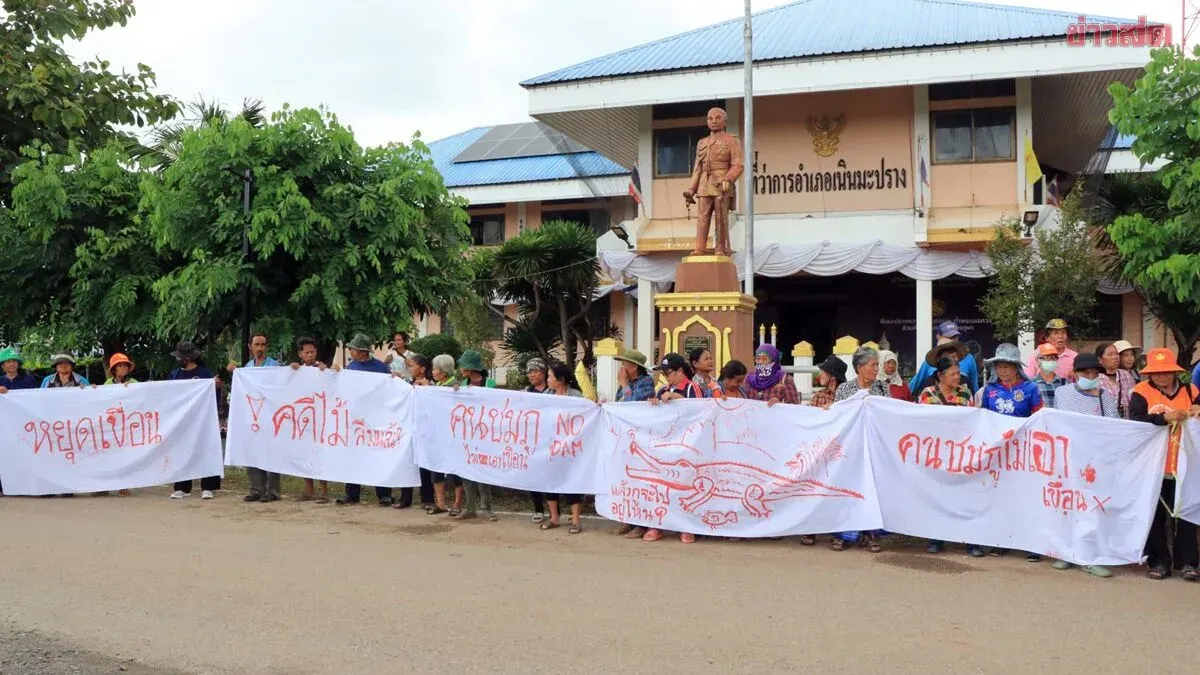
The Phu Nam Water Basin Conservation Network and Noen Maprang residents filed a complaint with the Noen Maprang district office against the Chom Pu dam project, after several parties attempted to revive the dam construction. On October 6, 2026, over 50 people from Ban Chom Pu, Village 3, Chom Pu Subdistrict, Noen Maprang District, Phitsanulok Province, gathered at the district office. Led by network president Mo Khamkun and secretary Chaow Yen-cham, they presented their letter to District Officer Manas Singdet, demanding cancellation of the Chom Pu dam construction and an investigation into illegal rubber logging in Thung Salaeng Luang National Park allegedly carried out by state officials.
Mo Khamkun stated that the group submitted the petition with two main requests: first, to oppose the proposal and implementation of the Chom Pu dam because it would severely impact the aquatic ecosystem, natural waterways, and local livelihoods. The area is a biodiversity hotspot, home to protected wildlife, and contains valuable archaeological sites such as ancient boat discoveries and Sukhothai-era salt ponds, among other impacts. The network believes flood and drought issues can be addressed through sustainable alternatives that do not destroy natural resources or affect farmers’ land.
Second, they urged police to investigate and prosecute the illegal logging of restricted rubber trees within Thung Salaeng Luang National Park (section 5), which has not yet been examined or resulted in disciplinary or criminal action, to ensure justice and protect communal natural resources.
Chaow Yen-cham added that the network and local residents oppose the dam because it would affect a wide area, eliminating natural tourism sites, but suggested alternatives such as monkey cheek reservoirs or small weirs at locations like the Dead Elephant Canal or various points along the Chom Pu Canal, which could accommodate thousands of rai. They want to conserve the Phu Nam basin, freshwater crocodiles, the termite mound area, and blind fish, the tukkaay, which are reserved wildlife species, hoping for knowledge sharing and a solution that benefits the community.
The Noen Maprang district officer said he would receive the network’s petition and forward it to the Royal Irrigation Department for further consideration, and inform the Phitsanulok governor of the requests to seek joint solutions. Regarding the illegal logging case, he said it would be referred to the Noen Maprang police station supervisor for re‑investigation.
The reporter noted that the proposed Chom Pu reservoir (or dam) would occupy approximately 2,700 to 3,000 rai of pristine forest within Thung Salaeng Luang National Park. The project has been assessed as being able to create a water distribution system and agricultural area.