Villagers Sell Rare Goose Egg Mushrooms Near Mae Klang Waterfall
Villagers near Mae Klang waterfall in Chiang Mai collect and sell goose egg mushrooms, earning about 100–150 baht per kilogram and selling roughly 200 kilograms daily during October. The income supports many local families, with villagers dividing labor between gathering, cleaning, and selling the mushrooms. Vendors such as Boonsri buy the harvest and resell it roadside and in Chiang Mai city throughout the month.
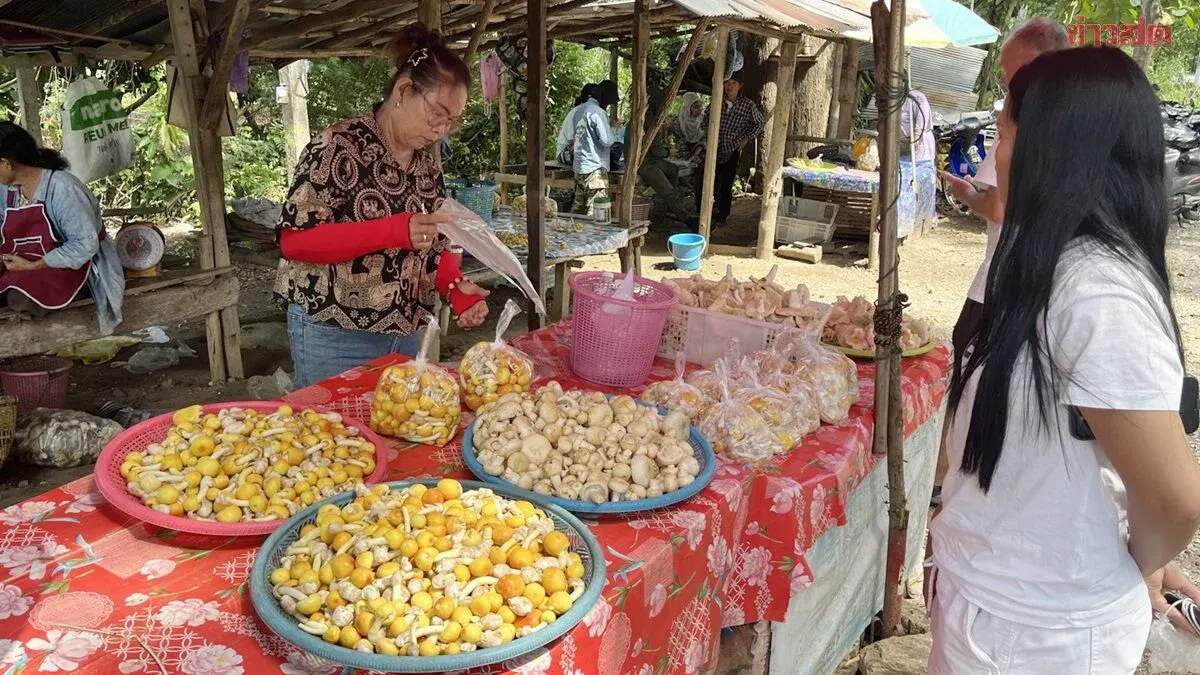
Villagers can only eat this mushroom once a year, yet they head out to collect and sell goose egg mushrooms, earning a good income at 100–150 baht per kilogram, with daily sales of about 200 kilograms. This provides income for villagers and roadside vendors. On October 6, 2026, reporters said villagers gather the so‑called goose egg mushroom (locally known as het fai hong) and sell it for profit. Ms. Boonsri, a mushroom seller at the entrance to Ban Klang on the road to Doi Inthanon in Chom Thong district, Chiang Mai, invites people to buy the villagers’ mushrooms sold roadside. She purchases the mushrooms from locals and resells them, operating daily throughout October each year. The edible wild mushrooms are the egg mushroom or het rong, called goose egg mushroom by villagers, priced at 150 baht per kilogram; the het lom or het khlai mushrooms are bagged and sold at 100 baht per kilogram, sometimes mixed. To collect the mushrooms, villagers leave their homes at night or before dawn to search the forest near Mae Klang waterfall. They bring the harvest to roadside vendors around 7 a.m., then go back into the forest for a second round, delivering more mushrooms by noon. Sales are brisk and sell out every day. The income supports many local families; tasks are shared—some collect, others clean the mushrooms before bagging. The mushroom season occurs once a year, but each day wholesalers buy the entire supply to resell in Chiang Mai city, said vendor Boonsri.