200 Residents Storm Nakhon Phanom Hall to Oppose Potash Mining Survey
Over 200 residents protested at Nakhon Phanom Provincial Hall on September 25 against a proposed potash mining survey in Renu Nakhon District, citing fears of environmental damage and salinization based on impacts observed in neighboring pr
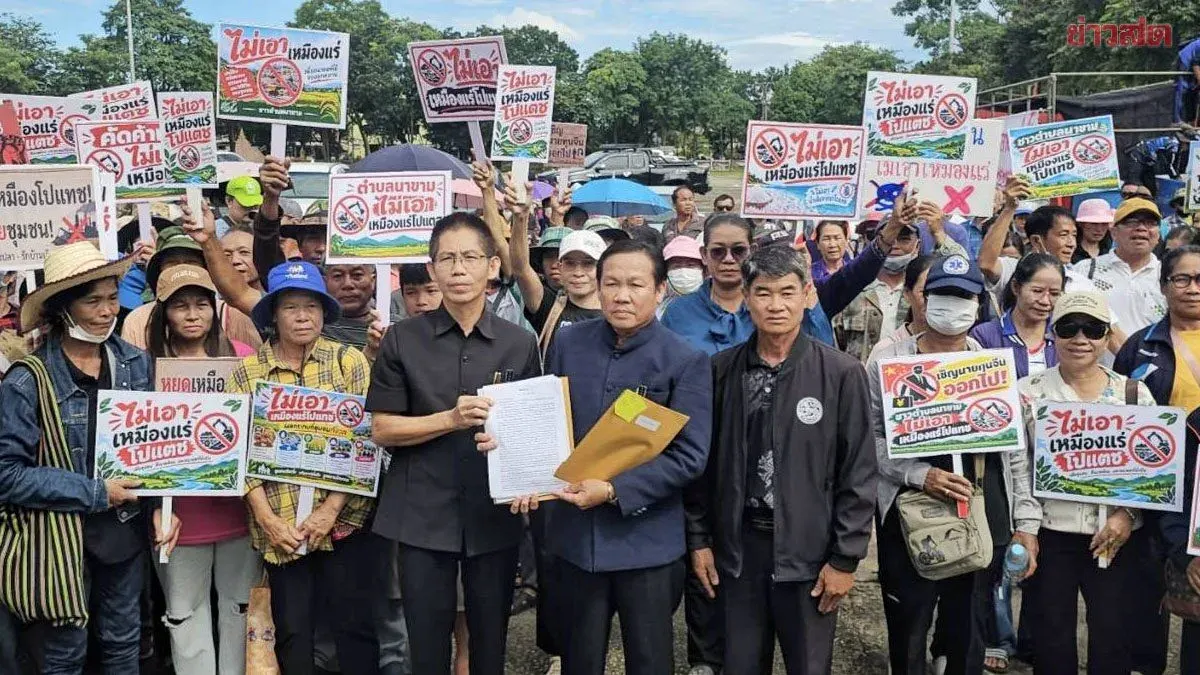
On September 25, 2025, at 09:30 near Nakhon Phanom Provincial Hall, Sathit Pharamee, head of Na Kham Subdistrict Administrative Organization in Renu Nakhon District, led over 200 residents in a protest against issuing a special mining survey permit for potash in four subdistricts of Renu Nakhon. The protesters arrived in approximately 20 pickup trucks and six-wheel trucks with signs reading "No potash mining—concerns about environmental impact," carrying placards opposing both the permit issuance and mining operations.
Sathit revealed that although the survey application had passed some committee review stages, residents felt genuine and comprehensive community input had not been sought. He emphasized that residents firmly reject not only mining but even exploratory drilling. Sathit noted he had previously visited Nong Sai Subdistrict in Dan Khun Thot District, Nakhon Ratchasima Province, and learned how residents there had suffered salinization impacts for over a decade, rendering rice farming impossible. He warned that similar contamination in the water system could affect agriculture and livelihoods across broader farming and community areas sharing water resources. Past surveys indicate Na Kham Subdistrict contains a potash layer approximately 45 meters thick, raising concerns it may become a future mining target affecting ancestral farmland.
Subsequently, Deputy Governor Weeera Rukvanichkul of Nakhon Phanom received a petition from community representatives and promised to escalate their concerns to the governor and forward the matter to relevant agencies by September 25. The province also held a meeting with representatives from the Department of Basic Industries and Mining at 10:00 the same day, inviting district officials, subdistrict heads, and community leaders to discuss the survey project and its potential long-term environmental impacts.