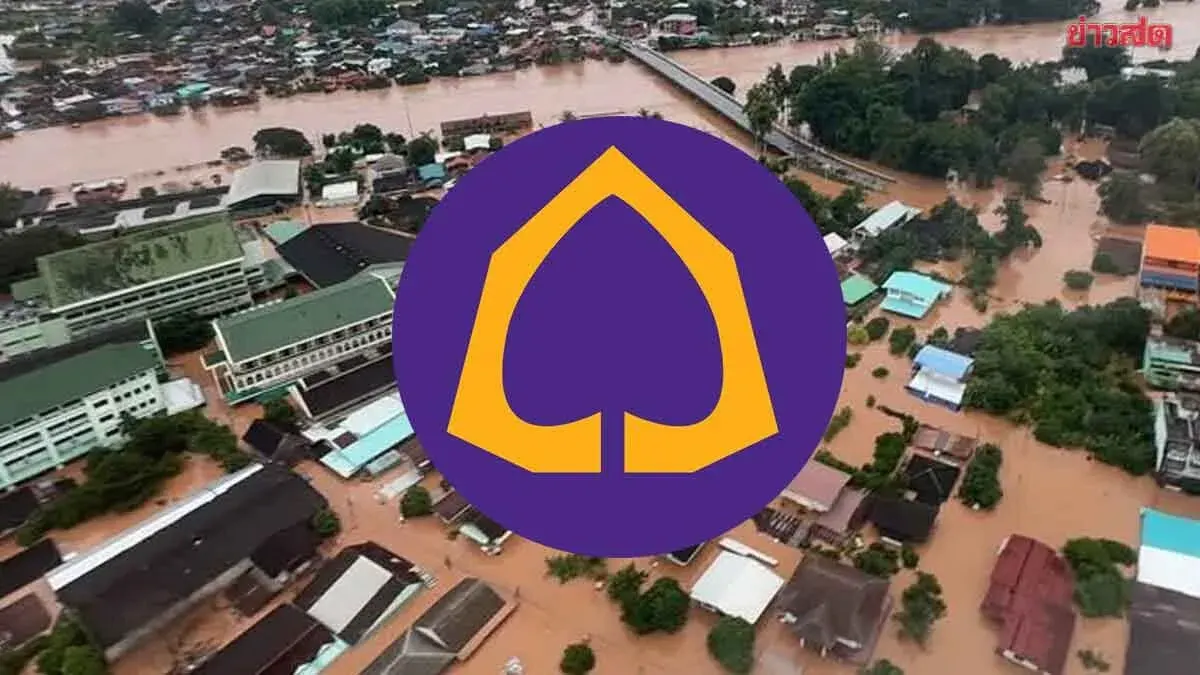
Agriculture Ministry Opens War Room to Manage Nationwide Flooding
Thailand's Agriculture Ministry opened a flood command center to manage nationwide flooding across 21 provinces using a three-phase water management strategy, while proposing a new permanent drainage canal project to prevent future crises l

The Agriculture Ministry confirmed that the four main Chao Phraya dams remain stable and is proposing a permanent Chai Nat-Pa Sak-Gulf of Thailand drainage canal project to address long-term structural flooding issues. Agriculture Minister Suriya Jungrungreangkit chaired a flood situation monitoring meeting at the Royal Irrigation Department's Smart Water Operation Center, with senior officials including Secretary Sarawut Neuang Chamnong, Deputy Permanent Secretary Krit Uttamvaedin, and Irrigation Department Director Withaya Kaewmi in attendance.
The minister issued four key operational guidelines for the department to implement active 24-hour water management using a three-phase strategy of "upper retention, mid-delay, and lower release" to maintain balance between flood prevention, water storage for the dry season, and protection of economic and agricultural areas. Currently, 21 provinces are experiencing flooding from accumulated monsoon rains. The four main Chao Phraya Basin dams are holding water at 70 percent capacity, with efforts to retain as much as possible upstream. The minister emphasized that this year's water discharge is manageable and will not be as severe as the 2011 or 2017 flooding crises. In 11 low-lying water retention areas, farmers have already harvested more than 90 percent of their rice crop, allowing these areas to absorb floodwater without affecting production.
For water management in central and lower regions, the Irrigation Department is gradually increasing discharge from Chao Phraya Dam to no more than 2,000 cubic meters per second while keeping the water level below 17.5 meters to protect communities upstream. The department has issued advance warnings to low-lying areas outside the embankment. In the Pa Sak Basin, discharge from Pa Sak Cholasit Dam has been reduced to just 25 cubic meters per second, and water flow through Rama VI Dam is being carefully managed to prevent overlapping flood waves. Current challenges include accumulated rainfall in areas below the dams and a storm system moving westward. Officials have deployed more than 500 mobile pumps nationwide to accelerate drainage of stagnant water.
Following the meeting, the minister and his team traveled to the Khlong Lat Phli Royal Drainage Gate in Samut Prakan to closely monitor water discharge into the Gulf of Thailand, operating pumps at maximum capacity and fully opening the drainage gate. This reduces the water travel distance from 18 kilometers to just 600 meters and cuts travel time from five hours to ten minutes. The operation is coordinated with tidal cycles to maximize drainage efficiency. The minister also announced preparations for a long-term structural solution: the "Chai Nat-Pa Sak-Gulf of Thailand Canal Project," which will be proposed to the cabinet as a permanent drainage channel to cut off floodwater before it reaches Bangkok and surrounding areas.